
resources
Exploring California Cities by Population: A Comprehensive Guide for 2025
Industry Expert & Contributor
26 Apr 2025

California is home to some of the largest and most vibrant cities in the United States. With a population that continues to grow, understanding the dynamics of these urban centers is crucial for anyone interested in the state’s future. This guide will explore California cities by population, highlighting key demographics, economic factors, and cultural significance as we look ahead to 2025.
Key Takeaways
- California’s largest cities include Los Angeles, San Francisco, and San Diego, each with unique characteristics.
- Population trends show a steady growth in urban areas, influenced by factors like migration and economic opportunities.
- Understanding population density helps illustrate the differences between urban and rural areas in California.
- Comparative analysis reveals that cities vary greatly in diversity and growth rates, shaping their cultural landscapes.
- County-level statistics highlight the differences between urban and rural populations, impacting local policies and services.
Overview of California’s Largest Cities
California is home to a diverse array of cities, each with its own unique character and contribution to the state’s identity. Understanding these urban centers requires a look at their demographics, economic influence, and cultural importance. Let’s take a closer look.
Key Demographics
California’s major cities are characterized by diverse populations. This diversity is reflected in age, ethnicity, and socioeconomic status. For example, Los Angeles has a large Hispanic population, while the Bay Area is known for its Asian communities. These demographic variations shape the character of each city and influence everything from local businesses to cultural events.
Here’s a quick look at the estimated populations of some of California’s largest cities as of 2024:
| City | Population (Estimated) |
|---|---|
| Los Angeles | 3,898,747 |
| San Diego | 1,386,932 |
| San Jose | 1,013,240 |
| San Francisco | 873,965 |
| Fresno | 545,715 |
Economic Impact
The economic engines of California are largely driven by its major cities. San Francisco and the Silicon Valley area are hubs for technology and innovation, attracting investment and talent from around the world. Los Angeles is a global center for entertainment, trade, and tourism. San Diego boasts a strong economy in defense, biotechnology, and tourism. The largest cities in California contribute significantly to the state’s GDP and provide employment opportunities for millions.
California’s urban centers are not just places to live; they are economic powerhouses that drive innovation, create jobs, and shape the future of the state.
Cultural Significance
California’s largest cities are cultural melting pots, each offering a unique blend of traditions, arts, and lifestyles.
- Los Angeles is synonymous with Hollywood and the entertainment industry, influencing global trends in film, music, and fashion.
- San Francisco is known for its progressive values, vibrant arts scene, and iconic landmarks like the Golden Gate Bridge.
- San Diego’s proximity to the border with Mexico gives it a distinct cultural flavor, reflected in its cuisine, music, and art scene.
These cities are home to world-class museums, theaters, music venues, and cultural festivals, making them attractive destinations for tourists and residents alike. They also play a crucial role in shaping California’s identity and promoting cultural exchange.
Population Trends in California
California’s population is always changing, and understanding these shifts is key to planning for the future. Let’s take a look at how the state has grown, what’s expected to happen, and what factors are driving these changes.
Historical Growth Patterns
California’s population growth has been pretty remarkable over the last century. From the Gold Rush era to the tech boom, each period has brought significant increases. But, the rate of growth hasn’t been constant. There have been periods of rapid expansion and times when things slowed down. Understanding these historical patterns helps us see the bigger picture.
Here’s a quick look at some key milestones:
- Gold Rush (1849-1855): Massive influx of people seeking fortune.
- Post-World War II (1945-1960): Suburban expansion and economic boom.
- Late 20th Century (1970-2000): Tech industry boom and immigration.
Future Projections
Predicting the future is never easy, but demographers use various models to estimate California’s future population. These projections consider things like birth rates, death rates, and migration patterns. While growth is expected to continue, it’s likely to be slower than in previous decades. This has implications for everything from housing to infrastructure. You can explore California population map to see the distribution.
Factors Influencing Population Changes
Several factors play a role in shaping California’s population trends. These include:
- Economic Opportunities: California’s job market, especially in tech and entertainment, attracts people from all over the world.
- Housing Costs: High housing costs can deter people from moving to or staying in California.
- Environmental Factors: Climate change and natural disasters can influence migration patterns.
California’s population growth is slowing, primarily due to declining birth rates influenced by shifts in education, marriage, and work choices. This trend is expected to continue, impacting the state’s demographics and economy in the coming years.
Here’s a table summarizing the key factors:
| Factor | Impact |
|---|---|
| Economic Opportunities | Attracts new residents, especially young professionals. |
| Housing Costs | Discourages migration and can lead to outward migration. |
| Environmental Factors | Can cause displacement and influence long-term residency choices. |
Major Urban Centers in California

Los Angeles
Los Angeles is a sprawling metropolis and a major hub for, well, everything. It’s known for the entertainment industry, but it’s also a huge economic engine and a cultural melting pot.
- Population (2024): Approximately 3.9 million
- Key Industries: Entertainment, aerospace, technology, tourism
- Cultural Highlights: Hollywood, beaches, diverse neighborhoods
Los Angeles faces challenges related to traffic congestion, housing affordability, and income inequality. Despite these issues, the city continues to attract people from all over the world, drawn by its opportunities and lifestyle.
San Francisco
San Francisco is famous for its tech industry, iconic landmarks, and unique culture. It’s a relatively small city geographically, but it packs a big punch.
- Population (2024): Approximately 874,000
- Key Industries: Technology, finance, tourism
- Cultural Highlights: Golden Gate Bridge, Alcatraz, diverse neighborhoods, San Francisco homes for sale
San Francisco’s high cost of living is a major concern. Housing prices are among the highest in the nation, making it difficult for many to afford to live there. The city is also grappling with issues related to homelessness and income inequality.
San Diego
San Diego offers a more laid-back vibe than Los Angeles or San Francisco, but it’s still a major urban center. It’s known for its beautiful beaches, military presence, and growing biotech industry.
- Population (2024): Approximately 1.4 million
- Key Industries: Military, tourism, biotech, manufacturing
- Cultural Highlights: Balboa Park, beaches, San Diego Zoo
San Diego’s economy is more diversified than some other California cities, which helps to buffer it from economic downturns. However, the city still faces challenges related to housing affordability and traffic congestion. The city is working on expanding its public transportation options to alleviate these issues.
Population Density Across California
California is a big state, and how many people live in each area varies a lot. You’ve got super crowded cities and then wide-open spaces with hardly anyone around. Understanding this population density is key to figuring out things like resource management, infrastructure planning, and even how communities develop.
Understanding Density Maps
Density maps are visual tools that show how many people live in a specific area, usually measured as people per square mile. These maps use colors to represent different density levels, making it easy to see where the most and least populated areas are. California’s population density map is a great way to quickly grasp the distribution of residents across the state.
- Darker colors usually mean higher density, indicating urban centers.
- Lighter colors show lower density, representing rural or sparsely populated regions.
- These maps often use data from the US Census Bureau to ensure accuracy.
Urban vs. Rural Distribution
The difference in population density between urban and rural areas in California is pretty stark. Cities like Los Angeles and San Francisco have thousands of people per square mile, while some northern counties might have only a handful. This uneven distribution affects everything from housing costs to access to services.
Consider these points:
- Urban areas face challenges like traffic congestion and high housing costs.
- Rural areas often struggle with limited access to healthcare and education.
- Understanding this divide helps policymakers address the specific needs of each type of community.
Implications of Population Density
Population density has a big impact on various aspects of life in California. High density can lead to innovation and economic growth but also strains resources and infrastructure. Low density can offer a quieter lifestyle but may limit opportunities.
Population density affects resource allocation, infrastructure development, and environmental sustainability. Areas with higher density require more robust public transportation, waste management, and water resources. Conversely, sparsely populated regions may need support for basic services like schools and hospitals.
Here’s a quick look at some implications:
- Environmental Impact: Denser areas often have higher pollution levels.
- Infrastructure Needs: Cities require extensive public transportation and utilities.
- Economic Opportunities: Urban centers tend to offer more job opportunities.
Comparative Analysis of California Cities
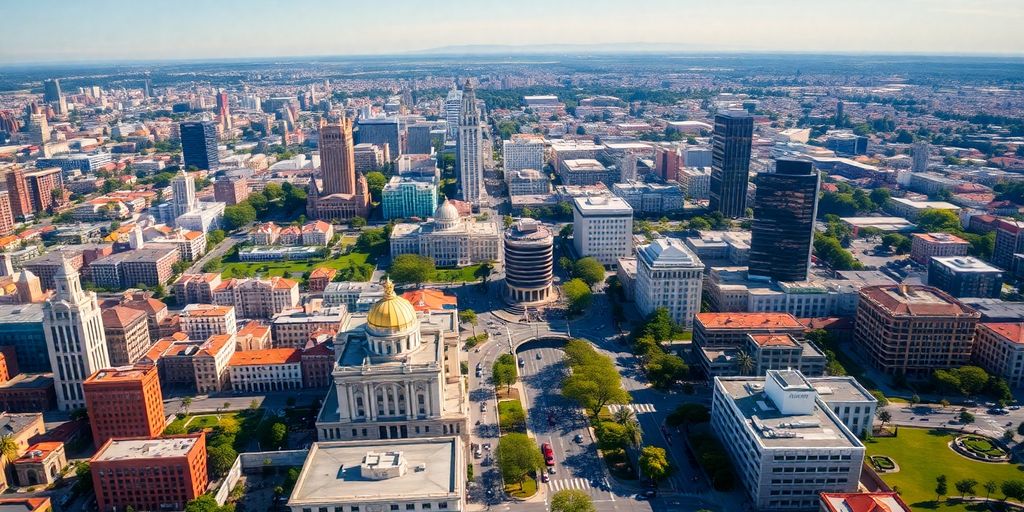
City Population Rankings
Okay, so let’s talk about how California cities stack up against each other in terms of population. It’s not just about which city is the biggest, but also about understanding the distribution of people across the state. Los Angeles consistently tops the list, followed by San Diego and San Jose. But beyond the top three, things get interesting. Population rankings can shift depending on annexation, migration patterns, and even economic booms or busts. For example, a city experiencing rapid job growth might see its population surge, while another might stagnate or even decline.
Here’s a simplified look at the top 5 (estimated for 2025):
| Rank | City | Estimated Population |
|---|---|---|
| 1 | Los Angeles | 4,000,000+ |
| 2 | San Diego | 1,400,000+ |
| 3 | San Jose | 1,000,000+ |
| 4 | San Francisco | 900,000+ |
| 5 | Fresno | 550,000+ |
Growth Rates by City
Growth rates are where things get really dynamic. Some cities are booming, while others are seeing slower growth or even declines. Factors like housing costs, job opportunities, and quality of life play huge roles. For instance, cities in the Inland Empire have seen significant growth as people seek more affordable housing options compared to coastal areas. Meanwhile, some Bay Area cities might experience slower growth due to extremely high living costs. Understanding these growth rates helps us anticipate future infrastructure needs and potential challenges.
Here are some factors influencing growth rates:
- Housing Affordability: Cities with lower housing costs tend to attract more residents.
- Job Market: Strong job markets drive population growth.
- Quality of Life: Access to amenities, good schools, and safe neighborhoods are important.
It’s important to remember that growth isn’t always a good thing. Rapid growth can strain resources, lead to overcrowding, and exacerbate existing problems like traffic congestion and pollution. Sustainable growth is the key, focusing on smart planning and investment in infrastructure.
Diversity in Urban Areas
California is known for its diversity, and that’s especially true in its urban areas. Each city has its own unique blend of cultures, ethnicities, and backgrounds. Los Angeles, for example, is one of the most diverse cities in the world, with large communities from all over the globe. San Francisco also boasts a rich cultural tapestry, shaped by its history as a major port city and its vibrant LGBTQ+ community. Understanding this diversity is crucial for creating inclusive policies and fostering a sense of belonging for all residents. You can compare real estate options in different cities to see how diversity impacts neighborhoods.
Here are some ways diversity manifests in California cities:
- Cultural Enclaves: Many cities have distinct neighborhoods that reflect the cultures of specific immigrant groups.
- Language Diversity: A wide range of languages are spoken in California’s urban areas.
- Religious Diversity: California is home to people of many different faiths.
California’s Population by County
County Population Statistics
Okay, so let’s talk about how many people live in each county in California. It’s not just about the big cities; the counties tell a bigger story. You’ve got Los Angeles County with a huge population, then you have some smaller, more rural counties with just a few thousand people. It’s a pretty big range. Understanding these numbers helps us see where people are choosing to live and how resources are distributed.
Here’s a quick look at some estimated county populations for 2024:
| County | Estimated Population |
|---|---|
| Los Angeles | 10,000,000+ |
| San Diego | 3,300,000+ |
| Orange | 3,100,000+ |
| Riverside | 2,500,000+ |
| San Bernardino | 2,200,000+ |
Rural vs. Urban Counties
California is interesting because you have these massive urban centers, but also vast rural areas. Think about it: you’ve got the Bay Area and LA, but then you drive a few hours and you’re in farmland or mountains with hardly anyone around. The population density varies wildly. Urban counties tend to have more resources, better infrastructure, and different kinds of jobs. Rural counties often rely on agriculture or tourism, and they face different challenges like limited access to healthcare or education. It’s a real contrast. You can explore California’s population density map to see this in action.
Impact of County Policies on Population
What’s really interesting is how county policies can affect population growth or decline. Things like zoning laws, affordable housing initiatives, and even tax rates can influence where people decide to live. For example, if a county makes it easier to build new homes, you might see more people moving there. Or, if a county has really high property taxes, people might move to a neighboring county with lower taxes. It’s all connected. County policies shape the demographics, and the demographics, in turn, influence the policies. It’s a cycle.
County-level decisions regarding land use, economic development, and social services play a significant role in shaping population trends. These policies can either attract new residents or encourage existing ones to relocate, thereby influencing the overall demographic landscape of the county.
Here are some factors that can influence population:
- Job opportunities
- Cost of living
- Quality of schools
- Availability of healthcare
Visualizing California’s Population Data
It’s one thing to talk about numbers, but seeing them laid out visually? That’s when things really click. We’re going to explore how maps, charts, and infographics can help us understand California’s population in a much more intuitive way. Forget just reading statistics; let’s see what’s happening.
Maps of Population Distribution
Maps are super useful for showing where people live. You can instantly see the crowded areas and the more open spaces. For example, a population density map uses colors to show how many people live in each area. Red might mean a lot of people are packed together, like in Los Angeles, while green could show fewer people, like in some parts of Northern California. These maps often use data from the US Census Bureau to show the population per square mile. This makes it easy to spot trends and patterns at a glance.
Charts of Historical Data
Charts are great for showing how things have changed over time. A line chart, for instance, can show California’s population growth from 1850 to 2023. You can see the big jumps during the Gold Rush or after World War II. These charts help us understand the story behind the numbers. They show us when the population grew quickly, when it slowed down, and what might have caused those changes.
Infographics on Demographics
Infographics are like a mix of pictures and words that make complex information easy to understand. They can show things like the age breakdown of California’s population, the different ethnic groups, or how many people live in cities versus rural areas. They often use icons, colors, and short bits of text to get the point across. It’s a quick and fun way to get a demographic snapshot of the state.
Visualizing data isn’t just about making pretty pictures. It’s about making information accessible. When we can see the patterns and trends, we can understand the story of California’s population in a much deeper way. It helps us make better decisions and plan for the future.
Here are some things you might find in an infographic about California’s demographics:
- A pie chart showing the percentage of people in different age groups.
- A bar graph comparing the population of different counties.
- Icons representing different industries and the number of people employed in each.
Final Thoughts on California’s Population Landscape
In wrapping up our exploration of California’s cities by population, it’s clear that this state is a tapestry of diverse communities. From the sprawling urban centers like Los Angeles and San Francisco to the quieter towns scattered throughout, each area has its own unique character and appeal. Understanding these population dynamics not only helps in grasping the state’s growth trends but also highlights the rich cultural fabric that defines California. Whether you’re considering a move, planning a visit, or just curious about where people live, this guide serves as a helpful resource. California continues to evolve, and its cities will play a key role in shaping the future.
Frequently Asked Questions
What are the largest cities in California by population?
The biggest cities in California include Los Angeles, San Diego, and San Francisco.
How has California’s population changed over the years?
California’s population has grown steadily over the years, with many people moving to the state for various opportunities.
What factors affect population growth in California?
Factors like job opportunities, climate, and lifestyle choices influence why people move to California.
How does population density vary across California?
Population density is much higher in urban areas like Los Angeles compared to rural areas, which have fewer people.
Why is understanding California’s demographics important?
Knowing California’s demographics helps us understand the needs of its residents and how to plan for the future.
Where can I find maps showing California’s population distribution?
You can find maps showing population distribution on state government websites or educational resources.
Share

Peyman Khosravani
Industry Expert & Contributor
Peyman Khosravani is a global blockchain and digital transformation expert with a passion for marketing, futuristic ideas, analytics insights, startup businesses, and effective communications. He has extensive experience in blockchain and DeFi projects and is committed to using technology to bring justice and fairness to society and promote freedom. Peyman has worked with international organisations to improve digital transformation strategies and data-gathering strategies that help identify customer touchpoints and sources of data that tell the story of what is happening. With his expertise in blockchain, digital transformation, marketing, analytics insights, startup businesses, and effective communications, Peyman is dedicated to helping businesses succeed in the digital age. He believes that technology can be used as a tool for positive change in the world.


