
resources
Define Smart Technology: Understanding the Core Concepts
23 Feb 2026

Smart technology is truly ubiquitous these days, isn't it? From the smartphone tucked into your pocket to the advanced thermostat managing your home's climate, these innovations are everywhere. But what does it truly signify to "define smart technology" in a comprehensive sense? Essentially, at its core, smart technology focuses on crafting devices and systems that possess the remarkable ability to connect, learn, and dynamically respond to their surrounding environment. These sophisticated tools leverage components like sensors, vast amounts of data, and robust internet connections to operate with greater efficiency, ultimately making our daily lives just a bit more manageable and productive. Whether it's autonomously adjusting your home’s temperature or empowering medical professionals to track a patient’s health in real-time, smart technology is undeniably reshaping the very fabric of how we live and work, progressing steadily, one innovative step at a time.
Key Takeaways
- Smart technology refers to devices and systems designed to connect, gather data, and react automatically to stimuli.
- It adeptly employs mechanisms such as sensors, internet connectivity, and artificial intelligence to enhance operational effectiveness, enabling systems to work smarter, not merely harder.
- These intelligent systems are capable of learning from collected data, consequently altering their operational methods over time, often with minimal human intervention.
- Smart technology finds widespread application across diverse sectors—encompassing homes, urban environments, manufacturing facilities, and even critical healthcare services.
- The overarching objective is to conserve time, reduce expenditures, and augment convenience or safety for end-users.
Defining Smart Technology: Core Principles
When we engage in discussions about "smart technology," what fundamental concepts are we truly addressing? It's far more than just a catchy marketing label; it encompasses devices and integrated systems capable of transcending simple, predefined instructions. They are meticulously engineered to exhibit intelligence, operate with peak efficiency, and establish seamless connections with other entities. Consider it akin to endowing everyday objects with a rudimentary form of cognitive ability and the capacity for intercommunication.
The Evolution of "Smart"
The very meaning of the term "smart" has undergone a significant transformation over time. Originally, it might have been an acronym, standing for "self-monitoring, analysis, and reporting technology"—quite the technical mouthful, wouldn't you agree? However, its scope has profoundly expanded in contemporary usage. Today, it encapsulates a broad spectrum of advanced functionalities that render technology more inherently useful and remarkably responsive. We've certainly progressed beyond merely reporting data to systems that can genuinely comprehend and react to their environment or the nuances of how we interact with them.
Intelligence, Efficiency, and Interconnection
At its fundamental level, smart technology is meticulously constructed upon three pivotal tenets:
- Intelligence: This denotes the technology's inherent capacity to process information, derive insights through learning, and subsequently formulate decisions. Crucially, it's not merely programmed; it possesses an impressive adaptability.
- Efficiency: Smart systems are precisely engineered to judiciously utilize resources, automate routine tasks, and generally ensure operations run more smoothly and swiftly. This judicious approach often translates directly into notable savings in both time and financial outlay.
- Interconnection: The vast majority of smart technology relies heavily on connectivity, typically to the internet or other sophisticated networks. This enables devices to seamlessly communicate with one another, share vital data, and function synergistically as a unified whole.
These three principles operate in concert, forming a symbiotic relationship. A device might possess sufficient intelligence to autonomously activate, but it's the interconnection that informs it of your imminent arrival home, and the resulting efficiency stems from its judicious energy consumption, engaging only when truly necessary.
Key Technological Components
So, what exactly imbues something with the characteristic of being "smart"? Several crucial technologies invariably come into play:
- Connectivity: This forms the essential backbone. Devices absolutely require the ability to connect to various networks (such as Wi-Fi, Bluetooth, or cellular) in order to transmit and receive critical information.
- Sensors: These components function as the veritable "eyes and ears" of smart devices. They diligently gather data concerning the environment—registering parameters like temperature, motion, light levels, or sound.
- Data Processing & Analytics: Once data has been meticulously collected, it mandates thorough processing. This involves the analytical examination of information to discern underlying patterns, derive meaningful interpretations, and generate actionable insights.
- Artificial Intelligence (AI) & Machine Learning (ML): These are the very elements that bestow upon smart devices their inherent "intelligence." AI and ML empower systems to learn dynamically from data, continuously improve their performance over extended periods, and formulate predictions or decisions without the need for constant human oversight.
- Automation: Drawing upon the collected data and identified patterns, smart systems are capable of autonomously executing actions. This might encompass adjusting a thermostat, securing a door, or optimizing a complex factory production process.
These distinct components collaborate synergistically, forging systems that transcend the mere sum of their individual parts, thereby giving rise to the advanced capabilities we now instinctively associate with smart technology.
How Smart Technology Operates
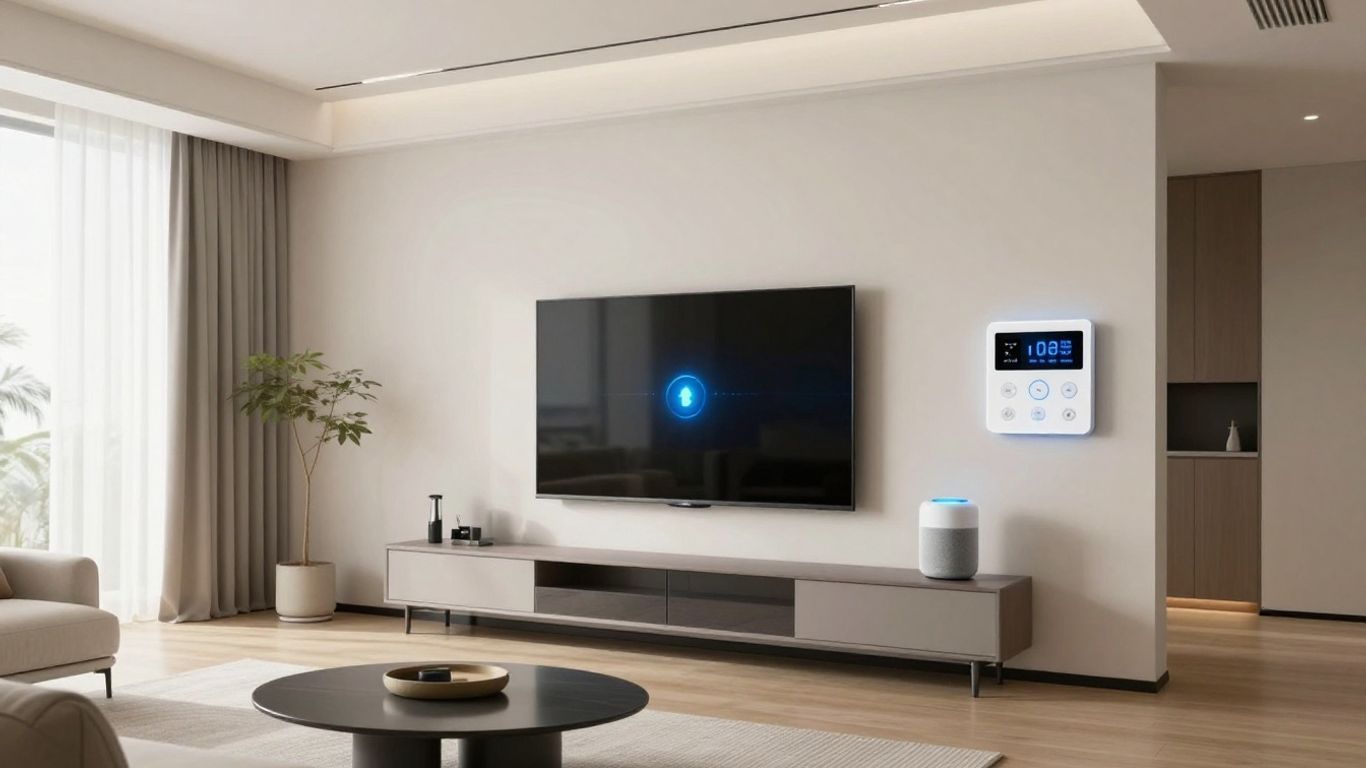
So, exactly how does all this "smartness" truly manifest and function? It’s certainly not magic, even though it can sometimes feel that way. Fundamentally, smart technology represents a sophisticated amalgamation of interconnected components that communicate seamlessly and continuously learn. Picture it as a highly responsive digital nervous system, orchestrating your devices and systems.
Connectivity and Data Flow
Firstly, these devices absolutely must establish connections. This typically implies they are linked to the internet or some form of dedicated network. This crucial connection serves as their conduit for transmitting and receiving information. Without it, how would a smart thermostat ever know the current weather forecast, or your smart speaker be able to relay the latest news? Data is perpetually flowing back and forth, enabling devices to converse not only with each other but also directly with us.
Data Collection and Processing
Smart devices are ingeniously equipped with an array of sensors. These sensors function much like the "eyes and ears" of the system, assiduously gathering information about their immediate environment or the precise manner in which we are utilizing them. A smart security camera, for instance, meticulously collects video footage; a smart watch diligently tracks your heart rate; and a smart traffic light sensor astutely detects approaching vehicles. All of this raw data, once collected, demands meticulous processing. This is precisely where powerful computers and intricate algorithms come into play. They meticulously sift through the information, actively seeking out patterns, identifying emerging trends, and highlighting anything that appears particularly significant—truly an analytical powerhouse.
Learning and Adaptation through AI
This is precisely where the inherent "intelligence" truly comes alive. Many smart systems adeptly employ Artificial Intelligence (AI) and machine learning capabilities. This signifies that they don't merely adhere to pre-programmed instructions; rather, they actively learn from the vast quantities of data they acquire. Over time, a smart thermostat will discern your preferred temperature settings for various times of day, or a sophisticated smart manufacturing system will learn to fine-tune its processes for superior output. Indeed, the more data these systems process, the more remarkably intelligent they become.
Automation and User Interaction
Once the system has comprehended the prevailing conditions and assimilated knowledge from them, it is then empowered to take action. This often translates into the automation of various tasks. Lights illuminate as you enter a room; your car autonomously applies the brakes if it detects an impending obstacle; or a factory robot precisely adjusts its operational speed. Naturally, we also actively engage with these systems. We utilize intuitive applications on our smartphones, issue clear voice commands, or simply press buttons to convey our desires or to monitor ongoing activities. It truly is a two-way street, profoundly simplifying our lives and significantly enhancing system efficiency.
The entire operational process hinges on a continuous, iterative loop: meticulously collect data, comprehensively analyze it, effectively learn from it, and subsequently act upon those insights. This dynamic cycle repeats incessantly, empowering smart technology to adapt and consistently refine its performance over time, all without requiring constant human intervention.
The Benefits of Smart Technology
Smart technology undeniably brings a wealth of advantageous features to the forefront, streamlining our lives and enhancing our professional endeavors with greater simplicity and efficacy. It's not merely about acquiring sophisticated gadgets; rather, it’s about how these interconnected systems harmoniously collaborate to ensure everything operates with unparalleled smoothness.
Enhanced Efficiency and Productivity
One of the most significant triumphs associated with smart technology is its remarkable ability to accelerate processes and substantially reduce wasted effort. Consider, for instance, how a smart thermostat intelligently learns your daily schedule and automatically adjusts heating or cooling. This proactive approach ensures you're not unnecessarily expending energy to heat an unoccupied house, thereby saving both energy and money. In professional environments, smart systems can expertly automate repetitive tasks, liberating individuals to concentrate on more intricate and value-added responsibilities. This invariably culminates in achieving more substantial outcomes in less time—truly a game-changer.
- Automating routine tasks: Significantly diminishes the need for manual labor and mitigates the potential for human error.
- Optimizing resource use: Guarantees that energy, raw materials, and precious time are utilized with maximum effectiveness.
- Streamlining workflows: Interconnects disparate processes to facilitate quicker and more cohesive task completion.
Improved User Experience and Convenience
Smart technology is meticulously engineered with user-friendliness at its core. Its interfaces are frequently intuitive and straightforward, enabling virtually anyone to command complex systems with just a few taps or simple voice commands. This transforms interaction with technology from a burdensome chore into the experience of engaging with a highly helpful assistant. Furthermore, the capacity for remote control—such as illuminating lights before you arrive home or verifying that your door is securely locked—introduces a layer of convenience that is, frankly, difficult to disregard.
Advanced Security and Monitoring
Security protocols receive a substantial upgrade courtesy of smart systems. These devices can vigilantly monitor for any anomalous activity and issue immediate alerts. Smart cameras are capable of recording events with precision, and smart locks can provide meticulous logs detailing who accessed premises and precisely when. This real-time monitoring capability instills a profound sense of peace of mind and facilitates swift responses to potential issues, whether it pertains to a security breach or an unforeseen water leak. Indeed, these systems are truly proactive.
Smart systems can effectively serve as vigilant guardians, continuously observing and reporting, which marks a significant advancement compared to conventional, older, and often passive security measures.
Resource Optimization and Cost Savings
Ultimately, a significant portion of the advantages offered by smart technology converges on the critical objectives of saving money and conserving resources. By judiciously managing energy consumption, minimizing waste, and automating tasks that would otherwise demand manual labor, smart systems are poised to deliver substantial cost reductions over time. This isn't merely beneficial for individual users; it also holds immense value for businesses and even entire municipalities striving to operate more sustainably and efficiently.
Applications Across Industries
Smart technology isn't exclusively confined to the gadgets populating our homes; it's profoundly transforming the operational methodologies of entire industries. Consider, if you will, its expansive influence—from the intricate processes of manufacturing to the complex dynamics of urban mobility, smart systems are making a monumental impact. They consistently assist businesses in achieving smoother operations, conserving valuable resources, and even pioneering entirely novel approaches to established practices. What an exciting time to witness such innovation!
Smart Homes and Buildings
This is likely the primary sphere where most individuals first encounter smart technology. Devices such as intelligent thermostats, sophisticated lighting systems, and advanced security cameras are rapidly becoming commonplace. Within residential settings, they can intelligently learn your routines to optimize energy consumption, perhaps by adjusting the temperature when you're away or extinguishing lights you've inadvertently left on. In more expansive commercial buildings, smart systems possess the capability to manage everything from climate control and security to even the flow of people within the space. This makes buildings not only more comfortable and secure but also considerably more efficient to operate—a win-win scenario.
Smart Cities and Infrastructure
Urban environments are also becoming remarkably smarter. Can you envision traffic lights that dynamically adjust based on real-time traffic flow to significantly alleviate congestion, or waste bins that signal their fullness so collection trucks only dispatch to where they're genuinely needed? Smart grids can manage electricity distribution with greater efficacy, thereby minimizing waste and bolstering reliability. Public transportation systems can leverage sensors to accurately track vehicle locations and passenger volumes, aiding in the optimization of routes and schedules. These interconnected systems are fundamentally designed to render urban living more convenient, efficient, and ultimately sustainable for every inhabitant.
Smart Manufacturing and Industry
Within factory settings, smart technology, frequently termed Industrial IoT (IIoT), is truly revolutionary. Sensors strategically placed on machinery can meticulously monitor their performance, predict precisely when maintenance will be required *before* a costly breakdown occurs, and fine-tune settings for optimal production output. This translates directly into reduced downtime and fewer expensive repairs. It also facilitates precise inventory tracking and continuous quality monitoring of products throughout their manufacturing journey. This elevated degree of control and insightful data leads directly to significantly more efficient production lines and superior quality goods—a testament to innovation.
Smart Health and Personal Wellness
The healthcare sector is experiencing profound transformations, thanks in no small part to smart technology. Wearable devices, for instance, can meticulously track vital signs like heart rate and sleep patterns, furnishing invaluable data for both individuals and their medical practitioners. Remote patient monitoring empowers healthcare providers to vigilantly oversee patients with chronic conditions from a distance, potentially obviating the need for frequent hospital visits. Furthermore, smart systems can assist in managing crucial hospital resources, meticulously tracking medical equipment, and even aiding in diagnostic processes. It's all about making healthcare more accessible, profoundly personalized, and significantly more proactive—what a difference this makes!
The comprehensive integration of smart technology across diverse sectors isn't merely about incorporating novel gadgets; it's about fundamentally re-evalizing and re-engineering processes to attain superior efficiency, more judicious resource management, and ultimately, enhanced outcomes. This transformative shift is predominantly fueled by the unparalleled capacity of these systems to collect, meticulously analyze, and decisively act upon data in ways that were previously deemed impossible.
The Role of Data in Smart Systems
Smart technology, at its very core, is fundamentally driven by data. Consider data as the lifeblood that empowers these systems to truly be "smart." Without a constant influx, devices would remain inert objects, incapable of true utility. However, when data flows freely, devices gain the astonishing ability to comprehend, react, and even predict future occurrences.
Real-Time Data Analysis
One of the most immediate and profound impacts of data within smart systems is the inherent capacity to analyze events precisely as they unfold. Sensors embedded in your smart thermostat, for example, are continuously gathering temperature readings. This critical data is then processed instantaneously, enabling the system to adjust heating or cooling parameters without you having to lift a finger—talk about convenience! Similarly, in a smart factory, sensors positioned on machinery diligently monitor performance in real-time. Should a machine exhibit unusual vibrations, that data is scrutinized immediately. This rapid, immediate feedback loop is absolutely crucial for averting potentially larger, more disruptive issues.
Predictive Insights
Beyond merely reacting to current events, smart systems adeptly utilize both historical and contemporaneous data to formulate well-informed hypotheses about future scenarios. By discerning patterns over extended periods—such as the typical activation and deactivation times for your smart lights, or the characteristic energy consumption of a building during specific hours—the system can begin to anticipate forthcoming needs. This remarkable predictive capability is precisely what allows a smart home to pre-heat your residence before your arrival on a chilly day, or enables a smart city to adjust traffic light timings based on predicted traffic congestion. It’s fundamentally about leveraging past information to ensure future actions are smoother and demonstrably more efficient. Isn't that an intelligent use of information?
Data-Driven Decision Making
Ultimately, all this meticulous data collection and insightful analysis culminates in the formulation of smarter, more informed decisions. For individual users, this might translate into receiving actionable recommendations on how to conserve energy, meticulously tailored to their specific usage patterns. For businesses or municipal planners, the implications are far more extensive. Imagine a city that meticulously analyzes data sourced from traffic sensors, public transportation ridership, and even prevailing weather patterns. This wealth of information can decisively assist them in determining optimal locations for new road construction, devising efficient bus rerouting strategies during major events, or judiciously scheduling infrastructure maintenance to minimize public disruption. It's truly transformative.
The relentless stream of information meticulously gathered by smart devices isn't merely for show; it serves as the vital engine propelling efficiency, fostering personalization, and facilitating proactive problem-solving. It fundamentally transforms passive hardware into active, intelligent participants in the intricate tapestry of our daily lives and operational workflows.
Here's a quick look at how data truly plays an indispensable role:
- Collection: Sensors and user interactions diligently gather raw information.
- Processing: Sophisticated algorithms meticulously sort through the data, identifying patterns and extracting meaningful insights.
- Action: Based on the comprehensive analysis, the system either executes necessary adjustments or provides invaluable insights.
- Learning: The system intelligently utilizes the outcomes of its actions to continually refine and improve its future decision-making processes.
The Future of Smart Technology
The way we engage with technology is in a constant state of evolution, and smart tech stands squarely at the epicenter of this transformation. It's no longer just about having a connected home; rather, we're keenly looking towards a future where these sophisticated systems are even more deeply interwoven into the very fabric of our daily lives and industrial operations. Consider, for a moment, how artificial intelligence is already rendering devices smarter and faster—it's quite remarkable, isn't it? This powerful synergy means that as AI capabilities advance, so too will all the other technologies it interacts with, relentlessly driving innovation forward.
Continued Integration and Advancement
We are consistently observing smart technology transcend the confines of individual devices to become seamlessly integrated systems. This implies that your smart thermostat won't merely communicate with your smart lights; it will actively coordinate with the local energy grid to optimize energy consumption based on fluctuating demand and pricing. This level of intrinsic interconnectedness is absolutely paramount. The overarching objective is to cultivate environments that are not just responsive but also profoundly predictive, anticipating our needs even before we consciously recognize them. This ambitious endeavor involves several crucial steps:
- Enhanced Interoperability: Devices originating from diverse manufacturers will increasingly need to function together with greater fluidity and compatibility.
- Advanced AI and Machine Learning: Systems will progressively excel at learning from intricate data patterns, thereby enabling them to make more nuanced and sophisticated decisions.
- Edge Computing: A greater proportion of data processing will occur directly on the devices themselves, substantially reducing reliance on cloud-based infrastructure and accelerating response times.
Expanding Applications and Impact
The pervasive reach of smart technology is unequivocally poised to expand further. We already observe its efficacy in smart cities, expertly managing traffic flow and energy distribution, and in smart manufacturing, meticulously optimizing production lines. The forthcoming wave will likely introduce even more specialized applications. For instance, within healthcare, remote patient monitoring could well become the standard, facilitating continuous care without the perpetual necessity of hospital visits. Can you imagine personalized learning environments in education, dynamically adapting to each student's unique pace and learning style? The sheer potential for enhancing quality of life and operational efficiency across the entire spectrum is truly immense. This expansion, it must be noted, is heavily contingent upon robust data analysis, which permits real-time adjustments and proactive, predictive maintenance capabilities.
The uninterrupted flow of data from seamlessly interconnected devices is the essential fuel that powers the inherent intelligence of smart systems. Meticulously analyzing this information facilitates immediate responses to shifting conditions and also provides crucial assistance in forecasting future requirements or identifying potential issues. This data-driven methodology is precisely what renders smart technology truly adaptive and exceptionally efficient.
Ethical Considerations and Development
As smart technology proliferates and gains ever-increasing power, we are compelled to thoroughly contemplate its broader implications. Privacy stands out as a significant concern—with so many devices diligently collecting data, how do we unequivocally guarantee its protection? Then there's the critical issue of potential bias embedded within AI algorithms, which, if left unaddressed, could regrettably lead to unfair or inequitable outcomes. Responsible development unequivocally necessitates constructing these systems with fairness, transparency, and robust security inherently built-in from their inception. It's about ensuring that as technology progresses, it does so in a manner that genuinely benefits everyone. This also encompasses diligently considering how these sophisticated systems might impact employment landscapes and society at large, and proactively planning for such transformative changes. Indeed, the advancement of responsible AI will undoubtedly constitute a major focal point.
Conclusion
Smart technology is quietly, yet profoundly, transforming the very fabric of how we live and work, often in ways we might not even consciously notice day to day. From the intelligent thermostats that meticulously adjust the temperature in your home, to the innovative watches that vigilantly track your health metrics, to the complex city systems designed to manage traffic flow and waste—these remarkable tools are progressively integrating into our routines. The fundamental principle underpinning smart technology is quite elegant: it involves devices and systems capable of gathering information, learning from it, and subsequently making informed decisions or subtle suggestions to enhance convenience, bolster safety, or improve efficiency. While the underlying technology can indeed be intricate, the ultimate goal invariably remains to address real-world challenges and, in essence, make life a little bit smoother. As more industries and residential spaces adopt these sophisticated tools, it's highly probable we'll witness even more dramatic shifts in how we interact with our immediate surroundings. A foundational understanding of smart technology empowers us to make more judicious choices regarding which tools to embrace and how best to utilize them. It's not merely about possessing the latest gadget—it’s about discovering genuinely effective solutions that truly cater to your individual needs.
Frequently Asked Questions
What exactly is 'smart technology'?
Think of smart technology as devices or systems that are extra clever and can do more than just their basic job. They're designed to connect to the internet, learn from how you use them, and even make decisions on their own to make things easier or more efficient for you. It's truly like giving everyday objects a little brain!
How do these smart gadgets actually work?
It's quite a team effort! Smart tech typically involves sensors to gather information, a means to connect (like Wi-Fi) to transmit that data, and specialized software that can interpret and utilize the information. Often, they employ something called Artificial Intelligence (AI) to learn and improve over time, and they can then perform actions automatically or allow you to control them effortlessly.
What are the biggest advantages of using smart technology?
One of the most appealing benefits is sheer convenience – imagine your lights turning on automatically the moment you enter a room! They also play a crucial role in helping to conserve energy and other resources, leading to greater overall efficiency. Plus, many smart devices can significantly enhance security by constantly monitoring surroundings and alerting you to any potential issues.
Can you give some examples of smart technology in action?
Absolutely! In your home, smart thermostats that intelligently adjust the temperature on their own or smart speakers you can simply talk to are quite common. Within cities, smart traffic lights help considerably reduce congestion, and in factories, robots collaborate with human workers to construct goods more quickly and safely. Even smartwatches that meticulously track your health fall under this category!
Why is data so important for smart technology?
Data is essentially the nourishment that smart technology consumes to learn and continually improve. Sensors diligently collect vast amounts of information, and smart systems then analyze it to comprehend current situations, predict what might happen next, and ultimately make more astute choices. Without data, smart tech simply wouldn't be very smart at all!
What's next for smart technology?
Things are definitely only going to get smarter! We anticipate seeing more devices working together seamlessly, new and incredibly exciting applications of smart tech in critical areas like healthcare and education, and hopefully, a strong emphasis on ensuring it's utilized responsibly and equitably for everyone's benefit.


