


innovation, resources
Diamond Beach: Iceland’s Growing Tourism Industry

Did you know Iceland’s Diamond Beach draws over 1 million visitors yearly, despite the country’s tiny population? With tourism booming (2.3M visitors in 2024!) and revenue hitting $888M in Q1 2025, this icy paradise is a goldmine but can Iceland sustain the surge? Dive into the profits, challenges, and future of this frozen gem!
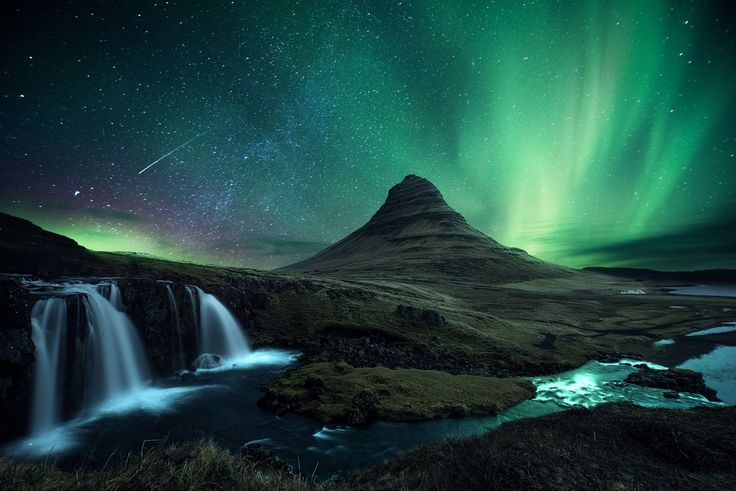
Diamond Beach is only one of the many tourist attractions Iceland offers. Indeed, Iceland welcomes more and more tourists due to its stunning landscapes, and Diamond Beach not only doesn’t fall short on this list, but it also keeps attracting more and more adventurers day by day.
Tourist Arrivals
Last year, in 2024, according to the country’s Touristic Board. Iceland welcomed just under 2.3 million foreign overnight visitors; this number has been a slight increase of 2% in comparison to 2023’s total number of foreign overnight visitors.
Additionally, with no doubt, a large share of these tourists have included Diamond Beach in their itineraries. Unfortunately, due to its rather small size, Iceland’s Touristic Board cannot provide us with specific data for Diamond Beach. Jökulsárlón Glacier Lagoon is a major tourist attraction, like Diamond Beach. This makes this area very appealing to tourists. Still, it is reported according to that chart that Southern Iceland is the second region in terms of room occupancy in hotels; between June 2024 and May 2024, room occupancy reached a peak of 90% and a low of 42%.
There is a trend of room occupancy rates higher than the national average in high seasons, whilst in lower seasons the rate tends to be lower than the national average rate.
Most of the tourists during this period between June 2024 and 2025 were mostly from the United States, accounting for 28.4% of the total tourists. British tourists come second with 10.8% of the share, followed by German tourists with 6.5% and Chinese tourists with 4.5% of the total share of foreign tourists, this accounting for departures from Keflavik airport.
Revenue Growth
Roughly 888 thousand dollars were generated from foreign tourists in the first quarter of 2025 (108.5 billion ISK), compared to 849 thousand dollars over the same period in the same period of last year. On a yearly basis, according to Statistics Iceland, total foreign visitor revenue has increased 2% from 5.013 billion dollars (612.9 billion ISK) to 5.1 billion dollars (623.80 billion ISK) in comparison to the previous 12 months.
The first quarter of 2025 saw approximately 108.5 billion ISK in revenue from international visitors, up from 103.8 billion ISK during the same period the previous year. Over the past 12 months, foreign visitor revenue has climbed from 612.9 billion ISK to 623.80 billion ISK, a 2% rise over the same period last year.
In April 2025, 29,741 people worked in Iceland’s tourist sector, a 1% drop from April 2024. An average of 31,407 people had jobs in the tourism sector during the 12-month period from May 2024 to April 2025, as opposed to 31,721 during the preceding 12-month period.
The Impact of Tourism on Southern Iceland’s Economy
Diamond beach has made us travel to the southern region of the country where it is located, and as a future destination for you, it is important to share the accomplishments of this region regarding how it has managed the problems tourism creates in these localities. Indeed, the Southern region of Iceland where Diamond Beach is located has seen a sharp increase in foreign tourists. The Destination Management Plan from february 2024 of the Marketing agency of Markaðsstofa Suðurlands specializes in data and tourism of Southern Iceland; and that plane gives us important data about the Tourism industry in the region as well as efforts done to combat problems that may surge due to the increase of the Tourism industry in the area.
Over 1 million tourists have visited Southern Iceland over the year of 2023, meaning that almost half of Iceland’s tourists have visited this region, and a large share of them have also been past Diamond Beach. Suðurland’s (Southern Iceland) population according to the OECD Data Explorer was 32 742 inhabitants, meaning that this region has over the length of one year received 30 times its own population. This, as you probably have already noticed, means that a lot of touristic spots can easily be over crowded, this opens us to question the sustainability of tourism in Iceland.
Sustainable tourism, a must to preserve Iceland’s treasure
In the span of 10 years, the number of tourist arrivals in the country have skyrocketed! Sustainable tourism in the North explains the the reason behind this tourist boom:
“After the economic meltdown in 2008, the Icelandic government increased its focus on tourism as a potential rescue line for foreign currency, with the Icelandic krona in free fall. Furthermore, the Eyjafjallajökull eruption in 2010 put Iceland on the map by bringing flight travel to a halt in large parts of the world.”
Furthermore, it is important to remember that Iceland is a small country of only, indeed according to the OECD Data Explorer Iceland’s population was about 388 thousand people in 2023 whilst the tourists arrivals represented over 2. 234 million people, in retrospect, that number is close to 6 times more than the population of Iceland, and considering that tourism in this country is mainly focused on nature, the country has taken measures to control the flow of tourists in certain tourist spots to preserve those natural habitats. Having 115 protected areas in the country, shows that there is a concern in protecting these sites. More over, Sustainable tourism in the North states that:
“Projects on sites operated by the state, like national parks and preserved areas, receive funding from a national programme to develop infrastructure for the protection of nature and cultural heritage, a strategic twelve-year plan with a policy for infrastructure development on tourist sites and routes. The programme sets goals for site management and sustainable development, protection of nature and cultural heritage, security, planning and design, and tourist routes. A three-year project plan sets out proposals for concrete projects in parallel with the strategic plan.”
Final Thoughts
In 2024, Iceland welcomed just under 2.3 million foreign overnight visitors, marking a 2% increase from the previous year. Southern Iceland, including popular spots like Diamond Beach, saw significant tourism growth, with room occupancy peaking at 90% between June 2024 and May 2024. The U.S. led the visitor count, followed by the U.K., Germany, and China. Tourism revenue rose by 2%, reaching approximately 108.5 billion ISK ($888 million) in Q1 2025. However, the rapid increase in visitors—especially in areas like Southern Iceland, which saw over 1 million tourists in 2023—has raised concerns about overcrowding and sustainability. Iceland, with a population of just 388,000, faces the challenge of balancing tourism growth with the preservation of its natural landscapes. To address this, the government has implemented sustainable tourism practices, including protecting over 115 sites and developing infrastructure to manage the influx of visitors while ensuring the conservation of its unique environment for future generations.


