
resources
Future of Farming: 5 IoT Smart Agriculture Trends You Can’t Ignore in 2025
Industry Expert & Contributor
17 Jul 2025

Here’s the thing: farming isn’t just dirt and tractors anymore. With iot smart agriculture, farmers are using data and devices to make better calls out in the field. In 2025, five tools are stealing the show. Let me run you through each one so you’ll know what’s coming next time you hear about smart farms.
Key Takeaways
- Climate FieldView Platform shows live field data—weather, soil moisture, and yield—in one place so planning gets a lot simpler.
- John Deere 8R Series Tractor with JDLink hooks your tractor up to the internet for performance tracking, remote alerts, and easier maintenance.
- CropX Soil Moisture Sensor lives in the ground and tells you exactly how much water each zone needs, cutting down on waste.
- Arable Mark Weather Station sits right in your field to track wind, temperature, humidity, and solar radiation for spot-on local forecasts.
- DJI Agras T30 drone flies over crops to spray fertilizer and pesticides fast, covers big areas, and uses less chemical than old methods.
1. Climate FieldView Platform
Okay, so let’s talk about the Climate FieldView Platform. It’s becoming a pretty big deal in farming, and it’s easy to see why. Basically, it’s all about getting a better handle on your data so you can make smarter choices out in the field. Think of it as centralizing all your info in one place.
The Climate FieldView Platform helps farmers integrate equipment data, monitor crop performance, and keep an eye on the weather. It’s designed to work with different brands of equipment, which is a huge plus. No one wants to be stuck with a system that only works with one type of tractor, right?
With FieldView, you can stream data from your planter and sprayer. This means you can see exactly what’s happening as you’re planting or spraying, and you can adjust things on the fly. It also enables variable-rate applications, so you’re not just applying the same amount of fertilizer or pesticides everywhere. You can tailor it to specific areas of your field that need it most. This is good for your wallet and the environment.
It also gives you real-time insights. This means you’re not waiting days or weeks to see how your crops are doing. You can see what’s happening now and make decisions based on that. It’s all about being proactive instead of reactive.
I’ve heard from a few farmers that using platforms like FieldView has really changed the game for them. They’re able to fine-tune their operations and see improvements in yield and efficiency. It’s not a magic bullet, but it’s a tool that can make a real difference.
Here’s a quick look at some of the key features:
- Data Visualization: See your field data in easy-to-understand maps and charts.
- Real-Time Monitoring: Keep an eye on your crops and equipment as they work.
- Variable Rate Prescriptions: Create custom application plans for different areas of your field.
- Reporting and Analysis: Track your progress and identify areas for improvement.
And here’s a simple table showing potential benefits:
| Benefit | Description |
|---|---|
| Increased Yield | Optimizing planting and application rates can lead to higher yields. |
| Reduced Input Costs | Variable-rate applications can reduce the amount of fertilizer and pesticides used. |
| Improved Efficiency | Real-time data helps you make faster, more informed decisions. |
Ultimately, the Climate certificates are about giving farmers the information they need to make the best decisions possible. And in today’s world, that’s more important than ever.
2. John Deere 8R Series Tractor With JDLink
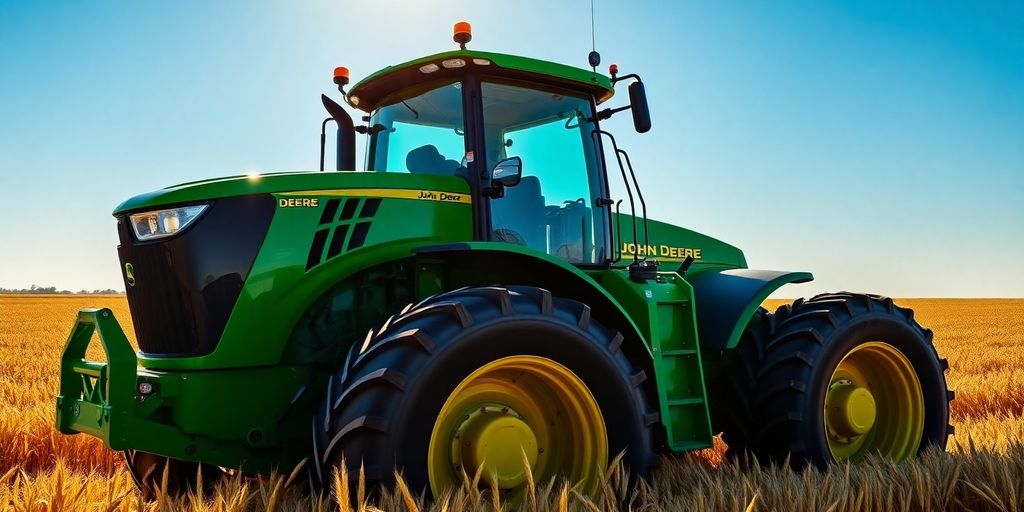
The John Deere 8R series tractor is more than just a powerful machine; it’s a smart farming hub on wheels. Equipped with JDLink, this tractor offers a comprehensive suite of connected solutions designed to optimize every aspect of field work. It’s a significant investment, but the potential returns in efficiency and data-driven decision-making are hard to ignore.
Think of it as having a seasoned farm manager riding shotgun, constantly analyzing data and making real-time adjustments. While the initial cost might seem high, consider the long-term benefits of reduced waste, optimized resource use, and increased yields. It’s about working smarter, not harder.
Here’s a quick look at some of the key benefits:
- Enhanced data collection and analysis
- Improved operational efficiency
- Remote monitoring and diagnostics
- Automated steering with AutoTrac guidance
It’s important to remember that technology is a tool, not a magic bullet. The John Deere 8R series, with all its smart features, is most effective when paired with sound agricultural practices and a knowledgeable operator. It amplifies good management; it doesn’t replace it.
For smaller operations, the investment might be harder to justify. However, precision livestock farming shows that even smaller farms can benefit from IoT solutions by focusing on specific pain points and adopting a step-wise approach. Start with what hurts the most, fix it, and then expand. The 8R series is a top-tier solution, but the principles of data-driven farming apply to everyone.
3. CropX Soil Moisture Sensor
Okay, so picture this: it’s 2025, and you’re walking through a field. It looks normal, but under the surface, there’s a network of sensors constantly checking what’s going on. That’s the CropX Soil Moisture Sensor in action. It’s not just about knowing if the soil is wet or dry; it’s about understanding the whole picture.
These sensors give farmers real-time data about the moisture levels at different depths, which is super important for making smart decisions about irrigation.
Think about it – no more guessing when to water. No more wasting water by over-irrigating. It’s all about precision, and that’s what these sensors bring to the table. They’re like having a soil expert right there in the field, 24/7.
Here’s what makes them so useful:
- Optimized Irrigation: Farmers can use the data to water only when and where it’s needed, saving water and money.
- Improved Crop Health: By maintaining optimal soil moisture, plants are healthier and more resistant to disease.
- Increased Yields: Healthier plants mean better yields, which translates to more profit for farmers.
Using highly precise temperature and moisture sensors helps farmers to make informed decisions about irrigation, fertilization, and other important aspects of crop management. This leads to more efficient use of resources, reduced environmental impact, and increased profitability.
It’s a pretty simple concept, but the impact is huge. By understanding the soil better, farmers can make better decisions and grow better crops. It’s a win-win for everyone.
Related Content:
what human activity uses the most water in the united states?
4. Arable Mark Weather Station
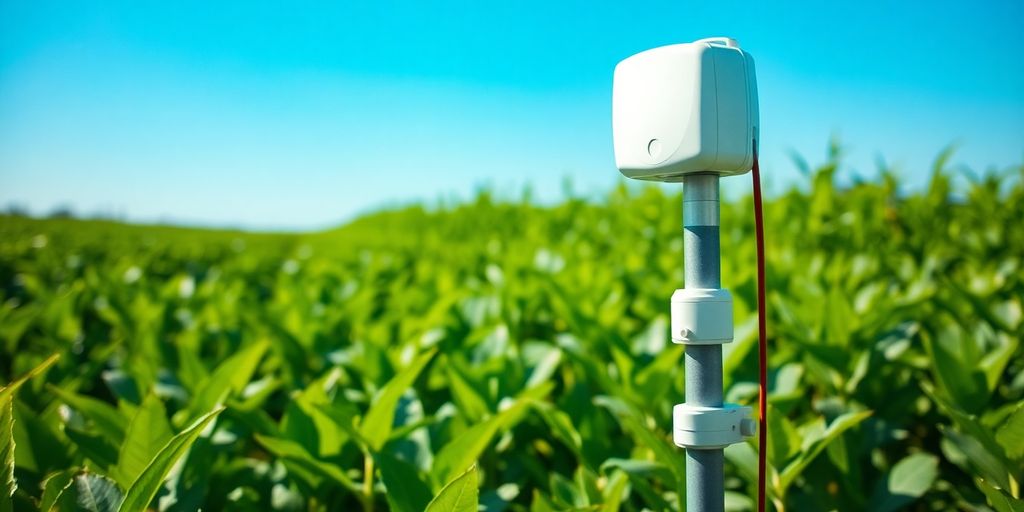
Okay, so the Arable Mark weather station is another piece of tech that’s making waves. It’s not your grandpa’s rain gauge, that’s for sure. This thing is packed with sensors and designed to give you a super detailed picture of what’s happening in your fields, weather-wise.
It’s like having a personal meteorologist for your farm.
Think of it this way:
- It measures rainfall with high accuracy.
- It tracks temperature, humidity, and solar radiation.
- It monitors plant health using specialized sensors.
- It sends all this data wirelessly to your devices.
The Arable Mark helps farmers make informed decisions about irrigation, pest control, and harvest timing. It’s all about getting the right data at the right time to optimize your operations.
With the Arable Mark, you can really fine-tune your farming practices based on real-time conditions. It’s about moving away from guesswork and towards data-driven decisions. This can lead to better yields, reduced waste, and a more sustainable approach to farming. It’s a win-win, really. By using smart agriculture systems, farmers can optimize their resource usage and improve overall efficiency.
5. DJI Agras T30 Agricultural Drone
Agricultural drones are becoming increasingly common, and the DJI Agras T30 is a prime example of the tech available. It’s designed to improve spraying efficiency and coverage, making it a valuable tool for modern farms. Let’s take a closer look at what it offers.
The DJI Agras T30 is engineered for high-precision spraying, covering more area in less time.
Here’s a quick look at some of its key features:
- Large Tank Capacity: Holds a substantial amount of liquid, reducing the need for frequent refills.
- High Flow Rate: Sprays at a rate that ensures thorough coverage.
- Obstacle Avoidance: Equipped with sensors to avoid collisions during operation.
Using drones like the Agras T30 can significantly cut down on labor costs and improve the consistency of spraying. They can reach areas that are difficult for traditional equipment, ensuring that crops receive the necessary treatments.
One of the biggest advantages is the precision it offers. The DJI Agras T30 drone uses advanced technology to apply liquids exactly where they’re needed, minimizing waste and maximizing effectiveness. This is especially important for things like pesticide application, where over-spraying can be harmful to the environment.
Here’s a simple comparison of traditional spraying vs. drone spraying:
| Feature | Traditional Spraying | Drone Spraying |
|---|---|---|
| Coverage | Can be uneven | Highly uniform |
| Precision | Lower | Higher |
| Labor Costs | Higher | Lower |
| Environmental Impact | Higher | Lower (less waste) |
## Conclusion
As this quick look at 2025 shows, IoT in farming isn’t just for big operations. Even smaller farms can use soil sensors, weather stations, and drone data to spot issues early and save water. Sure, there’s a learning curve and some upfront cost, but the boost in efficiency and healthier crops can pay off fast. Try one or two tools that make sense for your fields and workflow, and see how they fit your day-to-day. Over time, these simple steps can help you run a smoother farm, cut waste, and get a better harvest.
Frequently Asked Questions
What is the Climate FieldView platform?
Climate FieldView is a digital tool that shows farmers maps and charts about their fields. It gathers data from satellites and tractors. This helps farmers know which areas need more care or water.
How does the John Deere 8R Series tractor use JDLink?
The John Deere 8R Series tractor has JDLink built in. It sends real-time info about fuel, speed, and location to a phone or computer. Farmers can check on their tractor without being in the cab.
How does the CropX soil moisture sensor work?
CropX is a small device you put in the ground. It measures how wet or dry the soil is and sends that data to an app. This way, farmers know exactly when to water.
Why should farmers use the Arable Mark weather station?
Arable Mark is a compact weather station that tracks rain, wind, temperature, and sunlight in real time. Farmers get alerts about sudden changes in weather. With this info, they can plan when to plant, spray, or harvest.
What can the DJI Agras T30 drone do for farming?
The DJI Agras T30 is a heavy-duty drone for farms. It sprays fields quickly and evenly, covering up to 30 liters at once. It also maps crops to spot pests or diseases early.
How can small farms start using these IoT tools?
Small farms can pick one device to begin with, like a soil sensor or a weather station. Many companies offer starter kits and tutorials. As farmers learn, they can add more smart tools over time.


