

Sydney-based Neuno is one such business, with CEO Natalie Johnson exclusively telling Vogue Business that it is presently collaborating with five premium fashion brands on the introduction of NFTs. “We want to be the global 3D wardrobe that connects into everything,” she adds, outlining how it would function in detail. “For example, picture someone purchasing the legendary J Lo Versace garment from our website.
They are collaborating with a social media company that specializes in filters so that the owner may upload a photo of themselves ‘wearing’ the dress, and they are also partnering with one of Asia’s largest games so that they can outfit their gaming avatar in the dress. The consumer just needs to purchase the NFT once, and they will be able to utilize it in a variety of ways.”
Unlike existing NFT markets, where anybody may upload and sell an NFT, Neuno only works with brands, according to Johnson. In this approach, it hopes to provide a premium user experience while guaranteeing the purchaser’s legitimacy. Customers will be able to purchase NFTs using their credit cards, removing the requirement for cryptocurrency ownership as a barrier to entry.
NFTs in the fashion industry are becoming digital collectibles
While the major luxury labels take their time, many smaller companies and merchants have already stepped into the NFT game in many innovative ways, selling fashion NFTs on marketplaces like OpenSea, Nifty Gateway, and KnownOrigin.
The most basic example of a fashion NFT is when the NFT is the digital “twin” of a real-life garment. Clothia, an accessible luxury internet shop, is presently auctioning off NFT outfits. According to Clothia CEO Elena Silenok, the winning bidders will receive the matching real-life gowns, and both the NFTs and the actual clothes are one-of-a-kind.
According to Silenok, businesses should look beyond digitizing existing items and consider NFTs as a new income source. “NFTs may be comparable to how fashion businesses perceive bridge or diffusion lines,” she explains. “Luxury businesses may utilize NFTs to provide more customers access to their brands, just as a Chanel lipstick is more accessible to shoppers than a Chanel handbag.” Gucci’s $12 digital sneakers price tag is an example of this.
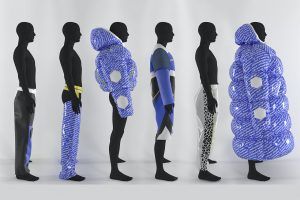
According to Amber Jae Slooten, co-founder of The Fabricant, a digital fashion business, the most exciting aspect of NFTs is extending beyond the tangible. “I don’t want to encourage businesses to just replicate their actual items,” she says. “I would urge them to look beyond their immediate surroundings. For example, one of our shoes was a burning shoe. You can make a variety of digital couture outfits that could never exist in real life.”
In cooperation with Adidas and Karlie Kloss’s organisation, Kode With Klossy, The Fabricant recently held a 3D fashion design competition. The best 20 entries were then auctioned off as non-financial tokens (NFTs). They were also on exhibit at a Decentraland gallery, where visitors wearing avatars could examine the artwork and digitally bid on the designs. The winner design received 1.4 ETH (about $2,400 at the time of writing). The auction proceeds went directly to the featured artists, while volunteer donations helped fund new events and programs for Kode With Klossy’s alumni network of over 5,000 scholars.
Regardless, another option for companies is to utilize NFTs as a chance to explore outside of fashion. Re-inc, a direct-to-consumer business created by four American female soccer players, including Megan Rapinoe, first made a reputation for itself selling streetwear. However, it is now releasing a set of NFTs, which are GIFs of digital playing cards portraying each of the soccer heroes. Jenny Wang, Re-fifth inc’s co-founder, says the company would buy carbon offsets with some of its revenues in response to concerns that NFTs are harmful for the environment. Environmental worries are likely to fade in the coming months, as Ethereum is in the midst of switching to a new “proof of stake” consensus system that would significantly reduce carbon emissions.
When it comes to virtual fashion and its potential, Cathy Hackl of the Futures Intelligence Group feels we’ve only scratched the surface. “As we move towards a more immersive web,” she adds, “every fashion company will need to have a virtual strategy.” “Selling virtual clothes and assets will provide companies with a substantial revenue stream. The appearance of my children’s avatars in video games is equally as important as how they look when they go to school. My daughter said to me the other day about her avatar, ‘Yeah mom, I paid a lot for that face.’”


