
resources
Master the 50 States and Capitals: An ABC Order Guide
18 Feb 2026

Embarking on the journey to learn all 50 states and their capitals can certainly feel like a formidable undertaking, couldn't it? Yet, it remains a fundamental aspect of both civics education and fostering a comprehensive understanding of our nation. This guide aims to simplify that process significantly, particularly for those who appreciate a structured approach. We'll navigate through them in alphabetical order—a particularly effective method, we find, for tackling the entire list. This strategy not only ensures comprehensive coverage, leaving no state overlooked, but also provides a clear, logical pathway as you progress through your learning.
Key Takeaways
- This comprehensive guide systematically lists all 50 U.S. states and their capitals in alphabetical order, facilitating ease of learning.
- Adopting an alphabetical sequence significantly streamlines the learning and memorization process for all fifty states.
- Mastering state capitals is a widely recognized and essential educational objective for students across the country.
- Our chosen method guarantees a systematic and exhaustive exploration of every state.
- The primary emphasis here is on a direct, ABC-ordered methodology for efficient recall and retention.
1. Alabama
We begin our alphabetical expedition with Alabama, an intriguing state situated in the southeastern United States. Officially welcomed into the Union on December 14, 1819, it proudly holds the distinction of being the 22nd state. Its capital city, Montgomery, is more than just a seat of government—it's a locale imbued with profound historical significance, particularly concerning the pivotal Civil Rights Movement.
What comes to mind when you consider Alabama? Perhaps its remarkably diverse landscapes, which stretch from the rolling Appalachian foothills in the north all the way to the pristine Gulf Coast beaches in the south. Beyond its natural allure, the state is also deeply recognized for its substantial historical role in cotton production and, subsequently, its crucial contributions to the struggle for civil rights.
To further illuminate, here are a few salient facts about Alabama:
- Capital: Montgomery
- Largest City: Huntsville
- Nickname: The Yellowhammer State
- State Bird: Yellowhammer
- State Tree: Southern Longleaf Pine
Alabama's path to statehood, it's worth noting, was rather intricate, encompassing various periods as a territory before its eventual admission to the Union. Over the centuries, its economy has undergone a remarkable transformation, shifting from a primarily agricultural foundation to a much more diversified industrial and technological base.
It's truly fascinating how Alabama's identity is inextricably linked to both its breathtaking natural beauty and its immense historical weight. Indeed, from the hallowed grounds of the historic Edmund Pettus Bridge in Selma to the cutting-edge U.S. Space & Rocket Center in Huntsville, the state presents an impressive spectrum of experiences and compelling points of interest.
2. Alaska
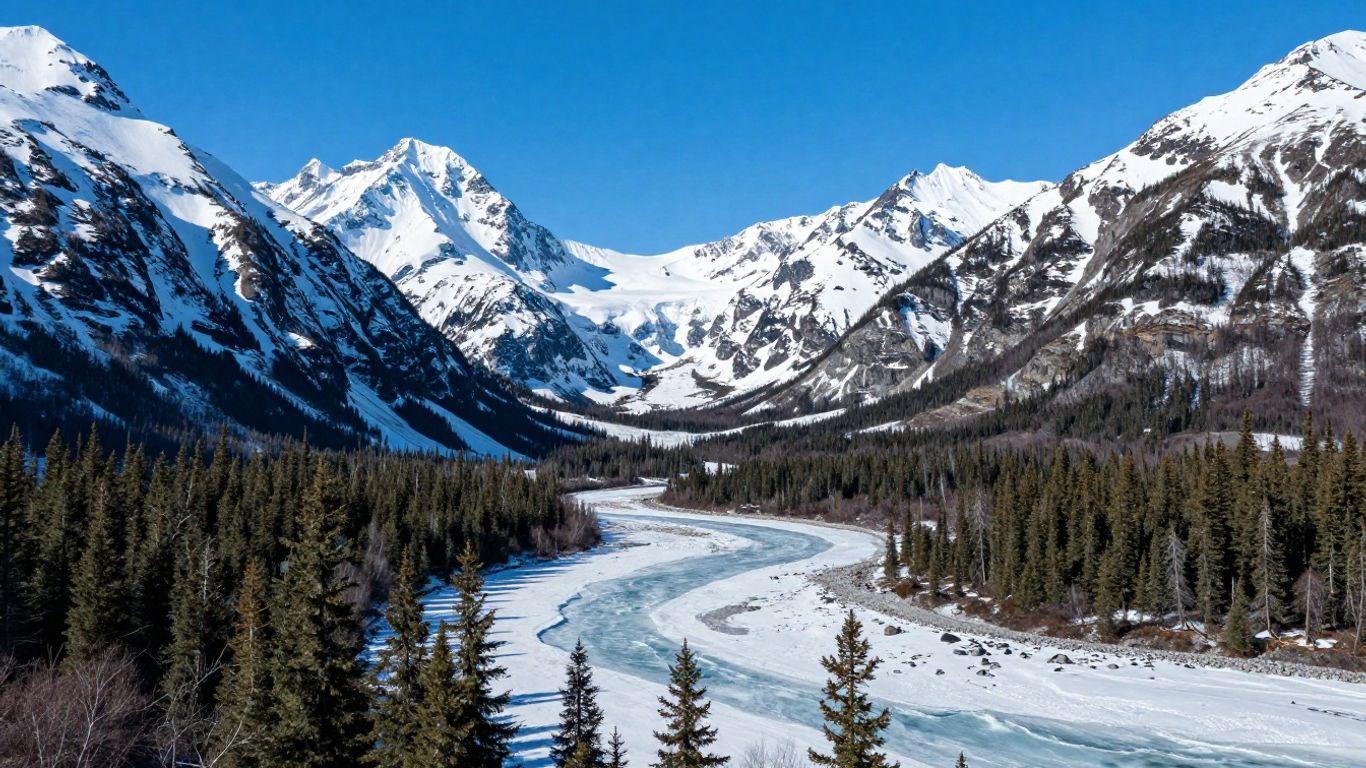
Next, we turn our attention to Alaska—the United States' largest state by sheer geographical area. Situated far to the north, it shares a significant border with Canada and reaches out to touch the Arctic Ocean. Perhaps surprisingly to some, Juneau serves as its capital city; it isn't, however, the most populous urban center, a distinction held by Anchorage.
Alaska is truly a realm of unparalleled natural beauty and intensely rugged landscapes. Envision expansive boreal forests, majestic peaks such as Denali (formerly Mount McKinley), and a coastline that extends for thousands upon thousands of miles. Moreover, it is renowned for its distinctive wildlife, including formidable bears, graceful moose, and soaring eagles—a testament to its untamed wilderness.
For those keen to learn more, here are a few intriguing facts about Alaska:
- It was acquired from Russia in 1867, a historic transaction.
- Remarkably, Alaska boasts more coastline than all the other U.S. states put together.
- The state experiences dramatic variations in daylight throughout the year, from nearly 24 hours of sunshine during the summer solstice to considerably abbreviated days in the winter months.
The immense geographical scale of Alaska necessitates a distinctive approach to travel, quite unlike that found in the contiguous lower 48 states. Many remote communities, for instance, are exclusively reachable by plane or boat, thereby rendering air travel an indispensable component of daily existence for Alaskans.
3. Arizona
Our alphabetical exploration of the United States now brings us to Arizona. This captivating southwestern state is celebrated for its breathtaking desert landscapes and a wonderfully vibrant culture. Phoenix serves as its capital city, a dynamic and bustling metropolis that also holds the distinction of being Arizona's most populous urban center.
Arizona proudly bears the moniker "Grand Canyon State," a designation that is, without question, perfectly apt given its status as home to one of the planet's most iconic natural wonders. The Grand Canyon itself is an utterly mesmerizing spectacle, meticulously sculpted over millions of years by the relentless flow of the Colorado River. It stands as a profound testament to nature's power, attracting visitors from every corner of the globe who eagerly come to behold its immense scale and richly colored geological strata.
Yet, beyond the awe-inspiring Grand Canyon, Arizona presents a wealth of other captivating features:
- Unique Geology: The state is characterized by striking red rock formations, the ubiquitous saguaro cacti, and expansive desert plains. Indeed, locations such as Sedona are particularly renowned for their visually dramatic geological wonders.
- Rich History: Arizona boasts a profound and multifaceted history, profoundly shaped by the enduring legacies of Native American tribes, the intrepid explorations of the Spanish, and the legendary Wild West era. Visitors can immerse themselves in this past by exploring ancient cliff dwellings and evocative historic ghost towns.
- Diverse Climate: While a significant portion of the state is indeed desert, its higher elevations, notably around Flagstaff, experience picturesque snowfall during the winter months, offering a stark contrast.
While one might initially envision vast, arid expanses when contemplating Arizona, it is, in reality, a state brimming with considerable variety and a profoundly distinct identity. It is, quite simply, a place where magnificent natural beauty converges seamlessly with a rich, intricate cultural tapestry.
Arizona's state flag, interestingly, prominently features a copper star—a powerful symbol of the state's historically significant copper production. The flag's vibrant red and yellow hues are directly inspired by the Spanish flag, a clear acknowledgment of Arizona's deep historical ties to Spanish heritage.
4. Arkansas
Continuing our alphabetical traverse across the United States, we now arrive at Arkansas. This state, affectionately known as the "Natural State," boasts a capital city whose name—Little Rock—might resonate with aficionados of certain musical genres. It is, undeniably, a locale steeped in rich history and adorned with truly picturesque landscapes.
Little Rock proudly holds the dual distinction of being both Arkansas's capital and its most populous city.
Arkansas distinguishes itself in several ways. For instance, it stands alone as the sole U.S. state where commercial diamond mining occurs. At the unique Crater of Diamonds State Park, visitors are actually permitted to prospect for diamonds themselves—and, rather wonderfully, keep any precious stones they unearth. Quite a compelling attraction, wouldn't you agree?
To further contextualize, here are some pivotal facts regarding Arkansas:
- Capital: Little Rock
- Nickname: The Natural State
- Origin of Name: Derived from the Quapaw word "akansa," which translates to "downstream people."
- State Bird: Northern Mockingbird
Beyond its dazzling diamonds, Arkansas is characterized by a remarkably diverse geography. To the north, one finds the scenic Ozark Mountains, offering superb opportunities for hiking and immersion in nature. Meanwhile, the flat Delta region in the east constitutes a significant agricultural zone, particularly renowned for its cultivation of rice and soybeans. The mighty Arkansas River, flowing directly through the state, has historically played—and continues to play—a vital role in its development and historical narrative.
The state's history, too, is quite compelling, marked by significant events during both the Civil War and the transformative Civil Rights Movement. Little Rock Central High School, for instance, famously served as the focal point of a major desegregation struggle in 1957.
Thus, while it may not consistently command the national spotlight, Arkansas truly offers a wealth of appeal, encompassing everything from its inherent natural splendor to its profound historical importance. It is, unequivocally, a state that lives up to its evocative nickname, the Natural State.
5. California
Let us now delve into the essence of California, the illustrious Golden State! It’s a locale that, frankly, requires little introduction, wouldn't you agree? From the dazzling allure of Hollywood glamour to the groundbreaking innovation of Silicon Valley, California stands as an undeniable powerhouse. Yet, beyond its internationally renowned landmarks and technological behemoths, there's an immense depth to this quintessential West Coast state.
Sacramento proudly functions as California's capital city. While it may not command the global recognition enjoyed by titans like Los Angeles or San Francisco, it is, nevertheless, the vital seat of government and a crucial hub for all state-level operations. It’s often quite intriguing how the designated capital isn't always the most celebrated or populous city within a given state, isn't it?
To provide a clearer picture, here are a few pivotal facts concerning California:
- Population: With over 39 million residents, California holds the distinction of being the most populous state in the U.S.
- Area: Spanning a remarkably diverse terrain that ranges from sun-drenched beaches to majestic mountains and arid deserts, it ranks as the third-largest state by total area.
- Economy: California commands the largest state economy within the nation, underpinned by robust major industries including cutting-edge technology, vast agriculture, dynamic entertainment, and thriving tourism.
California's evocative nickname, the 'Golden State,' finds its origins in the tumultuous yet transformative era of the Gold Rush in the mid-19th century. The momentous discovery of gold at Sutter's Mill in Coloma ignited an unprecedented migration of fortune-seekers. Though gold mining has long since ceased to be a primary industry, the moniker has endured, symbolizing both historical prosperity and boundless opportunity.
When conjuring an image of California, one might immediately envision the iconic Golden Gate Bridge or the extensive, sun-kissed beaches of Southern California. However, the state also encompasses expansive agricultural regions—most notably the Central Valley—which serve as a prodigious producer of fruits, vegetables, and nuts for the entire nation. It truly is a state defined by its incredible contrasts and seemingly endless opportunities.
6. Colorado
Our alphabetical exploration of the United States brings us next to Colorado. This magnificent state, universally recognized for its awe-inspiring Rocky Mountains, possesses a capital city that resonates with a similarly majestic ambiance. Indeed, Denver serves as the distinguished capital of Colorado.
Colorado's captivating landscape acts as a powerful magnet, drawing outdoor enthusiasts throughout every season. From exhilarating skiing opportunities in the winter to invigorating hiking adventures in the summer, there is, quite simply, an endless array of activities to pursue. The state also holds a profound and rich history, inextricably linked to its mining heritage and the iconic narrative of the American West.
For those seeking pertinent information, here are a few essential facts about Colorado:
- Capital: Denver
- Nickname: The Centennial State
- Admission to the Union: August 1, 1876 (it was the 38th state to join)
The state's geography is remarkably diverse—an interesting blend of high plains stretching across the east that gracefully transitions into the dramatic, towering peaks of the Rocky Mountains in the west. This striking contrast, in turn, fosters a splendid array of ecosystems and presents unparalleled opportunities for recreational pursuits.
When one contemplates Colorado, the imagery often conjures up snow-capped peaks against brilliant blue skies. It truly is a place that embodies the quintessential spirit of the West, offering both profound natural beauty and a dynamically expanding urban core in Denver.
7. Connecticut
Now, let's turn our attention to Connecticut, a state that often feels like a discreet gem nestled in the northeastern United States. As one of the original thirteen colonies, it certainly boasts a remarkable depth of history encapsulated within its comparatively modest geographical footprint. When one considers Connecticut, what comes to mind? Perhaps the quintessential charm of New England towns, a picturesque coastline stretching along Long Island Sound, or even its powerful, enduring connections to the insurance sector. The capital city of Connecticut is, in fact, Hartford.
Connecticut's evocative nickname, the "Constitution State," truly underscores its profound historical importance. It played an instrumental role in the very formation of the United States; indeed, its own colonial governance document, the Fundamental Orders of Connecticut, is occasionally cited as the first written constitution in North America. Quite an impressive claim to fame, wouldn't you agree?
To elaborate further, here are a few essential facts about Connecticut:
- Capital: Hartford
- Largest City: Bridgeport
- Nickname: The Constitution State
- Motto: Qui Transtulit Sustinet (He Who Transplanted Still Sustains)
Geographically speaking, Connecticut is flanked by Massachusetts to its north, Rhode Island to its east, New York to its west, and the expansive Long Island Sound to its south. The landscape itself presents an engaging variety, transitioning from gently rolling hills in the interior to more expansive coastal plains. It is, by all accounts, a state that masterfully harmonizes its profound historical roots with dynamic modern development.
Connecticut, despite its size, certainly delivers a significant impact when considering its substantial contributions to American history and its vital standing within the contemporary economy. It's unequivocally a state well worth exploring in detail!
8. Delaware
Let us now introduce Delaware, proudly known as the First State! It is, admittedly, a rather diminutive geographical entity, yet it undeniably carries substantial historical weight and played an outsized role in the early formation of the United States. Indeed, Delaware holds the singular distinction of being the very first state to ratify the U.S. Constitution, doing so back in 1787—a pivotal act that cemented its enduring nickname.
When considering Delaware, its capital is Dover. While it may not be the largest urban center within the state, it serves as the crucial seat of government. Wilmington, by contrast, is actually the largest city, and it is particularly recognized for its profound historical significance, notably intertwined with the influential du Pont family.
To offer a concise overview, here are a few salient facts about Delaware:
- Nickname: The First State
- Capital: Dover
- Largest City: Wilmington
- Motto: Liberty and Independence
Delaware's geography, too, presents an engaging blend of features. It encompasses a little bit of everything—from picturesque coastal areas along the Atlantic to serene marshlands, and gently rolling hills as one moves further inland. Furthermore, its position as one of the Mid-Atlantic states places it in a remarkably convenient nexus between major urban centers such as Philadelphia and Baltimore.
Delaware, though modest in size, possesses an historical importance that is nothing short of immense. Its pioneering role in ratifying the Constitution truly established a foundational precedent for the nation's subsequent formation. In historical terms, it is unequivocally a state that performs far beyond its physical weight class.
9. Florida
We now arrive at Florida, famously known as the Sunshine State! It’s a destination that immediately conjures images of pristine beaches, exhilarating theme parks, and perhaps even the occasional alligator for many. Yet, Florida is far more than merely a vacation haven; it is a state steeped in a rich, intricate history and boasting a truly distinctive geography.
The capital of Florida is Tallahassee. While it may not command the widespread renown of its more celebrated counterparts like Miami or Orlando, Tallahassee is where the vital work of the state government unfolds. Geographically, it's nestled within the Florida Panhandle—that unique westward extension of the state reaching towards Alabama.
Florida's very shape is quite remarkable. As a peninsula, it is enveloped by water on three sides: the vast Atlantic Ocean to the east, the tranquil Gulf of Mexico to the west, and the picturesque Florida Bay to the south. This singular geographical characteristic profoundly influences both its climate and its diverse ecosystems.
To offer a more comprehensive understanding, here are a few essential aspects of Florida:
- Geography: It is widely recognized for its predominantly flat terrain and an extraordinarily extensive coastline. A significant portion of the state maintains a very low elevation, which, regrettably, renders it particularly vulnerable to hurricanes and flooding.
- Economy: Tourism, naturally, constitutes a monumental industry. However, Florida also sustains robust agricultural sectors (its citrus fruits, especially oranges, are globally acclaimed) and a burgeoning aerospace industry, prominently centered around Cape Canaveral.
- Population: Ranking among the most populous states in the U.S., Florida is home to vibrant major metropolitan areas such as Miami, Tampa, and Jacksonville.
Florida's natural environment is astonishingly diverse, encompassing everything from the intricate wetlands of the Everglades in the south to the powdery sandy beaches that adorn its thousands of miles of coastline. This rich and varied environment, in turn, sustains an impressive array of indigenous plant and animal life, with some species found nowhere else on Earth.
Consequently, while Florida might be best known for its abundant sunshine and entertaining attractions, there's a lot more to uncover and appreciate about this truly fascinating state.
10. Georgia
Our journey continues with Georgia, affectionately dubbed the Peach State! It's a locale that harmoniously blends a profound historical legacy with a strikingly vibrant contemporary scene, particularly evident in its bustling capital city.
Atlanta proudly serves as Georgia's capital, simultaneously functioning as a pivotal hub for business, culture, and transportation throughout the Southeastern United States. This remarkable city experienced significant growth in the aftermath of the Civil War, swiftly establishing itself as a beacon of the New South. You're likely familiar with its airport, Hartsfield-Jackson Atlanta International Airport, which consistently ranks among the busiest globally. Beyond its logistical importance, Atlanta is also deeply revered for its instrumental role in the Civil Rights Movement, home to poignant landmarks such as the Martin Luther King, Jr. National Historical Park.
To offer a more detailed perspective, here are a few intriguing facts about Georgia:
- It holds the distinction of being the 4th state to formally join the Union, achieving statehood on January 2, 1788.
- In addition to its celebrated peaches, Georgia is a substantial producer of both pecans and broiler chickens, contributing significantly to national agriculture.
- The state's official floral emblem is the exquisite Cherokee Rose.
Georgia's economy, it must be noted, is commendably diverse, underpinned by robust sectors in agriculture, manufacturing, and various services. It's a state that adeptly balances its rich, storied past with an innovative, forward-thinking approach to industry and technological advancement.
11. Hawaii
Aloha! Let’s immerse ourselves in the captivating allure of Hawaii, our nation's sole island state. Its geographical isolation, far out in the expanse of the Pacific Ocean, truly sets it apart from the continental U.S. Honolulu serves as its dynamic capital city, gracefully situated on the island of Oahu.
Hawaii comprises a stunning archipelago of several islands, though the majority of its population resides on Oahu, Maui, Kauai, or the geographically largest, often simply called the Big Island (formally known as the island of Hawaiʻi). The state is universally celebrated for its breathtaking beaches, awe-inspiring volcanoes, and a cultural heritage that is distinctively its own.
For those eager to discover more, here are a few intriguing facts about Hawaii:
- It holds the unique distinction of being the only U.S. state where coffee is cultivated.
- Its state fish bears the rather memorable name Humuhumunukunukuapua'a, a species of reef triggerfish.
- Remarkably, despite being the smallest state by land area, Hawaii boasts the longest coastline of any U.S. state.
The very genesis of the Hawaiian Islands is a testament to immense geological forces, having been forged by volcanic activity over countless millions of years. In essence, these islands are the majestic peaks of colossal underwater mountains, rising dramatically from the ocean floor.
Exploring Hawaii's rich tapestry is akin to embarking on a delightful mini-vacation. It is a place profoundly endowed with both a deep history and unparalleled natural beauty. And, for your recall, remember that Honolulu is the vibrant capital, a city perpetually buzzing with activity.
12. Idaho
Our alphabetical traverse through the United States now brings us to Idaho. This captivating state, nestled within the Pacific Northwest region, is justly celebrated for its breathtaking natural beauty—and, indeed, for its world-renowned potatoes! The distinguished capital city of Idaho is Boise.
Idaho carries the evocative nickname, the "Gem State." This appellation is derived from the substantial presence of both precious and semi-precious gemstones discovered within its borders. It’s an undeniably apt designation, we think, given the state's rich and abundant mineral resources.
To offer a more comprehensive understanding, here are a few intriguing facts about Idaho:
- Idaho consistently ranks as the leading producer of potatoes in the United States. They truly cultivate them in impressive quantities!
- The state proudly hosts Hells Canyon, which holds the record as the deepest gorge in all of North America.
- It is also widely recognized for its expansive wilderness territories, encompassing significant portions of the iconic Yellowstone National Park.
The capital, Boise, is strategically positioned in the southwestern quadrant of the state. It stands as Idaho's most populous city and functions as the vibrant cultural and economic nexus. Boise, moreover, boasts a rapidly expanding tech industry and a particularly lively downtown district.
13. Illinois
We now turn our focus to Illinois, a prominent state situated in the Midwest. It is widely recognized for its predominantly flat terrain and, naturally, for its world-renowned city of Chicago. The capital city of Illinois is Springfield. While it may not be the state's largest urban center, it nonetheless fulfills this crucial governmental role.
When individuals contemplate Illinois, Chicago frequently emerges as the foremost image. Indeed, it functions as a colossal hub for commerce, culture, and transportation. However, Springfield possesses its own distinct historical resonance, particularly through its profound association with Abraham Lincoln, who spent a significant portion of his life there. Visitors can explore his preserved home and the esteemed presidential library and museum dedicated to his legacy.
To provide further clarity, here are a few essential facts about Illinois:
- Capital: Springfield
- Nickname: The Prairie State
- Largest City: Chicago
Beyond its urban centers, Illinois plays a substantial role in both agriculture and industry. It presents a remarkably diverse profile when one examines its economic structure and geographical expanse. Acquiring knowledge of its capital, Springfield, offers an important piece of the puzzle, but the state, in its entirety, is far more expansive and multifaceted than any single city could represent.
The very name of the state, Illinois, derives from the historic Illinois Confederation of Native American tribes. This origin imbues the name with deep roots, connecting it directly to the region's rich pre-European settlement history.
14. Indiana
Let's explore Indiana, proudly known as the Hoosier State! It's a locale imbued with significant heart and a profound history, particularly evident in spheres such as motorsports and agriculture.
Indianapolis holds the dual distinction of being both the capital and the largest city, functioning as a lively hub for sports and culture. It's quite remarkable, isn't it, how a state so widely recognized for its expansive farmlands also nurtures such a vibrant and dynamic urban core?
Here are a few defining characteristics that truly set Indiana apart:
- The Indy 500: This legendary automobile race takes place annually at the iconic Indianapolis Motor Speedway. It stands as an immensely significant event, consistently attracting enthusiasts from across the globe.
- Agriculture: Indiana is a substantial producer of both corn and soybeans. Indeed, one will observe vast, sprawling fields of these essential crops throughout the state.
- Manufacturing: Beyond its agricultural prowess, Indiana boasts a robust manufacturing base, with a particularly strong presence in the automotive industry.
Indiana's enduring nickname, the "Hoosier State," remains somewhat shrouded in historical mystery. The precise origin of the term is not definitively known, yet it functions as a cherished term of endearment that local residents embrace with considerable pride.
While an initial image of Indiana might conjure rolling hills and farmland—which are, undeniably, a significant component of its identity—it is also a state characterized by a dynamic economy and a unique cultural tapestry. It represents a fascinating convergence where tradition gracefully meets progress, all enveloped within that distinctive and friendly Hoosier spirit.
15. Iowa
We now direct our attention to Iowa, a state centrally located within the heartland of the Midwest. When envisioning Iowa, one might immediately conjure images of expansive, rolling cornfields—and such an impression would be entirely accurate. It stands as an exceptionally prodigious agricultural producer, particularly renowned for its corn and soybeans. However, there is, of course, more to Iowa than solely its farming legacy.
The capital of Iowa is Des Moines. This city is not only the largest urban center in the state but also serves as a vibrant hub for both business and culture. Here, one discovers stately government buildings, diverse museums, and a dynamic downtown district.
For those seeking more insight, here are a few compelling facts about Iowa:
- Iowa holds the unique geographical distinction of being the only state whose eastern and western borders are formed entirely by significant rivers: the mighty Mississippi River to the east and the historic Missouri River to the west.
- The state is commonly referred to as the "Hawkeye State," though the precise etymology of this particular nickname remains a subject of historical debate.
- Beyond its celebrated corn and soybeans, Iowa is also a major producer of pork, playing a crucial role in the nation's meat supply.
Iowa's characteristic landscape is defined by its remarkably fertile plains, which were meticulously sculpted by glacial activity over many millennia. This extraordinarily rich soil ensures its status as one of the most productive agricultural regions in the United States, thereby contributing substantially to the nation's broader food supply.
Thus, while its vast agricultural fields undeniably constitute a significant portion of its identity, Iowa presents a distinctive fusion of rural charm and sophisticated urban centers, all deeply anchored in a history inextricably linked to its fertile land and iconic rivers.
16. Kansas
Our ongoing alphabetical exploration of the United States brings us next to Kansas. This quintessential Midwestern state is widely recognized for its expansive, wide-open plains and its immensely significant role in American agriculture. The capital of Kansas is Topeka.
Kansas possesses a rich and compelling history, having played a notable part in both the nation's westward expansion and the tumultuous Civil War era. It is, quite fittingly, often referred to as the "Sunflower State," an homage to the abundant presence of sunflowers across its landscapes.
For a clearer understanding, here are a few essential facts about Kansas:
- Capital: Topeka
- Largest City: Wichita
- Nickname: The Sunflower State
- State Bird: Western Meadowlark
- State Flower: Sunflower
When individuals contemplate Kansas, their minds often drift to the vast agricultural lands that yield a substantial portion of the country's wheat and corn. It is, in every sense, a state that profoundly embodies the very essence of America's heartland.
The distinctive geography of Kansas is characterized by its largely flat terrain, which subtly ascends from its eastern boundary towards the west. This particular landscape has rendered it exceptionally conducive to farming, thereby making a profound contribution to its fundamental economic identity.
17. Kentucky
We now explore Kentucky, a state celebrated for far more than its globally recognized fried chicken. Its capital city is Frankfort, gracefully nestled within Franklin County—a locale rich in history and possessing a truly distinctive cultural identity.
Kentucky’s path to statehood, it's worth noting, was somewhat intricate; it initially formed a part of Virginia. Nevertheless, it officially entered the Union as the 15th state on June 1, 1792. This storied state has certainly witnessed its share of pivotal historical events, encompassing everything from early frontier settlements to its significant, often conflicted, role during the Civil War.
For those interested, here are a few compelling facts about Kentucky:
- The state bears the charming nickname, the "Bluegrass State," though, curiously, the namesake bluegrass itself is not indigenous to the region.
- Kentucky proudly hosts the world's most extensive cave system: the magnificent Mammoth Cave National Park.
- It is also globally renowned for its prolific bourbon production—remarkably, there are more barrels of bourbon maturing in Kentucky than there are human inhabitants!
Frankfort itself is indeed a charming city, strategically positioned along the Kentucky River. It serves as a vital hub for state government operations and offers visitors an authentic glimpse into the state's past, replete with historic architecture and engaging museums. Furthermore, the city's picturesque location affords stunning scenic views, rendering it a genuinely delightful destination for exploration.
18. Louisiana
We now turn our attention to Louisiana, a state that masterfully blends diverse influences into a truly distinctive identity. Situated in the southern United States, its culture is remarkably unique, largely owing to its rich historical tapestry woven from French, Spanish, African, and Native American threads. This vibrant fusion is palpably evident in its music, its celebrated cuisine, and its overarching ambiance.
The capital of Louisiana is Baton Rouge. While not the state's largest city, it undeniably serves as a significant nexus for both governmental affairs and industrial activity. Its strategic position directly on the Mississippi River has been—and continues to be—paramount to Louisiana's economic development and pivotal role in regional trade.
Several compelling aspects truly set Louisiana apart:
- Cuisine: Louisiana is globally renowned for its extraordinary culinary traditions. Consider iconic dishes such as gumbo, jambalaya, and crawfish étouffée—preparations bursting with complex flavors and often delivering a delightful piquant kick. It is, unequivocally, a veritable melting pot of gastronomic legacies.
- Music: From the soulful strains of jazz emanating from New Orleans to the spirited rhythms of Cajun and Zydeco music in its rural parishes, Louisiana possesses a profoundly rich musical heritage that has influenced soundscapes across the nation and beyond.
- Geography: A substantial portion of the state comprises intricate wetlands, meandering bayous, and the expansive Mississippi River Delta. This unique and biodiverse landscape sustains a wealth of wildlife and has fundamentally shaped the patterns of human habitation and livelihood within the region.
The state's very name, it's fascinating to note, pays homage to King Louis XIV of France, and this enduring French heritage is visibly manifested in numerous place names and even within certain local dialects. Louisiana, therefore, is a place where history feels remarkably palpable in the everyday experience.
Indeed, when one contemplates Louisiana, it’s difficult not to envision the exuberant spectacle of Mardi Gras in New Orleans, with its vibrant parades, elaborate costumes, and spirited celebrations. Yet, the state encompasses so much more depth than merely that iconic festivities. It is a place characterized by deep historical roots, a dynamically vibrant present, and an inimitable character all its own.
19. Maine

Our alphabetical exploration of the United States brings us next to Maine. Celebrated for its dramatic, rugged coastline and its exquisitely fresh seafood, Maine holds the distinction of being the northeasternmost state in the country. Furthermore, it is the largest state within the New England region, both in terms of geographical area and population.
The capital of Maine is Augusta.
Maine bears the fitting moniker, the "Pine Tree State," a designation that perfectly reflects the extensive forest cover across its landscape. It is, unequivocally, a place that deeply cherishes its intrinsic natural beauty, evident everywhere from the craggy shores of Acadia National Park to its sprawling inland woodlands.
For those interested in unique characteristics, here are a few intriguing facts about Maine:
- It stands alone as the only state in the U.S. with a single-syllable name.
- The state is a prodigious producer of blueberries, contributing a substantial portion to the nation's overall supply.
- Maine boasts the longest coastline throughout the entire New England region.
Historically, Maine's economy has been predicated upon traditional industries such as lumber, fishing, and shipbuilding. While these sectors certainly retain their importance, tourism has emerged as an exceptionally significant draw for the state, particularly during the summer months when visitors flock to enjoy its scenic coastlines and expansive outdoors.
20. Maryland
Our alphabetical journey through the United States now leads us to Maryland. This distinctive Mid-Atlantic state is characterized by both a profound history and a unique geography. Indeed, Annapolis proudly serves as the capital of Maryland.
Maryland is widely celebrated for its picturesque coastline along the magnificent Chesapeake Bay—a natural feature that plays an exceptionally vital role in both its economy and its cultural identity. Moreover, the state possesses a significant historical presence, having been one of the original thirteen colonies that formed the nation.
For a more concise overview, here are a few essential facts about Maryland:
- Capital: Annapolis
- Largest City: Baltimore
- Nickname: The Old Line State
- Motto: Fatti maschii, parole femine (Manly deeds, womanly words)
When one considers Maryland, an immediate image might be the iconic Chesapeake Bay, globally renowned for its delectable blue crabs. The state's narrative is, in fact, deeply interwoven with the very founding of the United States, evidenced by the numerous pivotal historical sites situated within its boundaries. Annapolis, the capital, functions not only as the seat of government but also as a preeminent center for maritime history, famously housing the United States Naval Academy.
Maryland's strategic geographical location and its advantageous access to waterways have profoundly influenced its development for many centuries. From its formative colonial roots to its modern role as a hub for technology and government, the state consistently evolves while steadfastly preserving its unique and rich heritage.
21. Massachusetts
We now arrive at Massachusetts, a state profoundly imbued with both history and an undeniable charm. When one contemplates Massachusetts, what images or ideas first emerge? For many, it's the immense historical significance, particularly its pivotal role in the American Revolution. Yet, it also stands as a leading hub for both advanced education and groundbreaking innovation.
The capital of Massachusetts is Boston.
Beyond its deep historical foundations, Massachusetts distinguishes itself as a leader across several crucial sectors. It proudly hosts some of the nation's most venerable and esteemed educational institutions, including renowned universities like Harvard and MIT. This exceptional academic prowess, in turn, significantly fuels its robust economy, particularly in burgeoning fields such as biotechnology and finance.
For an expanded perspective, here are a few intriguing facts about the Bay State:
- It's the only state in the U.S. where the legislature is constitutionally mandated to convene in Boston.
- The inaugural Thanksgiving celebration, a cornerstone of American lore, took place in Plymouth, Massachusetts.
- The state is deservedly recognized for its exquisite coastline, featuring iconic locales such as Cape Cod.
Massachusetts, fascinatingly, presents a compelling confluence of the ancient and the avant-garde. One can stroll along streets that were instrumental in shaping the very fabric of the nation, then, with a mere turn, encounter a state-of-the-art research facility. It's a place where history is not merely confined to textbooks; rather, it is an intrinsic, living part of the everyday landscape.
22. Michigan
Our alphabetical progression through the United States next brings us to Michigan. This prominent state, widely recognized for its profound connection to the Great Lakes and its pivotal automotive history, possesses a capital city that might just offer a touch of unexpected insight.
Lansing functions as the dignified capital of Michigan. While it does not hold the title of the state's largest city, it fulfills the crucial role as its governmental epicenter.
For a clearer understanding, here are a few essential facts about Michigan:
- Nickname: The Great Lakes State
- Statehood: Achieved on January 26, 1837 (it was the 26th state admitted)
- Origin of Name: The name is derived from the Ojibwa word "mishigamaa," which translates evocatively to "great water" or "large lake."
Michigan's geography is fundamentally defined by its remarkably extensive coastline, bordering four of the five magnificent Great Lakes: Superior, Michigan, Huron, and Erie. This intrinsic connection has profoundly shaped both its economy and culture over many centuries. Furthermore, the state is globally celebrated as the very heartland of the American automotive industry, with Detroit having earned the enduring moniker "Motor City."
While a common association for many regarding Michigan is exclusively with automobiles, its economy is, in fact, notably diverse. Industries such as manufacturing, agriculture, and cutting-edge technology all contribute significantly to the state's dynamic economic landscape. It is, ultimately, a place graced with a rich industrial past and an equally strong, forward-thinking commitment to innovation.
23. Minnesota
Our alphabetical exploration of the United States brings us next to Minnesota. This remarkable state, famously known by its moniker "Land of 10,000 Lakes," actually exceeds that count considerably—boasting closer to 12,000, if you can believe it! Its capital city is Saint Paul, a truly vibrant hub gracefully positioned on the mighty Mississippi River. It forms an integral part of the expansive "Twin Cities" metropolitan area, alongside Minneapolis, which holds the distinction of being the state’s largest city.
Minnesota's distinctive geography has been profoundly shaped by its glacial past, leaving in its wake a landscape beautifully interspersed with countless lakes and dense forests, particularly prominent in the northern regions. The Iron Range, located in the northeast, carries immense historical significance for its iron ore mining operations, which played an instrumental role in the state's foundational industrial development.
For those seeking more specific details, here are a few key facts about Minnesota:
- Capital: Saint Paul
- Largest City: Minneapolis
- Nickname: Land of 10,000 Lakes
- Key Industries: Prominent sectors include agriculture (corn, soybeans, dairy products), mining, robust manufacturing, and cutting-edge technology.
When delving into Minnesota's rich tapestry, it’s particularly fascinating to observe its pronounced Scandinavian heritage, which has left an indelible mark on its culture, culinary traditions, and even certain place names. The state, furthermore, possesses a deep and compelling history involving various Native American tribes, intrepid fur traders, and early European settlers.
The state's economy has, over the years, successfully diversified, moving beyond its historical reliance on purely natural resources. Today, Minnesota stands as a leader in innovative fields such as medical technology, sophisticated food processing, and dynamic retail, with numerous major corporations proudly calling it home.
24. Mississippi
We now turn our attention to Mississippi, a captivating state nestled in the southeastern United States. It is widely recognized for its profound history—particularly its pivotal role in the Civil Rights Movement—and its immensely significant contributions to American music, most notably the blues.
The capital of Mississippi is Jackson.
Mississippi's geography is fundamentally shaped by its extensive river systems, chief among them the iconic Mississippi River, which gracefully delineates its western border. The state also features remarkably fertile plains, prominently within the Mississippi Delta region, which has historically been a preeminent agricultural zone.
For a concise overview, here are a few essential facts about Mississippi:
- Capital: Jackson
- Largest City: Jackson
- Nickname: The Magnolia State
- Admission to Union: December 10, 1817 (making it the 20th state)
Mississippi's cultural panorama is profoundly influenced by the interplay of its rich history and distinctive geography. The state boasts a robust literary tradition and is frequently associated with the evocative "Southern Gothic" genre. Its musical heritage, especially the soul-stirring blues, has exerted an enduring and far-reaching impact on popular music globally.
The economy of Mississippi has, historically, been largely dependent on agriculture, with crops such as cotton, soybeans, and rice constituting significant outputs. In more recent decades, however, the state has also experienced notable expansion within its manufacturing, aerospace, and healthcare sectors.
25. Missouri and more
We’ve now traversed a significant portion of our nation, exploring numerous states and their respective capitals, and we're officially approaching the final stretch of this comprehensive guide! Missouri is next on our itinerary, and its capital is Jefferson City—a strategically central location within the state, gracefully positioned directly on the Missouri River.
As we begin to conclude this alphabetical tour, it's worth recalling that the endeavor of learning all 50 states and their capitals can, indeed, seem like a considerable undertaking. However, by judiciously breaking it down—perhaps by geographical region or by simply focusing on a manageable handful at a time—the process becomes significantly more attainable and less daunting.
To complete this segment of our list, here are a few additional states:
- Montana: Helena
- Nebraska: Lincoln
- Nevada: Carson City
- New Hampshire: Concord
- New Jersey: Trenton
Mastering these myriad names and locations serves as an excellent means of enriching your overall knowledge of the United States. Think of it as meticulously assembling a grand, intricate puzzle, where each piece of information acquired seamlessly integrates into the broader, more complete tableau of American geography.
Wrapping Up Your State and Capital Journey
So, there you have it—a comprehensive tour of the United States! We've meticulously navigated through all 50 states and their respective capitals, presenting them in a clear, alphabetical sequence. While the sheer volume of information might initially appear substantial, dissecting it in this organized manner unequivocally simplifies both the learning and retention processes. Whether you're a student diligently preparing for an examination, a curious traveler meticulously planning an upcoming itinerary, or simply an individual who appreciates acquiring such foundational knowledge, this meticulously compiled list serves as an invaluable resource. We encourage you to continue practicing, perhaps challenging a friend, or even transforming it into an engaging game. After all, possessing a solid grasp of your states and capitals represents a commendable achievement, forging a deeper connection to the intricate tapestry of our nation. Happy learning!
Frequently Asked Questions
Why is it important to learn the states and their capitals?
Acquiring knowledge of the states and their capitals is akin to cultivating a mental blueprint of the United States! It profoundly enhances your geographical comprehension, facilitates a more informed understanding of national news and events, and proves exceptionally valuable for academic assessments and general knowledge. Consider it as laying the foundational building blocks for accurately contextualizing occurrences across America.
Are there any tricks to remembering the capitals?
Many individuals find success in creating mnemonic connections! Occasionally, a capital city's name might bear a phonetic resemblance to its respective state, or perhaps you can construct a humorous narrative or vivid mental image. For example, the popular phrase 'Georgia on my mind' might serve as an effective aid in recalling Atlanta. Furthermore, breaking the list into smaller, more digestible groups can significantly reduce any initial feelings of overwhelm.
What's the best way to study the states and capitals?
Varying your study methods is absolutely crucial for optimal retention! You might employ flashcards, sketch maps, engage with educational songs, or even participate in interactive online games. The acts of reading the names aloud and physically writing them down can also prove highly beneficial. The more diverse your engagement with the information, the greater the likelihood of successful memorization and recall.
Are all the state capitals also the largest cities in their states?
This is a common misconception, but no, not always! While certain capitals do indeed hold the distinction of being their state's largest urban centers, many others do not. For instance, in Illinois, Springfield serves as the capital, yet Chicago stands as the vastly larger and more widely recognized city. It's a frequent point of confusion, so it's advisable to approach their learning as distinct pieces of information.
How can I make learning fun for younger kids?
Transforming the learning process into a game is an excellent strategy! You could utilize puzzles, provide coloring pages featuring state flags, or even orchestrate a scavenger hunt where clues ingeniously guide them to different states and capitals. Engaging with catchy, educational songs about the states and capitals also tends to be a considerable hit with younger learners, fostering memorization through rhythm and rhyme.
What if I have trouble with states that sound alike or have similar names?
That is, without doubt, a very common challenge! When you encounter states or capitals that prove difficult to differentiate, endeavor to focus on their unique characteristics. Consult a map to observe their specific geographical location, or uncover a distinctive fact associated with each one. Sometimes, simply enunciating the name audibly ten times can significantly aid in embedding it firmly in your memory!


