
resources-malaysia
MH370 Malaysia: The Lingering Mystery of a Lost Flight
Industry Expert & Contributor
01 Nov 2025

Years have passed since Malaysia Airlines Flight 370 vanished, and let's be honest, the story still feels surreal, like a plot from a film. One moment, it was a standard flight from Kuala Lumpur to Beijing; the next, it disappeared off the face of the earth. The entire event remains baffling, especially in our modern world where we can track just about anything. Here, we'll delve into what happened, the colossal search that followed, and all the lingering questions that continue to surround the MH370 incident.
Key Takeaways
- The mystery began on March 8, 2014, when MH370 went missing with 239 people on board, sparking one of the greatest enigmas in aviation history.
- Despite vast international search operations across the South China Sea and the Indian Ocean, the main wreckage of the aircraft has never been located.
- Debris confirmed to be from MH370 eventually washed up on the shores of East Africa, prompting Malaysia to officially declare the flight an accident.
- A host of theories still circulate—from pilot error and hijacking to unlawful interference—fueled by the plane's bizarre deviation from its flight path and the deliberate shutdown of its transponder.
- This tragic incident has spurred global calls for superior aircraft tracking technology and stricter safety standards to prevent such a disappearance from ever happening again.
The Disappearance of MH370 Malaysia
A Flight Vanishes Over the South China Sea
It was meant to be just another routine red-eye flight. Malaysia Airlines Flight 370, a Boeing 777, lifted off from Kuala Lumpur shortly after midnight on March 8, 2014, with Beijing as its destination. Aboard were 227 passengers and 12 crew members. Everything appeared perfectly normal as the plane ascended and set its course northward. The last standard radio call from the cockpit—a calm and simple "Good night, Malaysian three seven zero"—was received by air traffic controllers at 1:19 a.m. Barely two minutes later, the aircraft's transponder, which communicates its position to radar, fell silent. Soon after, the plane vanished from civilian radar screens altogether. This abrupt loss of contact with a modern, jumbo jet in a well-travelled air corridor was simply unprecedented.
The Initial Hours of Confusion and Search
What unfolded next was a period of profound confusion. Air traffic controllers in both Malaysia and Vietnam at first thought the plane might have landed in Vietnam or perhaps even turned back. Search and rescue operations kicked off in the South China Sea, right along the aircraft's planned route. However, as the hours ticked by with zero sign of the plane and conflicting reports began to surface, the sheer magnitude of the mystery started to sink in. It took several agonizing hours before the flight was officially declared missing. This vacuum of information, combined with the seeming impossibility of a huge jetliner just disappearing, quickly filled with speculation and deep worry.
Unprecedented Event in Modern Aviation
In an age where aircraft are fitted with all sorts of sophisticated tracking and communication gear, the disappearance of MH370 was nothing short of baffling. Military radar did, in fact, detect the plane making a significant deviation from its intended course—turning west and then southwest—but this crucial piece of information wasn't immediately shared or understood in the context of a missing passenger plane. The aircraft effectively went dark, leaving authorities and the entire world scrambling to figure out how such a thing could even happen. The absence of any distress calls or signs of trouble before the transponder was switched off just added another layer to the enigma, marking this as a truly unique and disturbing chapter in aviation history.
The Extensive Search for MH370
Early Search Efforts and Reorientation
The initial hours after MH370 went missing were fraught with confusion. Authorities logically first concentrated their search efforts in the South China Sea, tracing the plane's intended flight path to Beijing. This was the area where they expected to re-establish contact. But as hours bled into days with absolutely no trace of the aircraft, it became painfully clear that the search area had to be drastically re-evaluated. The game-changing revelation was that MH370 had veered sharply off course, heading west instead of continuing east. This stunning turn of events meant the entire focus of the search had to pivot—away from the South China Sea and towards a vast, largely uncharted expanse of the Indian Ocean.
International Cooperation in the Search
The thought of a Boeing 777 disappearing in the modern era seemed almost unbelievable, but the global community rallied together. A massive international effort was rapidly mobilised, with nations like China, Australia, the United States, and the United Kingdom committing significant resources. This multinational force included ships, state-of-the-art aircraft, and sophisticated satellite technology. Yet, despite this unprecedented cooperation and the deployment of cutting-edge equipment, the plane remained stubbornly elusive. The immense scale of the ocean, coupled with a lack of definitive data, made locating the aircraft a monumental challenge.
The Costly and Fruitless Endeavors
The hunt for MH370 unfolded in several phases, each more complex and costly than the last. At first, surface searches spanned millions of square miles, an area roughly the size of the continental United States. When this yielded nothing, the operation shifted to deep-sea underwater missions. This phase involved using advanced sonar and autonomous underwater vehicles to meticulously map the ocean floor within a designated 75,000-square-mile zone in the southern Indian Ocean. This region, however, posed extreme difficulties, with depths plunging over 13,000 feet and notoriously treacherous weather. Despite an investment of hundreds of millions of dollars and the use of the world's most advanced technology, these extensive and expensive efforts ultimately failed to find the main wreckage. The only tangible proof of the plane's fate came from pieces of debris that washed ashore thousands of miles away, confirming a crash but not its location.
The southern Indian Ocean, where the search ultimately focused, is one of the most remote and challenging environments on Earth for such an operation. Its sheer vastness, extreme depths, and unforgiving weather conditions made finding any trace of the aircraft an incredibly formidable task.
Key aspects of the search included:
- Initial Surface Search: Swept across a huge area of the South China Sea and adjacent waters.
- Underwater Sonar Mapping: Deployed autonomous underwater vehicles to scan the seabed in the southern Indian Ocean.
- Satellite Data Analysis: Helped refine search zones based on the final satellite communications from the aircraft.
Debris and Official Declarations
Confirmation of MH370 Debris
It took some time, but eventually, fragments believed to be from MH370 began to surface. The first significant piece, a flaperon, washed up on Réunion Island in July 2015. This was a major breakthrough because it was undeniably from a Boeing 777, and its serial numbers matched the missing aircraft. This discovery solidified the theory that the plane had gone down somewhere in the Indian Ocean. In the following months, more debris appeared on beaches in places like Tanzania, South Africa, and Madagascar. Of all these discoveries, three items were officially confirmed as belonging to MH370, with about seventeen others deemed highly likely to be from the plane. It was tragic confirmation that the aircraft had met a catastrophic end, but it shed little light on the how or why. The precise crash location remained a frustrating mystery. Oceanographers attempted to trace the debris back to its origin using models of ocean currents and wind patterns; this ocean current analysis was instrumental in guiding subsequent search efforts for more wreckage.
Malaysia Declares the Flight an Accident
After nearly a year of searching amid widespread confusion, the Malaysian government made a formal announcement in January 2015. They declared the disappearance of MH370 an "accident" and stated that all on board were presumed to have lost their lives. This was, understandably, a devastating declaration for the families. Despite this official stance, search operations in the Indian Ocean continued until 2018. These missions were incredibly expensive, costing tens of millions of dollars, yet the main wreckage was never found. The debris that did wash ashore—like the wing fragment and flaperon found on Africa's eastern coast—was located thousands of miles from where the plane first went missing. Officials theorised that the aircraft likely ran out of fuel before crashing into the sea. Still, the Prime Minister of Malaysia at the time vowed that the search would go on.
Continued Searches Yield No Main Wreckage
Even with the official declaration and the discovered debris, the main body of MH370 has never been found. The comprehensive searches, some of which employed highly advanced technology, came at a staggering cost of around $200 million Australian dollars before they were officially suspended in January 2017. While the debris confirmed the plane had crashed, it offered very few clues about the circumstances leading to it.
Here’s a quick look at some of the key debris findings:
- Réunion Island: A flaperon, positively identified as belonging to MH370.
- East African Coast (Tanzania, Mozambique, South Africa, Madagascar, Mauritius): Approximately 20 pieces thought to be from MH370, including parts of the wing and fuselage.
- Other Locations: Various smaller fragments discovered along different coastlines.
These discoveries, while confirming a tragic end, only served to deepen the mystery surrounding the flight's final moments. The absence of the main wreckage meant that crucial questions about the plane's deviation and ultimate disappearance remained unanswered.
The absence of the primary wreckage, especially the flight recorders or "black boxes," left investigators without the critical data needed to piece together the final events of the flight. This void has allowed speculation and countless theories to flourish, contributing to the enduring enigma of MH370.
Lingering Questions and Theories
Theories of Pilot Error or Hijacking
Even after all these years, the precise cause of MH370's disappearance remains a massive question mark. One of the earliest and most persistent lines of thought points towards either pilot error or a deliberate act by the flight crew. The theory suggests that the pilots might have lost control or, far more chillingly, intentionally steered the aircraft off its designated path. This idea gained some traction because of the plane's highly unusual flight path deviation and the long period it remained airborne after all contact was lost. It's a difficult scenario to contemplate, given the rigorous training and professionalism we expect from airline pilots.
Unlawful Interference Suspected
Official investigations have consistently leaned towards the possibility of "unlawful interference." It’s a broad term, but it essentially implies that someone deliberately forced the plane to deviate from its flight plan, leading to its disappearance. The sharp change in direction, the disabling of communication systems, and the extended flight time all suggest a calculated human action—not a mechanical failure or a simple accident. The prospect that someone on board, or perhaps even with remote access, could orchestrate such a catastrophic event is truly terrifying. The complete lack of distress calls or signals further complicates this theory, hinting at a swift and decisive takeover.
The Role of Forged Passports
Early in the investigation, the discovery of two passengers travelling on stolen passports certainly raised eyebrows. These men, Seyed Mohammed Reza Delavar and Pouria Nourmohammadi, were using forged Italian and Australian passports. This immediately triggered speculation about terrorism or other criminal activity. However, deeper investigation into their backgrounds revealed no links to any known terrorist organisations. It turned out they were most likely asylum seekers hoping to reach Europe. While the forged passports added a layer of intrigue to an already confusing situation, they ultimately provided no clear answers to the central mystery, though they did expose a serious lapse in airport security.
- The flight path veered dramatically from its planned route over the South China Sea.
- Key communication systems, including the transponder, were manually switched off.
- The aircraft mysteriously continued to fly for several hours after it vanished from radar.
The absence of the main wreckage and the crucial "black boxes" means that definitive answers are incredibly hard to come by. This information vacuum allows for endless speculation and, most tragically, keeps the families of those on board in a painful state of perpetual uncertainty. The search for truth continues, fueled by a deep-seated need for closure.
Oceanographers have used drift analysis on the debris found along coastlines to estimate potential crash sites. These studies, such as those from the University of Western Australia, have suggested that the main wreckage might lie further north than the original search zones. This has led to renewed calls for search efforts, with the hope that new technology or a fresh approach might finally locate the missing aircraft and provide some long-awaited answers. You can read more about the challenges of locating the plane at Malaysia Airlines Flight 370.
Investigating the MH370 Malaysia Incident

Analysis of the Flight Path Deviation
When MH370 veered off its intended route, it wasn't just a minor navigational error. The plane disappeared from civilian radar screens roughly 200 nautical miles northwest of Penang Island, Malaysia. This wasn't a slow drift; it was a sharp, decisive turn. Subsequent analysis, supported by statements from Malaysian authorities, pointed to deliberate human input as the most probable cause for this change in direction. It didn't look like a mechanical failure—it was an action that required someone to actively pilot the plane away from its destination. Understandably, the initial search efforts focused on the original flight path over the South China Sea, but the data soon revealed the aircraft had turned west, charting a course towards the vast Indian Ocean. This pivot completely redefined the investigation and the search area.
The Significance of the Final Transmission
The last communication received from MH370 wasn't a cry for help or a mayday signal. It was a simple, almost nonchalant, "Good night." This final message was relayed from the aircraft's Automated Data Reporting System (ADRS) via an Inmarsat satellite. This signal was picked up at 8:11 a.m. on March 8, 2014, long after the plane had disappeared from military radar. The satellite system continued to receive automated "pings" for several more hours, even though the aircraft was no longer responding to direct communication. These pings, while not providing a precise GPS location, gave investigators a general arc or corridor where the plane might have been. It was this crucial satellite data that became the foundation for estimating the aircraft's final resting place in the southern Indian Ocean.
The Mystery of the Turned-Off Transponder
One of the most baffling aspects of the MH370 case is the simultaneous disabling of the aircraft's transponder and its ACARS system. The transponder is the device that allows air traffic control to see the plane on their screens, identifying its altitude, speed, and location. ACARS (Aircraft Communications Addressing and Reporting System) is a digital datalink for transmitting messages between the plane and ground stations. For both of these independent systems to go dark at almost the same time, especially just as the plane was deviating from its course, strongly suggests a deliberate act. This wasn't a random technical glitch; it was a calculated move to render the aircraft invisible to both radar and communication networks. This single action immediately shifted the investigation's focus from a possible accident to something far more sinister, pointing towards intentional interference.
The Pilot's Flight Simulator and MH370
One of the most persistent and unsettling threads in the MH370 investigation revolves around the pilot's personal flight simulator. Following the plane's disappearance, authorities seized and examined Captain Zaharie Ahmad Shah's home computer. What they discovered was a series of simulated flights, one of which charted a course deep into the southern Indian Ocean. This finding immediately raised difficult questions, particularly for the families of those lost.
Simulator Data Points to Indian Ocean Route
Investigators found that Captain Shah had used his flight simulator to plot various routes, and one particular flight path concluded in the vast, remote expanse of the Indian Ocean. This wasn't just a casual simulation; it appeared to be a detailed one. The data suggested a deliberate plotting of a course that hauntingly mirrored the presumed final journey of the actual aircraft. This detail became a significant focal point, fueling theories about the pilot's state of mind and potential intentions. It's a chilling piece of information when you consider the plane's final, unconfirmed resting place is believed to be in that very same ocean.
Official Statements on Simulator Findings
Malaysian officials, including the Transport Minister, have publicly acknowledged the simulator data. However, they have also been cautious, stating that this discovery doesn't definitively prove anything. Their argument is that a flight simulator could be used to plot thousands of routes to destinations all over the world, and this specific Indian Ocean route was just one of many possibilities. They have consistently stressed that there is no concrete evidence directly linking these simulator flights to the real-life disappearance of MH370. It’s a classic case of "correlation doesn't equal causation"—but for many, it remains a detail that's very hard to dismiss.
The simulator data, while highly suggestive, remains just one piece of a much larger, incomplete puzzle. Without the main wreckage and the flight recorders, drawing any definitive conclusions is next to impossible.
Ongoing Investigation into Pilot's Actions
Despite the official stance, the simulator data continues to be a subject of intense scrutiny. Investigators delved into Captain Shah's personal life, finances, and mental health, but found no clear red flags or motive for a mass murder-suicide. He has been described by colleagues and family as a dedicated and passionate professional. And yet, the simulated flight path into the Indian Ocean remains a significant—albeit unproven—element in the ongoing analysis of the MH370 disappearance. The lack of other clear explanations means this particular line of inquiry remains open, even years down the line.
Technological Clues and Future Prevention
Satellite Pings and Location Estimates
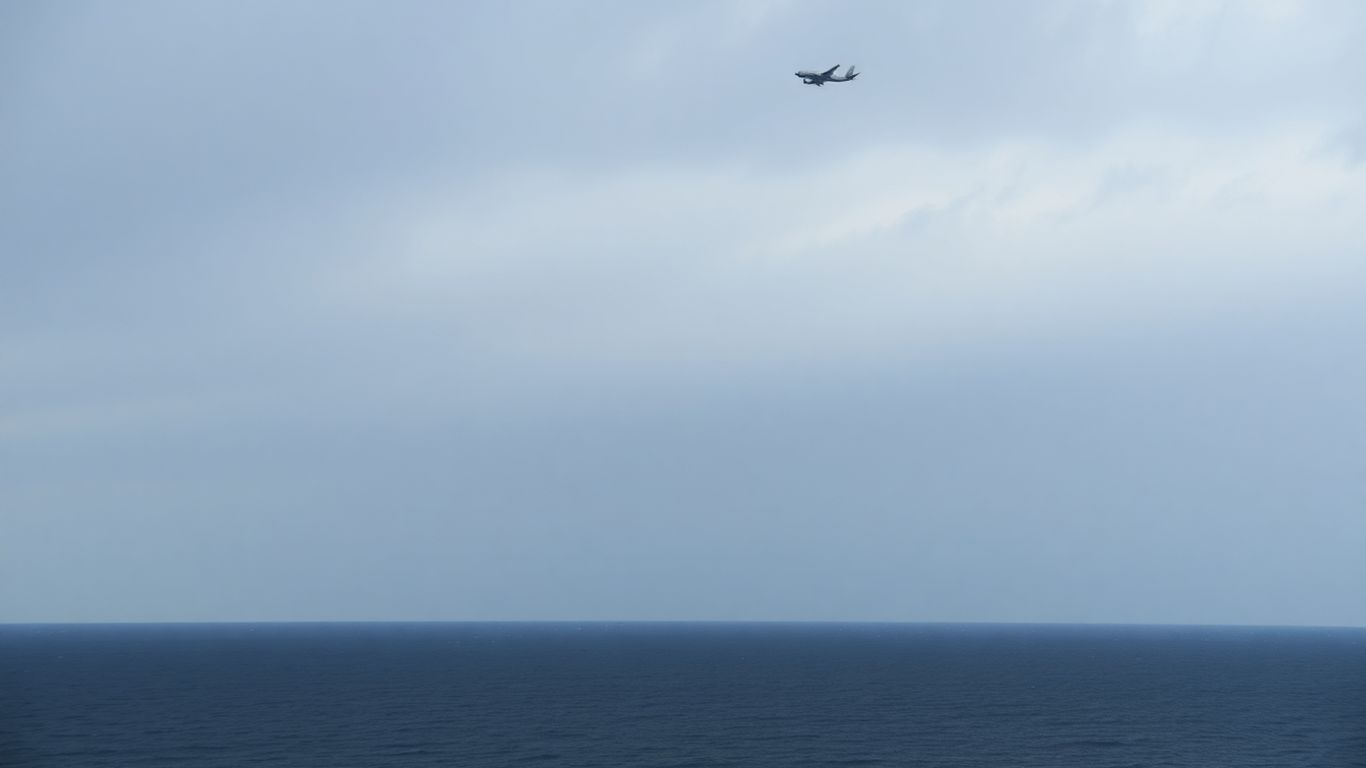
The disappearance of MH370 starkly highlighted some major gaps in how we track aircraft, especially over vast stretches of ocean. For hours, the plane simply seemed to have vanished into thin air. A small breakthrough, however, came from signals picked up by an Inmarsat satellite. These weren't precise location pings but were more like digital 'handshakes' that the aircraft's system was automatically sending. Although they didn't pinpoint the plane's exact location, they provided investigators with a crucial means of determining its general direction. By analysing the subtle changes in the signal's frequency, experts could deduce whether the plane was moving towards or away from the satellite. This analysis pointed to two potential corridors: one heading north towards Central Asia, and another south across the Indian Ocean. The northern route was quickly ruled out, as countries along that path reported no radar contacts. This left the southern Indian Ocean—a huge and remote body of water—as the most probable final flight path.
The Drive for Improved Aircraft Tracking
It’s quite jarring to think that in this day and age, a massive passenger jet could just disappear without a trace. The MH370 incident was a real wake-up call for the aviation industry, pushing for significant changes. The International Civil Aviation Organization (ICAO) has since been developing a framework known as the Global Aeronautical Distress and Safety System (GADSS). The primary aim? To ensure a tragedy like this never happens again. A key component of this initiative is mandating that aircraft automatically report their position more frequently. Currently, some planes only transmit their location every 15 minutes, which leaves a lot of room for uncertainty. The new regulations are designed to drastically reduce that interval, especially if an aircraft is in distress.
- New regulations mandate distress tracking systems on all large aircraft manufactured from 2021 onwards.
- Aircraft are now required to transmit their position every minute when in a distress situation.
- This system is designed to activate automatically, without needing any action from the pilots.
New Standards to Prevent Future Disappearances
One of the central problems with MH370 was that its transponders, which broadcast location data, ceased to function. This meant air traffic control effectively lost sight of the plane. To address this vulnerability, a company named Aireon is now using a network of satellites to track aircraft across the globe in real-time. This is a game-changer because it provides coverage over areas where ground-based radar simply can't reach, such as the middle of oceans. So, even if a plane's primary transponder were to fail or be turned off, this satellite system could still detect its signals. This kind of real-time tracking gives pilots and controllers a much clearer, continuous picture of where every plane is, which should help eliminate the terrifying blind spots that contributed to the MH370 mystery.
The core idea is that with constant, reliable tracking—even over the most remote parts of the globe—a repeat of the MH370 event becomes highly improbable. It's about having eyes on every aircraft, at all times.
| Technology | Function |
|---|---|
| Satellite Pings | Provided general location data through digital 'handshakes'. |
| GADSS | Mandates enhanced distress tracking systems for aircraft. |
| Aireon Satellites | Enable real-time, global aircraft tracking from space. |
Remembering Those Aboard MH370
It’s difficult to grasp that so many years have passed since MH370 vanished. The flight, which took off from Kuala Lumpur bound for Beijing on March 8, 2014, was carrying 239 souls—passengers and crew from all walks of life. The silence that followed its disappearance has been profound, leaving behind an ache that time has struggled to heal. Families have been left to navigate an unbearable void, grappling with the crushing uncertainty of what truly became of their loved ones.
The Passengers and Crew of the Flight
The manifest of MH370 was a rich tapestry of lives from across the globe. There were 153 Chinese nationals, 7 Indonesians, 6 Australians, and 5 Indians, alongside individuals from countries like the United States, Canada, France, and Russia. The all-Malaysian crew was led by Captain Zaharie Ahmad Shah, a highly experienced pilot with over 18,000 flight hours, and his co-pilot, Fariq Abdul Hamid. Every single person on that plane had a story, a destination, and people eagerly waiting for their arrival. We remember Rodney and Mary Burrows, who were excited to become grandparents, and Paul Weeks, who left his watch and wedding ring at home before his trip. There was also Liu Rusheng, an acclaimed calligrapher, and Firman Chandra Siregar, a young engineer embarking on a new job. These are but a few of the many lives tragically cut short.
Families' Enduring Trauma and Questions
For the families left in the wake of this tragedy, the lack of closure has been a relentless source of pain. Malaysia officially declared the flight an "accident" in January 2015, presuming all on board had perished. Yet, without the main wreckage or any definitive answers, this declaration brought little solace. The years that followed were marked by continued, costly search efforts that ultimately failed to provide concrete answers about the plane's final resting place. This persistent ambiguity only deepens their trauma, leaving them with a constant, agonizing loop of questions about the final moments of their loved ones.
The absence of a crash site means no bodies have been recovered, no final goodbyes have been possible, and no clear understanding of the events that transpired during those final, terrifying hours. This lack of resolution is a heavy burden that weighs on the hearts of all who lost someone on that flight.
Memorials Amidst Unanswered Questions
Despite the lack of firm answers, memorials have been held, both formally and informally, to honour the lives lost on MH370. These gatherings serve as a powerful testament to the enduring impact of the flight's disappearance and provide a space for families and friends to remember and support one another. While the world continues to hope for answers, these memorials stand as a poignant reminder of the profound human cost of this aviation mystery. The hope for an eventual discovery, however faint, persists—driven by the universal desire to finally bring peace to the families and to understand what happened to Flight MH370.
| Nationality | Number of Passengers |
|---|---|
| China | 153 |
| Indonesia | 7 |
| Australia | 6 |
| India | 5 |
| Malaysia (Crew) | 12 |
| United States | 3 |
| Canada | 2 |
| France | 4 |
| Iran | 2 |
| Russia | 1 |
| Taiwan | 1 |
| Ukraine | 2 |
| Netherlands | 1 |
| Hong Kong | 1 |
| Total | 239 |
An Unanswered Question
Years have passed since Malaysia Airlines Flight 370 disappeared, and frankly, we are still left searching for answers. Despite exhaustive search efforts and fragments of debris washing up on distant shores, the main wreckage—and more importantly, the full story of what transpired in those final hours—remains a mystery. It's a difficult truth to accept, especially for the families who lost their loved ones. The official conclusion points to an accident, likely a crash in the Indian Ocean, but the 'how' and 'why' remain subjects of intense debate. This entire ordeal has undeniably forced a global rethink of aircraft tracking, and the hope is that such a tragedy will never be repeated. But for now, MH370 remains one of modern aviation's biggest and most unsettling puzzles.
Frequently Asked Questions
What happened to Malaysia Airlines Flight MH370?
On March 8, 2014, MH370, a Boeing 777 en route from Kuala Lumpur to Beijing, vanished from radar screens. In spite of massive international searches, the main wreckage has never been located. The general belief is that the plane crashed into the southern Indian Ocean, but the exact cause and circumstances are still unknown.
When did MH370 disappear?
The flight took off from Kuala Lumpur late on the evening of March 7, 2014, and disappeared from radar in the early morning hours of March 8, 2014, local time. The cockpit's final communication was recorded at approximately 1:19 a.m. Malaysia time.
Where was MH370 last seen?
After deviating from its planned flight path, MH370 was last detected by military radar heading southwest over the Malay Peninsula, towards the Andaman Sea. Subsequent analysis of satellite data suggested its final resting place was likely in the southern Indian Ocean, far from its original destination.
Was any debris from MH370 ever found?
Yes, several pieces of debris confirmed to be from MH370 have washed ashore on coastlines in eastern Africa and on islands in the western Indian Ocean, with the first discovery made in 2015. While these finds provided tragic confirmation of a crash, they didn't help pinpoint the main wreckage.
What are the main theories about why MH370 disappeared?
Numerous theories persist, ranging from pilot suicide or hijacking to a sudden mechanical failure or a catastrophic event like a cabin fire or decompression. Investigators have examined the pilot's home flight simulator data and the use of stolen passports by two passengers, but no single theory has ever been definitively proven.
What is being done to prevent similar disappearances in the future?
The loss of MH370 starkly highlighted the need for more robust aircraft tracking. Since then, international aviation bodies have rolled out new standards for global flight tracking. These aim to ensure that aircraft can be monitored more effectively in real-time and that distress signals are transmitted automatically, helping to prevent such a mystery from ever occurring again.


