


resources
Unlocking the Future: Exploring the Potential of the New York Smart City Initiative
Industry Expert & Contributor
12 Jun 2025

New York City, a place known for always being on the move, is now also leading the way in something called the “smart city” movement. This isn’t just about adding fancy tech everywhere; it’s about making the city work better for everyone who lives here. From how we get around to how we handle trash, the new york smart city initiative is changing things to make daily life smoother and more efficient. It’s a big project, and it shows how NYC is trying to build a better future for its residents.
Key Takeaways
- New York City is using technology to improve daily life for residents, focusing on practical solutions.
- The city’s smart initiatives cover things like managing water, waste, and traffic more efficiently.
- NYC is working with private companies and startups to test new technologies.
- Community input is a big part of planning for the future of the new york smart city.
- The goal is to solve real problems and improve quality of life, not just use technology for its own sake.
Defining the New York Smart City
What Constitutes a Smart City?
So, what exactly is a smart city? It’s more than just throwing technology at urban problems. A smart city aims to improve the lives of its residents through data-driven decisions and innovative solutions. It’s about making urban living more efficient, sustainable, and enjoyable. Think of it as a city that’s constantly learning and adapting to the needs of its people.
- Improved infrastructure.
- Better public services.
- Increased citizen engagement.
A smart city isn’t just about the tech; it’s about how that tech improves people’s lives. It’s about creating a more connected, responsive, and sustainable urban environment.
New York City’s Vision for Smart Urbanism
New York City is consistently ranked among the top smart cities globally. NYC’s vision focuses on providing a high quality of life and seamless access to services for all residents. Paul Rothman, the smart cities and IoT director within the Office of Technology and Innovation, sees technology as an enabler. The city is working to make interactions with the government as easy as possible. NYC is using automated meters to manage their water, waste, and traffic systems. Their highly integrated meter system not only monitors resource consumption, but it also provides each resident with a personal usage snapshot. These features empower residents to take a more mindful approach to energy, water, waste, and commuting.
Beyond Technology: The Human Element
It’s easy to get caught up in the tech side of things, but a truly smart city never forgets the human element. As Debra Lam, Founding Executive Director of the Partnership for Inclusive Innovation, said, "When we say ‘smart,’ we tend to think about the technology, but it’s really about the people.” It’s about prioritizing community needs and ensuring that technology serves those needs, not the other way around. NYC includes dedicated bike lanes, composting, and trash containerization. It’s about creating a city that’s not only technologically advanced but also livable and equitable for everyone. The Smart City Testbed program is intended to be educational, demonstrating to agencies how technologies available to them can be used.
Key Technological Pillars of New York Smart City
Information and Communication Technology
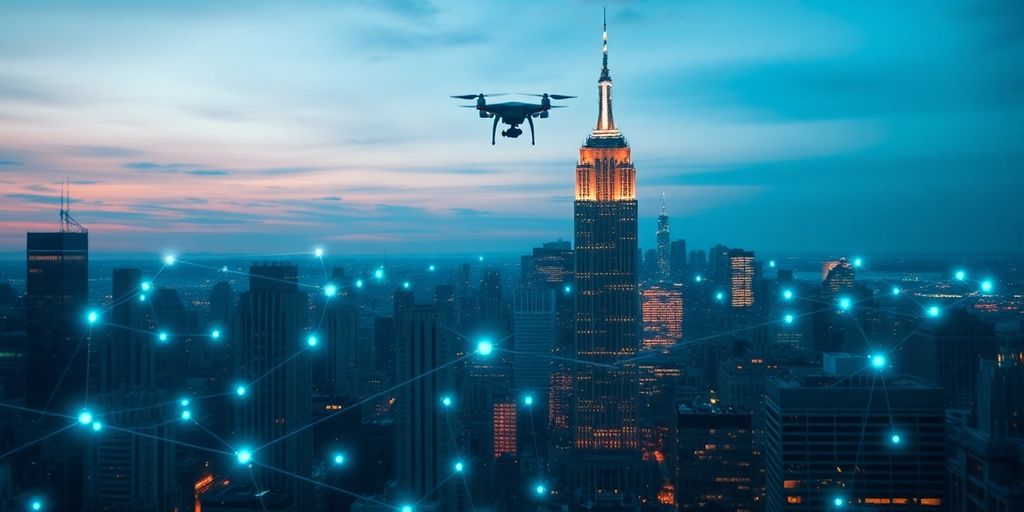
Information and Communication Technology (ICT) is the backbone of any smart city. It’s all about how data is captured, stored, processed, and shared. Think of it as the central nervous system, managing the flow of information from the city’s various sensors and systems. ICT manages data from the Internet of Things (IoT), making sense of the constant stream of information.
The Internet of Things in Urban Environments
The Internet of Things (IoT) is transforming urban spaces. It’s a network of interconnected devices and sensors embedded throughout the city, collecting data to improve efficiency, safety, and sustainability. New York City relies heavily on IoT devices to monitor everything from traffic flow to air quality. Here are some examples:
- Smart streetlights that adjust brightness based on pedestrian traffic.
- Sensors in waste bins that signal when they’re full.
- Water quality sensors that continuously monitor the city’s water supply.
IoT is not just about connecting devices; it’s about creating a smarter, more responsive urban environment. By collecting and analyzing data from these devices, the city can make better decisions and improve the quality of life for its residents.
Leveraging Artificial Intelligence and Data Management
AI and data management are crucial for turning raw data into actionable insights. New York City uses AI to analyze the vast amounts of data collected by its IoT devices, identifying patterns and trends that can be used to improve city services. For example, AI can be used to:
- Optimize traffic flow by predicting congestion and adjusting traffic signals in real-time.
- Improve energy efficiency by identifying buildings with high energy consumption.
- Enhance public safety by detecting and responding to potential threats.
AI is not just about automation; it’s about making smarter, more informed decisions. By leveraging AI and data management, New York City can create a more efficient, sustainable, and livable urban environment.
New York City’s Smart Solutions in Action
Optimizing Water Management Systems
New York City uses a staggering amount of water daily, exceeding one billion gallons. To manage this vast resource, the city employs state-of-the-art smart water quality sensors and consumption meters. These tools enable precise tracking of water consumption and quality throughout the city. This system isn’t just about monitoring; it’s about empowering residents. By providing detailed usage snapshots, individuals can make more informed decisions about their water consumption. The results speak for themselves: residents have collectively saved millions of dollars since the system’s installation. It’s a win-win, promoting both conservation and cost savings.
Innovations in Waste Management
Dealing with waste is a massive undertaking in a city like New York, where approximately 24 million pounds of waste are collected each day. The city is actively pursuing a more circular economy through several key initiatives. These include:
- Strategic placement of smart waste compactors to optimize collection routes.
- A data-driven approach to recycling, ensuring resources are recovered efficiently.
- Continuous evaluation and improvement of waste management processes based on real-time data.
New York City is committed to reducing waste and promoting sustainability through innovative strategies and community engagement. By focusing on data-driven solutions, the city aims to create a cleaner, more environmentally friendly urban environment for all residents.
Advancements in Traffic Management
New York City boasts the largest smart traffic management system globally. This complex network relies on traffic flow sensors to improve transportation efficiency and alleviate congestion, especially during peak commuting hours. The system’s effectiveness is constantly being refined through data analysis and adaptive algorithms. The goal is to minimize delays and improve the overall commuting experience for everyone. The city is also exploring the use of AI for enhanced urban management to further optimize traffic flow and reduce congestion. Here’s a simplified look at how the system works:
| Component | Function |
|---|---|
| Traffic Flow Sensors | Collect real-time data on traffic volume, speed, and density. |
| Data Analysis | Processes sensor data to identify patterns and predict congestion. |
| Adaptive Algorithms | Adjust traffic signals and routing to optimize flow based on real-time data. |
Enhancing Quality of Life Through Smart Initiatives
Improving Public Transportation and Tourism
Smart city initiatives are making a real difference in how people get around and experience New York City. Think about it: real-time traffic updates, optimized bus routes, and integrated payment systems all contribute to a smoother commute. For tourists, imagine interactive kiosks providing information about local attractions, personalized recommendations based on interests, and easy access to public transportation options. These improvements not only make the city more accessible but also boost tourism by creating a more enjoyable and convenient experience for visitors. Smart transportation systems enhance mobility, integrate EV charging stations, and improve public transit.
Sustainable Energy Solutions for Government Buildings
New York City is committed to reducing its carbon footprint, and government buildings are a key part of this effort. Smart technologies are being implemented to monitor and optimize energy consumption in these buildings. This includes:
- Smart lighting systems that adjust brightness based on occupancy and natural light levels.
- Advanced HVAC systems that regulate temperature and airflow to minimize energy waste.
- Real-time energy monitoring dashboards that provide building managers with insights into energy usage patterns.
These solutions not only reduce energy costs but also contribute to a more sustainable environment. Smart cities focus on efficiency and environmental impact, promoting green building, renewable energy, and recycling services.
The Accelerated Conservation and Efficiency Program
The Accelerated Conservation and Efficiency (ACE) Program is a comprehensive initiative designed to promote energy efficiency across New York City. The program offers a range of incentives and resources to help building owners and residents reduce their energy consumption. This includes:
- Financial assistance for energy-efficient upgrades.
- Technical support and guidance on energy conservation measures.
- Educational programs to raise awareness about energy efficiency.
The ACE Program is a great example of how the city is working to create a more sustainable and resilient future. By encouraging energy conservation, the program is helping to reduce greenhouse gas emissions, lower energy costs, and improve the quality of life for all New Yorkers. Smart cities use data analytics to guide efficiency improvements. Tech-driven decision-making reduces miscalculations and emotional bias.
Here’s a simplified look at the program’s impact:
| Measure | Impact |
|---|---|
| Energy-efficient upgrades | Reduced energy consumption by 15-20% |
| Technical support | Increased adoption of energy-saving practices |
| Educational programs | Greater awareness of energy efficiency |
Evolution of the Smart City Concept
The idea of a "smart city" isn’t new, but it has changed a lot over time. What started as a tech-focused vision is now becoming more about community needs and collaboration. It’s a journey from top-down, industry-led projects to bottom-up, community-driven initiatives.
From Industry-Led to Community-Driven Initiatives
In the early days, the smart city concept was often driven by big tech companies. For example, back in 2010, IBM launched its Smarter Cities Challenge, aiming to help cities become more efficient. These initiatives often involved implementing new technologies, like sensors and data analytics, to improve city services. However, the focus has shifted towards prioritizing community needs and involving residents in the planning process. Now, it’s more about understanding what residents actually want and using technology to address those needs.
The Role of Collaboration in Smart City Development
Collaboration is key to successful smart city development. It’s not just about cities working with tech companies, but also involving residents, community organizations, and other stakeholders. This collaborative approach helps ensure that smart city projects are aligned with the needs and priorities of the community.
- Partnerships between city governments and local universities can foster innovation and research.
- Public-private partnerships can bring together the expertise and resources of both sectors.
- Community engagement sessions can provide valuable feedback and insights from residents.
Addressing Challenges and Learning from the Past
Smart city development isn’t without its challenges. One of the biggest challenges is ensuring that these initiatives are equitable and inclusive. It’s important to consider the needs of all residents, including those who may be marginalized or underserved. Another challenge is addressing privacy concerns related to data collection and surveillance. Learning from past mistakes and adapting to new challenges is crucial for the future of smart cities.
It’s important to remember that technology is just a tool. The real goal of smart city development is to improve the quality of life for residents and create more sustainable, resilient, and equitable communities. By focusing on community needs and fostering collaboration, we can unlock the full potential of smart cities.
Community Engagement and Outcome-Driven Approaches

Prioritizing Community Needs in Smart City Planning
Smart city planning isn’t just about tech; it’s about people. The most successful initiatives start by deeply understanding the needs and desires of the community they aim to serve. Instead of dropping in the latest gadget and hoping it sticks, cities are now asking: What problems are we trying to solve, and how can technology help? This shift means going beyond surface-level surveys and engaging in meaningful conversations with residents to uncover their real pain points and aspirations. For example, if a neighborhood struggles with traffic congestion, the solution might not be a fancy new app but rather a redesigned bus route based on community feedback. This approach ensures that smart city projects are relevant, useful, and truly improve people’s lives.
Public Engagement Sessions for Future Work
To make sure smart city projects actually meet community needs, New York City is holding public engagement sessions. These aren’t just town halls where officials talk at residents; they’re designed to be two-way conversations. Libraries are often used as neutral, accessible spaces for these discussions. The goal is to gather input on everything from transportation to sanitation to public safety. By actively listening to residents, the city can address community needs and tailor its smart city initiatives to reflect the unique challenges and opportunities in each neighborhood. This collaborative approach helps build trust and ensures that technology serves the people, not the other way around.
Focusing on Outcomes Over Technology for Technology’s Sake
It’s easy to get caught up in the excitement of new technology, but smart cities need to resist the urge to implement tech for tech’s sake. The real focus should always be on achieving specific, measurable outcomes that improve quality of life. As Royall explained, the focus with emerging technology is on outcomes. San Antonio is exploring the use of an AI-powered translation tool in emergency response to better serve the community. Here’s a few things to keep in mind:
- Define clear goals: What problem are you trying to solve?
- Measure progress: How will you know if you’re successful?
- Adapt as needed: Be willing to change course if something isn’t working.
By prioritizing outcomes over technology, cities can avoid wasting resources on solutions that don’t deliver real value. This approach ensures that smart city initiatives are not just innovative but also effective and sustainable in the long run.
Ultimately, a smart city isn’t about having the most advanced gadgets; it’s about using technology to create a more livable, equitable, and sustainable future for all residents. It’s about sustainable solutions that make a real difference.
The Smart City Testbed and Private Sector Collaboration
Launching the Smart City Testbed Program
New York City recognized early on that smart city initiatives couldn’t thrive in a vacuum. That’s why they launched the Smart City Testbed program in October 2023. This program acts as a bridge, connecting city agencies with the innovative solutions being developed by the private sector. The goal? To see how these technologies can address real-world urban challenges. Over 130 applications poured in, showing the huge interest from companies wanting to get involved. It’s not just about flashy tech; it’s about finding practical ways to improve city services.
Educational Demonstrations for City Agencies
The Testbed isn’t just about throwing technology at problems and hoping something sticks. A big part of it is education. City agencies don’t always have the time or resources to keep up with the latest tech trends. The program demonstrates how available technologies can be used. In 2024, the program completed four pilot projects. The city expects to announce new pilots in the coming months. It’s about unlocking capabilities that agencies might not otherwise have the chance to explore. This approach helps the city prepare for emerging technologies.
Partnering with Smaller Businesses and Startups
It’s easy for big corporations to get their foot in the door, but New York City is also focusing on smaller businesses and startups. These companies often have fresh ideas and innovative solutions but lack the resources to navigate the complexities of working with a large city government. The Testbed program provides a platform for these smaller players to showcase their technologies and contribute to the city’s smart city vision. This public-private collaboration is essential for fostering a diverse and dynamic smart city ecosystem.
It’s no longer just something that the city government has to tackle solely by themselves. Cross-sector collaboration is essential for cities of all sizes. By working with the private sector, the city can tap into a wealth of expertise and resources that would otherwise be unavailable.
Here’s a simple breakdown of the Testbed’s goals:
- Connect city agencies with private sector innovation.
- Educate agencies on emerging technologies.
- Support smaller businesses and startups.
- Drive practical solutions to urban challenges.
Conclusion: The Path Ahead for New York’s Smart City Journey
So, as we wrap things up, it’s clear that New York City’s smart city efforts are really about making urban life better for everyone. It’s not just about fancy gadgets or super-fast internet, though those things definitely help. The real goal is to create a city that works well for its people, where daily life is a bit smoother and more connected. We’ve seen how New York is using technology to tackle big city problems, from managing traffic to handling waste, and even making sure everyone has access to city services. This whole journey shows that when a city focuses on its residents and uses smart tools thoughtfully, it can really change things for the better. It’s an ongoing process, for sure, but New York is definitely on the right track.
Frequently Asked Questions
What exactly is a smart city?
A smart city uses technology and data to make urban living better for everyone. This means using things like special sensors and computer programs to manage city services, save energy, and improve daily life for residents. It’s all about making the city more efficient, sustainable, and a nicer place to live.
How does New York City fit into the smart city movement?
New York City is a leader in smart city efforts, always ranking among the top five globally. The city hosts the annual Smart City Expo, where experts from around the world discuss how to build smarter, more fair, and eco-friendly cities. With over 8 million people, NYC relies heavily on automated systems to manage its water, trash, and traffic. These systems not only keep track of how much resources are used but also give residents personal updates, helping them be more mindful of their consumption.
What are some examples of New York City’s smart solutions?
New York City has many smart solutions in place. For example, it uses advanced sensors to track water usage and quality, which has saved millions of dollars. For waste, the city uses smart trash compactors and plans pick-up routes carefully. NYC also has the world’s biggest smart traffic system to help reduce congestion. On top of that, interactive kiosks help both tourists and locals get around, and the city is adding solar panels to government buildings to use cleaner energy.
What kinds of technology are used in a smart city?
Technology is the backbone of any smart city. This includes Information and Communication Technology (ICT), which helps collect and manage data from various city systems. The Internet of Things (IoT) involves a network of connected devices and sensors that gather real-time information, making cities more efficient and safe. Artificial Intelligence (AI) and data management also play a big role, helping cities make sense of all the collected data to improve services.
How has the idea of a smart city changed over time?
The idea of a smart city has changed a lot. In the past, it was often about big companies selling ready-made tech solutions. Now, it’s more about cities figuring out their own problems first and then finding the right tools to solve them. The focus has shifted from just adding technology to making sure that technology actually helps people and improves their quality of life. Cities are also working more with smaller businesses and startups.
Why is community involvement important for smart cities?
Community involvement is super important in smart city planning. Instead of just putting new tech into a city, the focus is now on listening to what residents need and want. Cities are holding public meetings to get feedback and make sure future projects truly help the community. The goal is to focus on real results and benefits for people, rather than just using technology for the sake of it.


