


resources
The Impact of Singapore Congestion Pricing on Urban Mobility
Industry Expert & Contributor
16 Jun 2025

Singapore has been a pioneer in tackling urban traffic problems with something called congestion pricing. It’s basically a system where drivers pay a fee to use certain roads, especially during busy times. This idea has changed how people get around the city and even how the city itself is planned. We’ll look at how Singapore’s approach to congestion pricing has grown, what it means for traffic, and how it helps the environment and the economy. The goal is to see what other places can learn from Singapore’s experience with this system.
Key Takeaways
- Singapore’s congestion pricing, called Electronic Road Pricing (ERP), has changed a lot over time, from early paper licenses to modern satellite-based systems.
- The system has really helped keep traffic moving and speeds steady in Singapore, even when compared to other big cities.
- Congestion pricing in Singapore isn’t just about traffic; it’s also a big part of how they plan city growth and improve public transport.
- This pricing method has brought good environmental results, like less pollution, and it helps push for greener ways to travel.
- Economically, singapore congestion pricing brings in money for city projects and shows how such systems can be good for the city’s finances overall.
Evolution of Singapore Congestion Pricing
Singapore’s journey with congestion pricing is pretty interesting, starting way back and evolving with technology. It’s not just about slapping a fee on driving; it’s a whole system designed to keep the city moving.
Early Area Licensing Scheme
Back in 1975, Singapore took a bold step with the Area Licensing Scheme (ALS). Imagine a paper-based system where you had to buy a daily license to drive into the city center. It sounds archaic now, but it was revolutionary then. It was a simple "pay-and-display" setup. This was the first major attempt to manage traffic flow in a busy urban area. It wasn’t perfect, but it laid the groundwork for what was to come.
Transition to Electronic Road Pricing
Fast forward to 1998, and Singapore launched the world’s first automated congestion pricing system, the Electronic Road Pricing (ERP). No more paper licenses! Gantries were set up across the city, charging drivers electronically as they passed. This was a game-changer. The ERP system allowed for variable pricing based on time of day and location, making it much more effective at managing traffic. Car trips into central Singapore came down 10-15 % in the two years after introduction of the Electronic Road Pricing scheme.
Future of Congestion Pricing with GNSS
And the evolution continues! Singapore is now moving towards a global navigation satellite system (GNSS). This means no more physical gantries. The system can track vehicles and charge them based on their actual usage of the roads. It’s cheaper, more flexible, and opens up new possibilities for managing traffic in real-time. It’s all part of a broader effort that includes other elements such as the long-standing vehicle quota system that requires ownership of an auctioned license to own a car and greater investment in public transport.
Congestion pricing in Singapore isn’t just about reducing traffic. It’s about creating a more livable city. The revenue generated goes back into improving public transportation and infrastructure, making it a win-win for everyone.
Impact on Traffic Flow and Speeds
Initial Reductions in Traffic Volumes
When Singapore first implemented congestion pricing, one of the most noticeable effects was a drop in the number of vehicles on the roads during peak hours. This immediate reduction in traffic volume helped to ease congestion and improve overall traffic flow. It wasn’t just a small change either; the decrease was significant enough to make a real difference in commute times for many people.
- Less traffic means fewer bottlenecks.
- Reduced stop-and-go driving.
- More predictable travel times.
The initial success of Singapore’s congestion pricing scheme demonstrated that charging drivers for road use could be an effective way to manage traffic demand. This early win helped build support for the system and paved the way for further refinements and expansions.
Sustaining Average Traffic Speeds
Maintaining decent traffic speeds in a bustling city like Singapore is a constant challenge. The congestion pricing scheme has played a key role in helping to sustain average traffic speeds over the years. By discouraging unnecessary trips during peak times, the system helps to keep traffic moving at a more consistent pace. This is achieved through peak-load pricing and regular price adjustments.
| Year | Average Speed (km/h) |
|---|---|
| 2010 | 28 |
| 2015 | 30 |
| 2020 | 29 |
Comparison with Other Global Cities
Singapore isn’t the only city experimenting with congestion pricing. Cities like London and Stockholm have also implemented similar schemes, with varying degrees of success. Comparing Singapore’s experience with these other cities can provide valuable insights into what works and what doesn’t. For example, Stockholm’s experience shows how initial public opposition can be overcome through a trial period and referendum. Early data from New York suggests that travel times have declined in lower Manhattan by 5-8 percent.
- London saw a 15% reduction in traffic after introducing its congestion charge.
- Stockholm experienced about a 20% drop in traffic volumes.
- New York is still gathering data, but early signs are promising.
Integration with Urban Planning
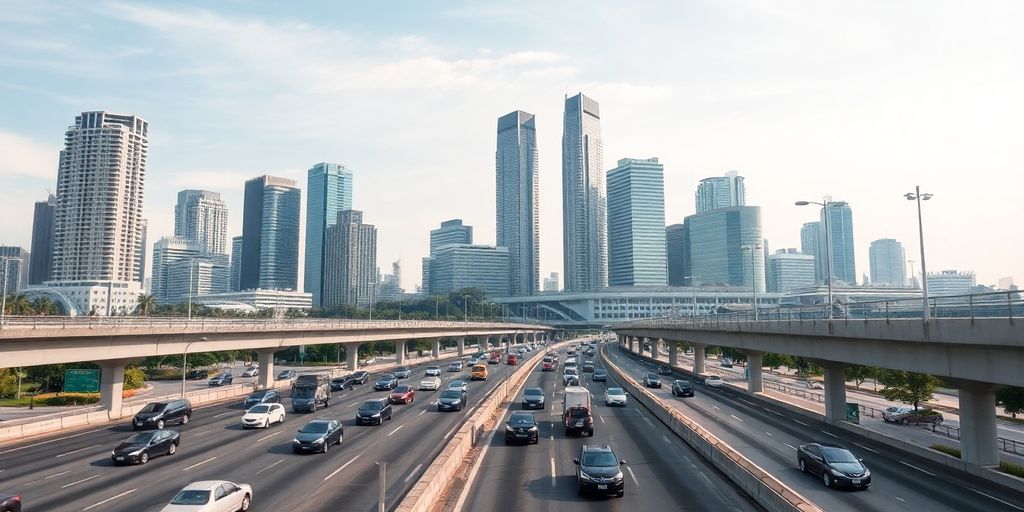
Congestion pricing isn’t just about making people pay to drive; it’s also a tool that can be used to shape how cities grow and how people move around. When done right, it can really change things for the better.
Enhancing Public Transportation Systems
One of the coolest things about congestion pricing is how it can help improve public transportation. The money collected from fees can be used to invest in better buses, trains, and even bike-sharing programs. Think about it: more frequent bus routes, cleaner trains, and more bike lanes. It all adds up to a better public transit experience, which encourages more people to leave their cars at home.
- Increased investment in bus and train infrastructure.
- Expansion of bike-sharing programs.
- Improved accessibility for all residents.
Influence on Urban Development and Land Use
Congestion pricing can also influence urban development. By making drivers pay for the actual cost of their travel, cities can encourage more efficient land use and reduce urban sprawl. This can lead to more compact, livable cities with a mix of housing, jobs, and amenities. Basically, it helps create communities where you don’t have to drive everywhere.
Imagine a city where you can walk to the grocery store, bike to work, and easily hop on a train to visit friends. Congestion pricing can help make that vision a reality by incentivizing smarter urban planning.
Role in Shaping Transportation Infrastructure
Congestion pricing plays a crucial role in shaping transportation infrastructure. It provides a revenue stream for transportation projects, helping cities prioritize investments in sustainable modes like public transit, walking, and cycling. It’s about building a system that works for everyone, not just drivers. For example, the Electronic Road Pricing (ERP) system in Singapore has been used to fund a range of transportation projects, including the development of a comprehensive public transportation network.
- Funding for new public transit lines.
- Creation of pedestrian-friendly zones.
- Expansion of cycling networks.
Environmental Benefits of Congestion Pricing
One of the really cool things about congestion pricing is how it can help the environment. By making people think twice about driving during rush hour, we can cut down on pollution and make our cities a bit greener. It’s not just about easing traffic; it’s about making a real difference in the air we breathe and the world we leave behind. Let’s take a look at how this works.
Reduction in Greenhouse Gas Emissions
Transportation is a big source of greenhouse gases, and these gases contribute to climate change. Congestion pricing can help lower these emissions by encouraging people to use other ways to get around, like public transit or biking. When fewer cars are stuck in traffic, there’s less pollution.
Think of it this way:
- Fewer cars on the road mean less gas being burned.
- More people using public transit reduces the overall carbon footprint.
- Encouraging cycling and walking promotes zero-emission travel.
Implementing congestion pricing is like giving the planet a little breather. It’s a way to nudge people toward cleaner options and reduce the amount of harmful stuff we’re pumping into the atmosphere. It’s not a perfect solution, but it’s a step in the right direction.
According to a study, a 10% drop in traffic can lead to an 8-10% reduction in CO2 emissions. That’s a pretty significant impact!
Improvement in Air Quality
Besides greenhouse gases, cars also release pollutants that can make the air unhealthy to breathe. Things like particulate matter and nitrogen dioxide can cause respiratory problems and other health issues. Congestion pricing can help clean up the air by reducing the number of cars on the road. This leads to less pollution and healthier communities. For example, the Ecopass scheme in Milan led to a 17% reduction in particulate matter and a 12% reduction in nitrogen dioxide.
Here’s a simple breakdown:
- Fewer vehicles mean less pollution.
- Reduced traffic congestion leads to better air circulation.
- Cleaner air results in fewer respiratory problems.
Promoting Sustainable Transportation Modes
Congestion pricing isn’t just about making driving more expensive; it’s also about making other forms of transportation more attractive. When driving becomes less appealing, people are more likely to consider options like public transit, biking, and walking. This can lead to a more sustainable transportation system overall. For instance, in Gothenburg, the congestion tax led to a 10% increase in bus passenger numbers and a 6% increase in train passenger numbers. This encourages sustainable urban mobility.
Here are some ways congestion pricing promotes sustainable transportation:
- It makes driving during peak hours less attractive.
- It encourages the use of public transit.
- It promotes cycling and walking.
Economic Implications of Singapore Congestion Pricing
Revenue Generation for Infrastructure
Singapore’s congestion pricing, primarily through the Electronic Road Pricing (ERP) system, generates substantial revenue. This income isn’t just pocketed away; it’s reinvested into the transportation sector. Think about it: better roads, expanded public transport network, and improved infrastructure all come from somewhere. The ERP acts as a dedicated funding stream, ensuring that as the city grows, the transportation system keeps pace. It’s a direct way to make sure those who use the roads the most contribute to their upkeep and expansion.
Impact on Commercial Activity
There’s always a worry that congestion pricing might hurt businesses. Will people avoid areas with tolls? Will shops and restaurants suffer? The Singapore experience suggests otherwise. While some businesses initially feared a drop in customers, many have found that reduced congestion actually makes their locations more attractive. People are more willing to visit when they know they won’t be stuck in traffic for hours. Plus, with more efficient transport, deliveries become smoother, and employees can get to work more reliably. It’s a balancing act, but Singapore seems to have found a way to make it work.
Cost-Benefit Analysis of the System
Okay, so congestion pricing brings in money, but what does it really cost? It’s not just about the price drivers pay. There are the costs of setting up and running the ERP system: gantries, software, enforcement, and all that jazz. Then you have to weigh that against the benefits: less congestion, faster travel times, reduced pollution, and the economic boost from smoother traffic flow. Studies have shown that, overall, Singapore’s ERP system has a positive return on investment. The benefits outweigh the costs, making it a worthwhile endeavor. It’s not perfect, but it’s a system that’s constantly being tweaked and improved to maximize its effectiveness.
It’s important to remember that congestion pricing isn’t just about making money. It’s about managing traffic, improving the environment, and making the city a better place to live and work. The economic benefits are just one piece of the puzzle.
Lessons from Global Congestion Pricing Schemes
Examples of Successful Implementations
Lots of cities have tried out congestion pricing, and we can learn a lot from what they’ve done. Some have been really successful, while others have faced challenges.
- London’s Congestion Charge: Since 2003, London has charged a fee to drive in the city center. It’s helped cut down on traffic and improve air quality. The London’s Congestion Charge has evolved over time, showing that these systems can be adapted.
- Stockholm’s Congestion Tax: Stockholm started taxing congestion in 2007. It’s reduced traffic and encouraged people to use public transport or bikes. It’s a good example of how to get people to change their habits.
- Singapore’s Electronic Road Pricing (ERP) System: Singapore has been using electronic sensors to charge drivers on busy roads since 1998. It’s a pretty advanced system that’s good at managing traffic.
Challenges and Adaptations in Other Cities
Congestion pricing isn’t always easy. Cities have run into different problems when trying to set these systems up.
- Public Opinion: People don’t always like the idea of paying to drive. It can be hard to get everyone on board, especially if they think it’ll hurt low-income folks or businesses.
- Technical Issues: These systems need good technology, like sensors and payment systems. Making sure everything works right can be tricky.
- Fairness: It’s important to make sure the charges are fair to everyone. If some groups are affected more than others, it can cause problems.
It’s important to remember that what works in one city might not work in another. Each place has its own unique situation, so you have to tailor the system to fit the local context.
Best Practices for Effective Congestion Pricing
To make congestion pricing work well, cities can try a few things:
- Change prices based on traffic: Adjusting the charges in real-time can help keep traffic flowing smoothly.
- Use the money wisely: Putting the money from congestion charges back into transportation projects or public transit can make people more willing to accept the system.
- Tell people why it matters: Explaining the benefits of congestion pricing and the problems with traffic can help build support.
Conclusion
So, what’s the big takeaway here? Congestion pricing, like what Singapore has done, really changes how people get around cities. It helps cut down on traffic, gets more folks using public transport, and even brings in money for new transit projects. Sure, putting these systems in place can be tricky. But cities can look at what others have done and use smart ideas like changing prices based on traffic, putting the money back into transportation, and just telling people why it’s a good idea. This way, we can make our cities better and more sustainable places to live.
Frequently Asked Questions
What is congestion pricing?
Congestion pricing is a system where drivers pay a fee to use certain roads or enter specific areas during busy times. The main goal is to make traffic less crowded by encouraging people to use other ways to get around, like public transportation, walking, or biking.
How has Singapore’s congestion pricing system changed over time?
Singapore was one of the first major cities to use congestion pricing. They started with a simple paper-based system in 1975, then switched to an electronic system in 1988 that charged drivers based on how much they used the roads, considering the time of day and traffic. Now, they’re moving to a system that uses satellites, which is even more flexible and cheaper to run.
Does congestion pricing really help reduce traffic?
Yes, congestion pricing has been shown to reduce traffic. For example, after Singapore started its electronic system, car trips into the city center dropped by 10-15%. London saw a 15% reduction in car traffic, and Stockholm’s traffic went down by about 20%. These changes help make roads less crowded and travel times more predictable.
How does congestion pricing help the environment?
A big benefit of congestion pricing is that it can make the air cleaner. By reducing the number of cars on the road, it cuts down on harmful gases released by vehicles. Studies show that if traffic goes down by 10%, carbon dioxide emissions can drop by 8-10%. This also helps improve the overall air quality in cities.
What happens to the money collected from congestion fees?
The money collected from congestion pricing can be used to improve public transportation, like adding more buses or trains, or making them run more often. This helps create a better and more eco-friendly way for people to travel, so they don’t have to rely on their cars as much.
Are there other cities that use congestion pricing successfully?
Many cities around the world have used congestion pricing successfully. London’s system, started in 2003, has reduced traffic and improved air quality. Stockholm’s tax, introduced in 2007, also cut down traffic and encouraged more public transport use. Singapore’s Electronic Road Pricing (ERP) system, from 1998, has been very effective at managing traffic during peak hours.


