


resources
Building a Greener Future: The Role of Sustainable Cities and Society
Industry Expert & Contributor
19 Jun 2025

It’s pretty clear that our planet is facing some big challenges, like climate change and growing cities. So, figuring out how to build greener, more livable places is super important. This whole idea of “sustainable cities and society” is really picking up steam, with places all over the world trying out new ways to cut down on their environmental impact, make life better for everyone, and build a more sustainable future. This article is all about how we can use new ideas to create that greener future, looking at smart city tech, green infrastructure, and what all this means for people.
Key Takeaways
- Things like parks and green roofs help cities deal with weather issues and make urban life better.
- Using renewable energy, like solar and wind power, can really cut down on carbon pollution in cities.
- Designing cities so everyone has fair access to housing, public spaces, and resources is a big deal.
- Being smart about how we use resources, like recycling water and making less trash, helps support our growing city populations.
- Cities like Amsterdam, with its bike culture, and Seoul, with its smart tech, show us how places can really lead the way in being sustainable.
Innovative Urban Planning for Sustainable Cities
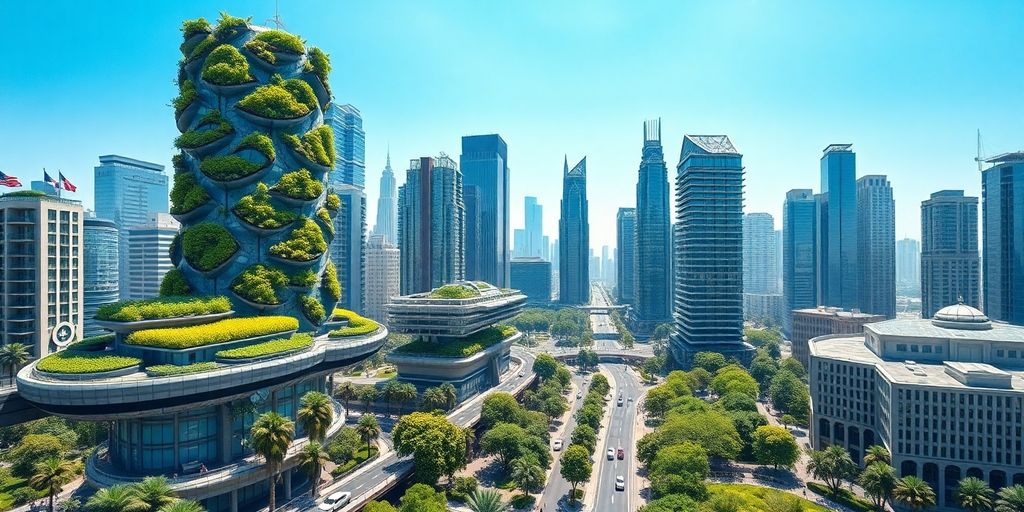
Urban planning is really changing. It’s not just about building more stuff; it’s about making cities work with nature and people. It’s about sustainable cities that are actually nice to live in, not just concrete jungles.
The Role of Green Infrastructure in Urban Areas
Green infrastructure? Think parks, green roofs, rain gardens. It’s all about bringing nature back into the city. These aren’t just pretty spaces; they’re functional parts of the urban ecosystem. They help manage stormwater, clean the air, and even cool things down. I saw a cool project in my town where they turned an old parking lot into a community garden. It’s amazing how much it changed the feel of the neighborhood.
- Reduces the urban heat island effect.
- Improves air quality.
- Creates habitats for wildlife.
Green infrastructure is a cost-effective way to improve the quality of life in cities. It provides multiple benefits, from reducing flood risk to improving public health.
Related Contents:
Embracing Green Building Practices and Eco-Friendly Materials
Buildings use a lot of energy and resources. Green building practices aim to change that. We’re talking about using materials that are sustainable, like bamboo or recycled concrete. Also, designing buildings to use less energy in the first place. It’s not just about being eco-friendly; it can also save money in the long run. I read about a green building materials project that cut energy costs by 30%!
- Using recycled and renewable materials.
- Designing for energy efficiency.
- Reducing water consumption.
Promoting Active Transportation and Bicycling
Cars? Not so great for cities. They cause pollution, traffic, and take up a ton of space. Active transportation, like walking and biking, is a much better alternative. Cities can promote this by building bike lanes, pedestrian-friendly streets, and investing in public transit. Amsterdam is a great example; everyone bikes there! It makes the city more livable and reduces emissions. I wish my city had better bike lanes.
- Building bike lanes and pedestrian walkways.
- Improving public transportation systems.
- Creating mixed-use neighborhoods to reduce commute times.
Here’s a simple comparison of transportation methods:
| Mode of Transport | Environmental Impact | Health Benefits | Cost |
|---|---|---|---|
| Car | High | Low | High |
| Bicycle | Low | High | Low |
| Public Transit | Medium | Medium | Medium |
Smart City Technologies for a Greener Future
Smart city technologies are changing how cities operate. They use data, analytics, and connectivity to make urban areas more efficient and sustainable. It’s not just about making things easier; it’s about creating better places to live.
IoT and Sensor Technologies for Urban Monitoring
IoT (Internet of Things) and sensor technologies are used to keep an eye on different parts of a city. This includes things like traffic, energy use, waste management, and water quality. These tools allow cities to collect real-time data and respond quickly to problems.
For example, cities can use sensors to monitor traffic and adjust traffic lights to reduce congestion. They can also track air quality and take steps to reduce pollution. This smart city solution helps cities make informed decisions and improve the quality of life for residents.
Big Data Analytics for Informed Decision-Making
Big data analytics helps cities make better decisions about things like infrastructure and resource allocation. By looking at large amounts of data, cities can identify trends and patterns that would otherwise be missed. This information can then be used to improve services and make cities more efficient.
For instance, big data can help cities understand how people use public transportation. This can help them optimize routes and schedules to better meet the needs of residents. It’s all about using data to make smarter choices.
Energy-Efficient Building Technologies
Energy-efficient building technologies are key to reducing energy consumption in cities. These technologies include things like smart thermostats, energy-efficient windows, and solar panels. By using these technologies, cities can significantly reduce their carbon footprint.
Here are some examples of energy-efficient building technologies:
- Smart thermostats that automatically adjust the temperature based on occupancy.
- Energy-efficient windows that reduce heat loss in the winter and heat gain in the summer.
- Solar panels that generate electricity from sunlight.
Energy-efficient buildings not only reduce energy consumption but also improve the comfort and health of residents. It’s a win-win situation for everyone involved.
Societal Implications and Future Directions
Smart cities and green tech? Sounds great, right? But we need to think about who benefits and who might get left behind. It’s not just about cool gadgets; it’s about making sure everyone has a fair shot.
The Impact of Technology on Urban Inequality and Access
Tech can be a double-edged sword. On one hand, it can make cities more efficient and sustainable. On the other, it can widen the gap between the haves and have-nots. Think about it: if only certain neighborhoods get access to high-speed internet or smart services, are we really making things better for everyone?
Here are a few things to consider:
- Digital divide: Not everyone has access to the internet or the skills to use new technologies.
- Surveillance: Increased monitoring can disproportionately affect marginalized communities.
- Affordability: Smart city services might be too expensive for some residents.
We need to make sure that smart city initiatives are designed with equity in mind. That means involving communities in the planning process and addressing the root causes of inequality.
The Role of Policy and Governance in Shaping Sustainable Cities
Policy and governance are super important. Cities need rules and regulations that support sustainability while also promoting fairness. It’s a balancing act, but it’s crucial for long-term success. For example, smart city technologies need to be implemented thoughtfully.
Here are some policy areas to consider:
- Incentives for green building: Encourage developers to use sustainable materials and practices.
- Regulations on data privacy: Protect residents from surveillance and data misuse.
- Investments in public transportation: Make it easier for everyone to get around, regardless of income.
Emerging Trends and Future Technologies in Urban Sustainability
What’s next for sustainable cities? Lots of exciting stuff! We’re talking about AI, blockchain, and even more IoT devices. But again, we need to be mindful of the societal implications. Let’s look at some trends:
- AI-powered resource management: Using AI to optimize energy consumption and reduce waste.
- Blockchain for transparent supply chains: Tracking the origin and environmental impact of goods.
- Urban air mobility: Drones and electric aircraft for transportation (with proper regulations, of course).
Here’s a quick look at potential benefits and challenges:
| Technology | Potential Benefits | Potential Challenges |
|---|---|---|
| AI | Improved efficiency, reduced waste | Job displacement, bias in algorithms |
| Blockchain | Increased transparency, secure data | Energy consumption, scalability |
| Urban Air Mobility | Faster transportation, reduced congestion | Noise pollution, safety concerns |
Global Examples of Sustainable Urban Innovations
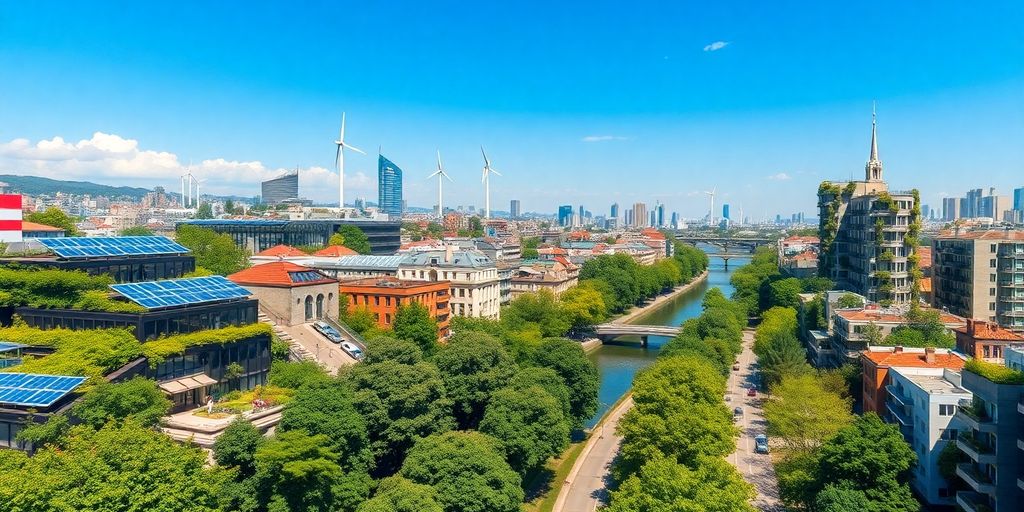
It’s inspiring to see how cities around the globe are tackling sustainability challenges head-on. Whether it’s through embracing renewable energy, planning smarter, or making cities more inclusive, there’s a lot happening to shape a greener future smart city. Let’s take a look at some standout examples.
Amsterdam’s Cycling Culture and Renewable Energy
Amsterdam is pretty famous for its commitment to sustainability, and its cycling culture is a perfect example. The city has over 800,000 bicycles and an extensive network of bike paths. This makes it easy and safe for residents to choose cycling over driving. This shift has really helped reduce traffic and pollution. Plus, Amsterdam has invested big in renewable energy, focusing on wind and solar power to meet its energy needs.
Seoul’s Green Spaces and Smart Technologies
Seoul is transforming urban living with its innovative green spaces and smart technologies. The city has created large parks and urban forests, like the Cheonggyecheon Stream restoration project, which turned a highway into a revitalized waterway and public space. On the tech side, Seoul is a pioneer in smart city initiatives, using data and IoT to optimize energy use, manage waste, and improve public transportation. These efforts not only make life better but also make the city more resilient to environmental challenges. Here’s a quick look at some of Seoul’s initiatives:
- Smart grids for efficient energy use.
- Traffic management systems to reduce congestion.
- Waste monitoring systems that optimize collection routes.
Medellín’s Public Transport and Inclusive Policies
Medellín, Colombia, has made impressive strides in sustainable urban development by focusing on public transport and inclusive policies. The city’s innovative transport solutions, like the Metrocable cable car system, connect marginalized communities to the city center, providing access to jobs and services. This has not only improved social equity but also reduced carbon emissions. Medellín’s approach shows how sustainability can go hand-in-hand with social justice.
Medellín’s transformation is a testament to how cities can overcome significant challenges by prioritizing inclusive policies and sustainable solutions. It’s a great example for other cities facing similar issues.
Resource Conservation in Sustainable Cities
Efficient Water Management and Recycling
Water is super important, especially in cities. Making sure we use water wisely is key for the future. Here’s how cities can do it:
- Collect rainwater from roofs.
- Treat wastewater and use it for watering plants or in factories.
- Use appliances that don’t waste water.
Cities that recycle water are less dependent on natural water sources and help the environment by reducing wastewater pollution.
Waste Reduction and Circular Economy Principles
Dealing with trash is a big problem for cities. But what if we could reuse everything? That’s the idea behind a circular economy. It means:
- Making products that can be recycled easily.
- Composting food scraps and yard waste.
- Recycling as much as possible and encouraging people to do it.
By switching to a circular economy, cities can reduce landfill dependency and create a more sustainable system for managing resources.
Promoting Urban Farming and Local Food Systems
Cities often don’t have much space for farms, but we can still grow food locally! Sustainable city initiatives can help with food security and reduce urban sprawl. Here’s how:
- Turn empty lots into gardens.
- Grow food on rooftops.
- Plan neighborhoods so that homes, stores, and green spaces are all close together.
Conclusion
So, as we wrap things up, it’s pretty clear that building greener cities and a more sustainable society isn’t just some far-off idea. It’s happening now, all around us. From cities putting in more bike lanes to using solar panels, people are finding ways to make things better. It’s not always easy, and there are definitely challenges, but the good news is that folks are working together. When we think about the future, it’s all about making choices that help the planet and everyone on it. It’s a big job, but every little bit helps, and it shows what we can do when we try.
Frequently Asked Questions
What is a sustainable city?
A sustainable city is a place designed to meet the needs of people, the economy, and the environment all at once. It means trying to cut down on pollution, save resources, and make sure everyone has fair chances.
How does renewable energy help cities become greener?
Things like solar and wind power help cities become greener because they don’t rely on burning fuels that harm the planet. This lowers bad gases in the air and helps fight climate change, giving us cleaner energy choices.
What are examples of green infrastructure in urban areas?
Green infrastructure includes things like parks, gardens on rooftops, and systems that collect rainwater. These parts of a city help clean the air, manage storms, and make urban areas nicer places to be.
Why is social equity important in sustainable cities?
Social fairness means that everyone, no matter their background or how much money they make, can get housing, jobs, and public services. This helps create a city that is more fair and welcoming to everyone.
What are some ways cities can conserve resources?
Cities can save resources by cleaning and reusing water, making less trash, and growing food right in the city. These methods help support more people living in cities without using up all our natural stuff.
How do green buildings support sustainability?
Green buildings are made to use less energy and water, and they often use materials that are good for the environment. They help lower a city’s carbon footprint and make indoor spaces healthier for people.


