


business resources
The Future of Mathematics Education: How Digital Learning Platforms Are Closing the Global Skills Gap
09 Jun 2026

Math scores tell a story most employers already know. Graduates entering the workforce routinely struggle with the quantitative reasoning their jobs demand. The gap between classroom instruction and real-world application has been widening for years, and digital learning platforms are now the most credible answer to closing it.
Why the Traditional Classroom Model Falls Short
Textbooks and lectures were designed for a different era. A student who doesn't grasp a concept when it's taught has few options. Ask the teacher in front of peers, fall behind quietly, or give up. None of those outcomes serve the learner or the employer who'll eventually hire them.
The problem compounds across borders. In lower-income regions and under-resourced school districts, access to qualified math teachers is inconsistent at best. A student in a rural area may go through entire academic years without a specialist math instructor. Meanwhile, the jobs those students are competing for require data literacy, statistical reasoning, and computational thinking at levels previous generations never needed.
Digital platforms address these structural failures directly. Adaptive learning systems identify where a student is struggling and adjust accordingly. A single teacher managing thirty students simply can't do that in real time. Standards-aligned content deployed consistently across a district or an entire country reduces the quality disparity between well-funded and underfunded schools.
What a Strong K-12 Math Program Actually Delivers
The distinction between a good math platform and an effective one comes down to outcomes, not features. Any platform can offer interactive exercises or progress dashboards. What matters is whether students actually retain the math they're taught, not just long enough to pass a test but well enough to use it. That's a harder bar to clear than most platforms admit.
A well-structured K-12 math program goes well beyond arithmetic and algebra. Savvas Learning Company's mathematics curriculum runs from early-grade numeracy all the way through advanced placement calculus and dual enrollment college courses, with tools that adjust to where each student actually is rather than where they're supposed to be. Each year's content is built on the last, so students aren't constantly patching holes that earlier instruction left open.
The EdTech Investment Case
Modernizing math education is an economic argument as much as a pedagogical one. As the EdTech skills economy case lays out, employers have moved well past hiring on credentials. They want people who can apply what they know, and schools are under growing pressure to produce graduates who can do exactly that. Data science, engineering, healthcare, finance; the quantitative floor across all of them keeps rising.
Districts that have put serious resources into high-quality math materials have seen the results show up in student performance, especially among groups that traditional instruction has consistently failed. That's the return on the investment.
Personalized Learning at Scale
Personalization gets thrown around a lot in ed-tech circles. Most of the time it just means the quiz gets harder when you get answers right. What actually moves the needle is catching the student who walked into sixth grade without ever fully grasping fractions and getting them back on track before algebra becomes a wall they can't climb.
This matters especially for first-generation college students and those from disadvantaged backgrounds, where foundational gaps often go undetected until they've become difficult to overcome.
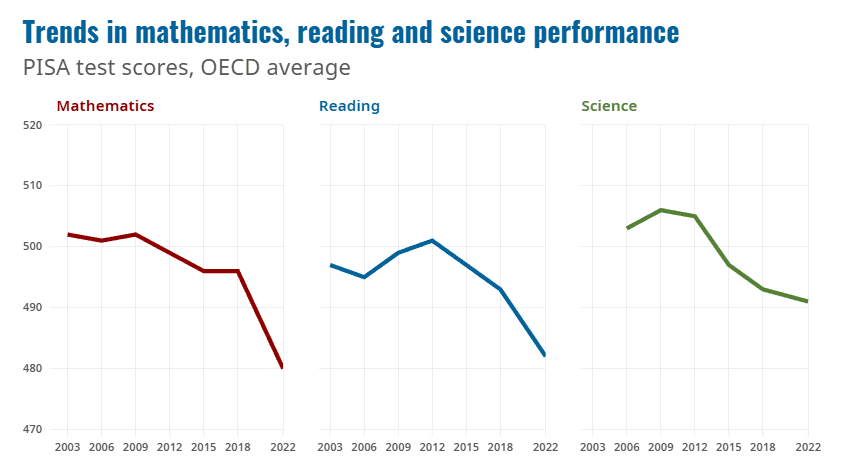
According to an OECD PISA 2022 report, students who are socioeconomically disadvantaged are seven times more likely than their advantaged counterparts to be below basic levels in math. That gap isn't closing on its own, but well-designed digital tools deployed alongside proper teacher support are showing real promise in narrowing it.
The Teacher's Role in a Digital-First Classroom
Platforms don't replace teachers. What they do is free teachers from low-value repetition and give them better data to act on.
When a teacher can see at a glance which students haven't mastered a prerequisite skill before new material is introduced, instruction becomes more precise. The teacher's expertise and relationship with students remains the core of learning. The platform provides the infrastructure that makes that expertise more impactful.
Schools and districts exploring these approaches can find useful context through Businessabc's education index, which covers universities and education institutions across global markets.
Aligning Math Education With Career Readiness
The end goal of mathematics education isn't test performance. It's preparing students for the quantitative demands of adult life. Fields like data science, engineering, healthcare, and finance all share one thing: employers in each of them expect candidates to arrive with real quantitative ability, not just a transcript that suggests they once studied it.
Students pursuing global business management careers face the same reality: the numbers side of business has become non-negotiable.
Platforms that maintain a consistent thread from early numeracy through college-level coursework give students a real advantage. They enter higher education with stronger foundations, require less remediation, and are more likely to persist through quantitative coursework that would otherwise become a barrier.
The skills gap employers keep raising doesn't close itself. It closes when the right tools, content, and instructional support reach students early enough to matter.


