
resources, innovation, first_page
Three Revolutionary Visions Shaping the Future

How three nations are pioneering the transition from the Fourth to Fifth Industrial Revolution, to lay down the foundations of a Society 5.0, what we commonly call the Smarter Society, an age of the emerging super intelligent sustainable society
 Three Revolutionary Visions Shaping the Future
The emerging Post-Information Stage represents the current and future trajectory of society, driven by advancements in artificial intelligence (AI), biotechnology, and other cutting-edge technologies. This stage promises to further integrate digital and physical realities, creating a more interconnected and intelligent world. We are now stepping into the new world of A(G)I opportunities!
AI, driven by Large Language Models and other complex systems, are poised to revolutionise industries by automating complex tasks, enhancing decision-making processes, and driving innovation. This is not without its risks but a more wise approach to technology would be able to deal with such perils.
Biotechnology advancements hold the potential to transform healthcare through personalised medicine and genetic engineering. On the other hand, renewed interest in healing modalities anchored in wisdom traditions is highlighting the human aspect of healthcare and reconnecting humanity with the natural and spiritual realms. The Post-Information Stage also envisions the rise of the Internet of Things (IoT), where everyday objects are interconnected and communicate with each other, creating smarter environments.
As society transitions into this new stage, ethical and societal implications must be carefully considered. Issues such as the displacement of jobs by automation, ethical dilemmas surrounding genetic manipulation, and the need for robust regulatory frameworks to manage emerging technologies will be critical areas of focus.
As we stand at the precipice of unprecedented technological transformation, three nations have emerged as beacons of innovation, each crafting distinct yet complementary visions for a smarter society:
- Japan’s Society 5.0
- Germany’s Industrie 4.0, and
- Malaysia 5.0
representing more than mere policy frameworks, they are blueprints for humanity’s technological future.
Let us delve into it further:
The Dawn of the Fifth Industrial Revolution
The Fourth Industrial Revolution (4IR) has fundamentally altered our understanding of what’s possible. We’ve witnessed the convergence of artificial intelligence, blockchain technology, Internet of Things, and quantum computing into a symphony of innovation that’s reshaping every aspect of human existence. But as I’ve observed throughout my career analyzing digital transformation trends, we’re already transitioning into the Fifth Industrial Revolution, one that promises even deeper integration between human intelligence and artificial systems.
Japan’s Society 5.0: The Super Smart Society Blueprint
From Hunter-Gatherers to Cyber-Physical Integration
Japan’s Society 5.0 concept, which I’ve studied extensively since its inception in 2016, represents perhaps the most ambitious attempt to create a truly integrated smart society. The Japanese government’s vision extends beyond mere digitization, it’s about creating a “Super Smart Society” where the boundaries between cyberspace and physical reality dissolve entirely.
The evolution from Society 1.0 (hunter-gatherer) through Society 4.0 (information age) to Society 5.0 demonstrates Japan’s systematic approach to societal transformation. What sets Japan apart is their recognition that technology alone cannot drive meaningful change, governance structures must evolve in parallel.
Agile Governance and International Collaboration
The Japanese Ministry of Economy, Trade, and Industry’s 2019 administrative model introduces three critical objectives that I believe will define smart governance globally:
- Governance for Innovation: Creating regulatory frameworks that foster rather than hinder technological advancement
- Governance of Innovation: Managing the ethical and social implications of emerging technologies
- Governance by Innovation: Using technology itself to improve governmental processes
Japan’s commitment to international collaboration protocols is particularly noteworthy. Their emphasis on intellectual property respect, technology accessibility, and inclusive participation regardless of gender, age, or nationality creates a framework for global cooperation that transcends traditional barriers.
Sustainability Meets Smart Technology
Prime Minister Suga Yoshihide’s 2020 declaration to achieve net-zero greenhouse gas emissions by 2050 demonstrates how Society 5.0 integrates environmental sustainability with technological advancement. This alignment with the UN Sustainable Development Goals positions Japan not just as a technology leader, but as a responsible global citizen.
Germany’s Industrie 4.0: Decentralized Excellence
The Platform Approach to Industrial Transformation
Germany’s Industrie 4.0 initiative, launched in 2011, showcases how traditional industrial powerhouses can lead digital transformation. With over 300 players from 159 organizations now active on Platform Industrie 4.0, Germany has created the world’s largest industry network of its kind.
The €200 million government investment has yielded remarkable results, but what impresses me most is Germany’s holistic approach. They’ve recognized that Industrie 4.0 isn’t just about smart factories, it’s about creating flexible, globally connected value networks that prioritize customer benefit over product focus.
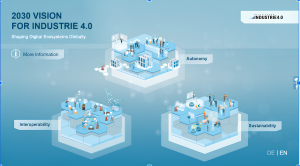 Image 1: 2030 Vision for Industrie 4.0- Shaping Digital Ecosystems Globally
Three Pillars of Digital Ecosystem Success
Germany’s 2030 Vision for Industrie 4.0 rests on three strategic pillars that I believe are applicable far beyond manufacturing:
- Autonomy: Building systems that can adapt and evolve independently
- Interoperability: Ensuring seamless communication between diverse technologies and platforms
- Sustainability: Creating long-term value that benefits society and environment
Global Collaboration and Standards
Germany’s international partnerships, with the Industrial Internet Consortium (USA), Alliance Industrie du Futur (France), and Robot Revolution Initiative (Japan), demonstrate how national digital strategies can become global movements. The Project GAIA-X initiative for distributed European data infrastructure exemplifies this collaborative approach.
 Image 2: Industry 4.0 characteristics by Ztudium Ltd
Malaysia 5.0: Emerging Market Innovation
Bridging the Digital Divide
Malaysia 5.0 represents something particularly close to my heart as someone who has extensively studied emerging market digital transformation. Malaysia’s focus on addressing technology adoption disparities between SMEs and multinational corporations tackles one of the most critical challenges facing developing economies.
The strategic emphasis on Key External Growth Areas (KEGA) shows remarkable foresight:
- Digital Economy: Beyond mere digitization to comprehensive fintech ecosystems
- Fourth Industrial Revolution Technologies: Leveraging AI, machine learning, and big data for competitive advantage
- Commodities 2.0: Adding value to traditional resources through technology
- Advanced Services: Modernizing service sectors for global competitiveness
- Green Economy: Positioning sustainability as a competitive advantage
SME Integration Strategy
What distinguishes Malaysia 5.0 is its explicit focus on small and medium enterprises. By creating online information-sharing platforms, fostering partnerships with higher education institutions, and optimizing public R&D funding, Malaysia is ensuring that technological advancement benefits all segments of society, not just large corporations.
Convergence and Divergence: Lessons for Global Implementation
Common Threads
All three visions share critical elements that I believe are essential for any smart society initiative:
- Government Leadership: Strong public sector commitment and funding
- Multi-Stakeholder Collaboration: Bringing together public, private, and academic sectors
- International Cooperation: Recognizing that smart societies must be globally connected
- Sustainability Focus: Integrating environmental responsibility with technological advancement
- Inclusive Growth: Ensuring benefits reach all segments of society
Unique Contributions
Each nation brings distinct strengths:
- Japan: Advanced AI capabilities and governance innovation
- Germany: Industrial expertise and platform-based collaboration
- Malaysia: Emerging market perspective and SME integration focus
The Path Forward: Building on These Foundations
As we move deeper into the Fifth Industrial Revolution, these three visions provide invaluable roadmaps. However, successful implementation requires more than policy frameworks, it demands cultural transformation, educational reform, and a fundamental reimagining of how we organize society.
The integration of cyber-physical systems, the democratization of AI, and the emergence of decentralized autonomous organisations will continue to challenge traditional governance structures. The nations that succeed will be those that, like Japan, Germany, and Malaysia, embrace both technological innovation and social adaptation.
A Smarter World for All
The visions of Society 5.0, Industrie 4.0, and Malaysia 5.0 represent more than national strategies, they’re contributions to humanity’s collective future. As we navigate the complexities of the digital age, these frameworks provide essential guidance for building societies that are not just smarter, but more equitable, sustainable, and human-centered.
The challenge now lies in adaptation and implementation. Other nations must study these models, extract applicable lessons, and develop their own contextually appropriate visions for the smart society future. The revolution has begun, the question is not whether it will transform us, but whether we will guide that transformation wisely.
References and Sources
This article draws from extensive research and analysis of national digital transformation strategies. Key sources include:
- Japan pushing ahead with Society 5.0 to overcome chronic social challenges: https://www.unesco.org/en/articles/japan-pushing-ahead-society-50-overcome-chronic-social-challenges
- Universities must step up to cater for ‘Society 5.0’ https://www.universityworldnews.com/post.php?story=20180711171755220
- Japan and India to collaborate on Society 5.0 : Hiroshige Seko: https://medium.com/redact/japan-and-india-to-collaborate-on-society-5-0-hiroshige-seko-c9111bd520b0
- Japan’s 2050 goal: A carbon-neutral society: https://www.europarl.europa.eu/RegData/etudes/BRIE/2021/698023/EPRS_BRI(2021)698023_EN.pdf
- Federal German Government: Future strategy for research and innovation (2023 accessed on https://www.bmbf.de/bmbf/de/forschung/zukunftsstrategie/zukunftsstrategie_node.html).
- Gooding, Matthew: Gaia-X: Has Europe’s grand digital infrastructure project hit the buffers? (2024, Data Center Dynamics accessed on: https://www.datacenterdynamics.com/en/analysis/gaia-x-has-europes-grand-digital-infrastructure-project-hit-the-buffers/).
- Hannover Messe: Digitalization. Standardization. Implementation. (2024, accessed on https://www.sci40.com/en/home.html).
- Avril 2021, l’Alliance Industrie du Futur se transforme pour porter la filière Solutions Industrie du Futur (S-I-F). http://www.industrie-dufutur.org/


