


Fashion Industry
Top 10 Smart Glasses and AI Wearables for 2027
25 Nov 2026

Introduction: when technology became something you wear
Smart glasses have finally become something people want to be seen wearing. After a decade of false starts, AI-powered eyewear is now sold by fashion houses, styled by pop stars and stocked in optical stores, not just tech shops.
The numbers show the shift. IDC reports that smart glasses without displays grew 167% year on year in the first quarter of 2026, reaching about 2.25 million units in a single quarter. It forecasts around 13.6 million smart glasses shipped in 2026, worth about $5.1 billion, and growth of 40.5% across smart eyewear in 2027.
The biggest change is that tech companies now design with eyewear brands rather than for them. Meta works with EssilorLuxottica on Ray-Ban and Oakley. Google and Samsung have partnered with Warby Parker and Gentle Monster. Even the newest collections arrive with celebrity collaborations, from LISA to Kylie Jenner.
As futurist Bernard Marr notes in his latest analysis of smart glasses and AI wearables trends, the challenge now is less about whether these devices work and more about how they look, how useful they feel every day, and how safely they handle our data.
Here are the 10 smart glasses and AI wearables that are defining fashion and technology as we head into 2027.
The top 10 smart glasses and AI wearables for 2027
| # | Device | Type |
|---|---|---|
| 1 | Ray-Ban Meta (Gen 3) | AI camera glasses |
| 2 | Meta Ray-Ban Display | AI glasses with in-lens display |
| 3 | Gentle Monster Intelligent Eyewear | AI glasses (Google, Samsung) |
| 4 | Warby Parker Intelligent Eyewear | AI glasses (Google, Samsung) |
| 5 | Meta Glasses by LISA | Celebrity-designed AI glasses |
| 6 | Ray-Ban Meta Audio | Camera-free audio glasses |
| 7 | Oakley Meta Vanguard | Sports AI glasses |
| 8 | Even Realities G2 + R1 ring | Display glasses and smart ring |
| 9 | Oura Ring 5 | AI health ring |
| 10 | Apple smart glasses | Expected 2027 |
1. Ray-Ban Meta (Gen 3): the style icon goes mainstream
The Ray-Ban Meta line has become the world's best-selling AI glasses, and the third generation, launched at Meta Connect in September 2026, leans further into fashion. It now comes in the classic Wayfarer, the Aviator and a new cat-eye frame called Zena, across 27 frame and lens combinations.
Under the classic look sits a 12MP camera with 3K video, a six-microphone array, open-ear speakers, Meta AI and up to nine hours of battery life. It starts at $449, $70 more than the Gen 2.
Why it matters for fashion: it proves smart glasses can look exactly like the eyewear people already love.
2. Meta Ray-Ban Display: the screen arrives in the lens
Meta Ray-Ban Display adds a small full-colour display inside the right lens, showing messages, navigation, live captions and translations without taking out your phone. It is controlled by the Meta Neural Band, a wristband that reads subtle finger gestures.
It launched in the US in September 2025 at $799. After a delay caused by demand, it reached the UK and Canada in September 2026 at £749 and CA$1,149, followed by France, Italy and Germany at €899.
Why it matters for fashion: it is the first mainstream glasses with a display that still looks like a pair of Ray-Bans. Display glasses are the trend IDC expects to gain momentum in 2027.
3. Gentle Monster Intelligent Eyewear: avant-garde meets Gemini
The Korean label known for sculptural frames has launched its first smart glasses with Google and Samsung, powered by Gemini on Android XR. The collection launched with a short film starring Joaquin Phoenix, directed by Jonathan Glazer.
The frames weigh about 40g and offer up to nine hours of battery, or up to 72 hours with the charging case. Prices range from $449 to $489. Pre-orders opened on 12 November 2026, with sales from 10 December in the US and South Korea.
Why it matters for fashion: it is the boldest design statement in AI eyewear yet, with fashion leading and technology following.
4. Warby Parker Intelligent Eyewear: smart glasses for everyday style
Warby Parker brings its accessible, prescription-first approach to AI glasses with three styles: Alden, Reid and Wren. Built with Google and Samsung, the glasses pair with both Android and iOS phones and include a 12MP camera for hands-free photos, directions, messages and live translation.
They start at $395, the lowest entry price of the new Google range, and ship from 10 December 2026. Demos are available across Warby Parker's US stores, and every purchase counts towards its Buy a Pair, Give a Pair programme.
Why it matters for fashion: it brings smart glasses into the everyday optical shop, where most people already buy their frames.
5. Meta Glasses by LISA: the celebrity collaboration
Meta's collaboration with BLACKPINK's LISA shows how quickly smart glasses have entered celebrity culture. The collection has two frames: the Meta Adventurer LISA Edition in a Moonlit Sky frame with Blush lenses, and the Meta Capri LISA Edition, an Eclipse cat-eye with grey lenses.
Both start at $399 and support prescriptions. Details include a custom star on the temples and case, collectible case charms inspired by LISA's pets, and digital photocards unlocked through the glasses. It follows the Kylie Jenner edition, which now has a new Ivory colourway.
Why it matters for fashion: smart glasses are now sold like fashion drops, with limited editions, collectibles and fan culture.
6. Ray-Ban Meta Audio: the camera-free option

At Connect 2026, Meta launched its first smart glasses with no camera at all. Ray-Ban Meta Audio offers music, calls, podcasts and Meta AI through open-ear speakers, in Clubmaster and Burbank styles.
It starts at $349 and is compatible with prescription lenses. Without a camera, Meta says it also has the longest battery life of any of its glasses.
Why it matters for fashion: it answers the biggest social objection to smart glasses, being filmed without knowing it, while opening up new design freedom.
7. Oakley Meta Vanguard: performance eyewear gets smart

Oakley Meta Vanguard is built for runners and cyclists. It has a centred, ultra-wide 12MP camera with 3K recording, Oakley Prizm lenses and IP67 resistance to sweat, dust and water.
It pairs with Garmin devices and Strava, so wearers can ask for real-time pace or heart-rate data and add performance stats to their videos. It costs $499 in the US and £499 in the UK.
Why it matters for fashion: sportswear and AI meet in a form athletes already trust.
8. Even Realities G2 and R1: quiet technology, minimalist design
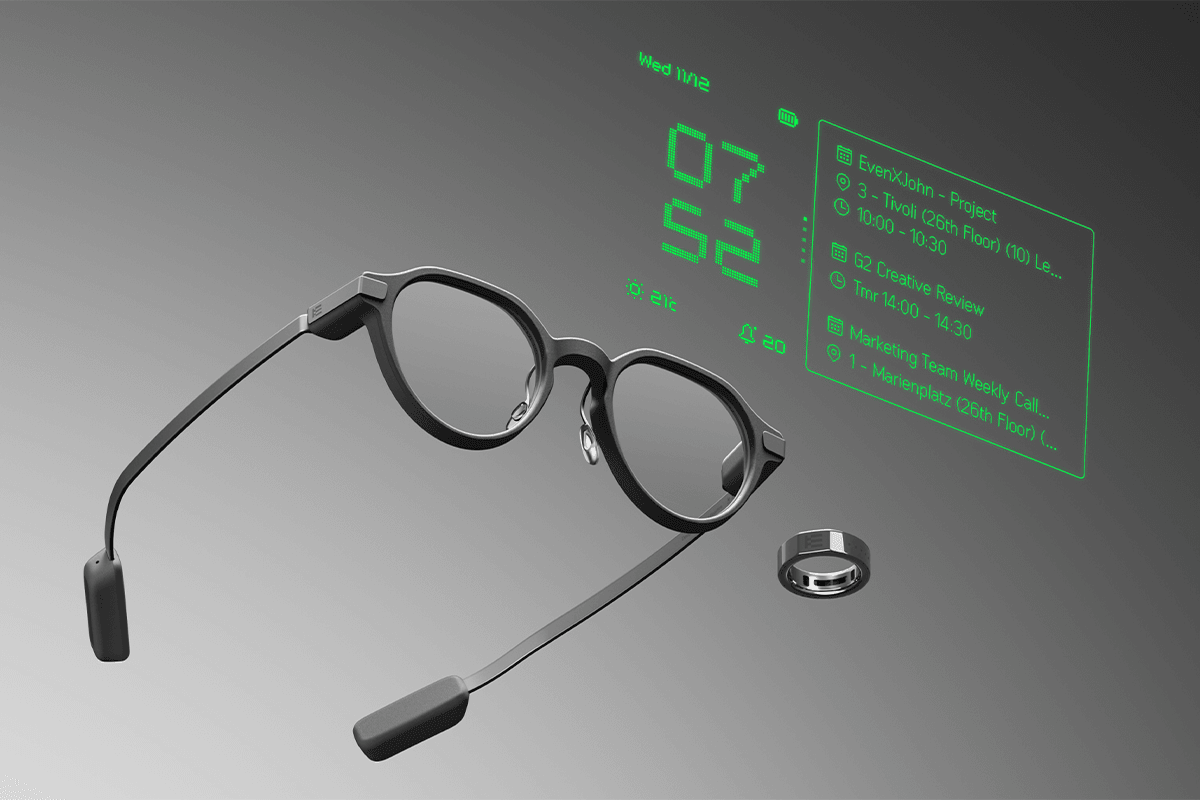
Even Realities takes the opposite path to Meta: no camera and no speakers. The G2 glasses show discreet green text in the lenses for notifications, navigation, teleprompting and translation, and they look close to ordinary prescription frames.
The optional Even R1 smart ring, made of zirconia ceramic and medical-grade stainless steel, lets users control the glasses with subtle finger gestures and tracks health data. The G2 costs $599 / £599 and the R1 costs $249 / £239.
Why it matters for fashion: it shows that privacy-first, minimalist design can be a selling point in its own right.
9. Oura Ring 5: the AI wearable that looks like jewellery
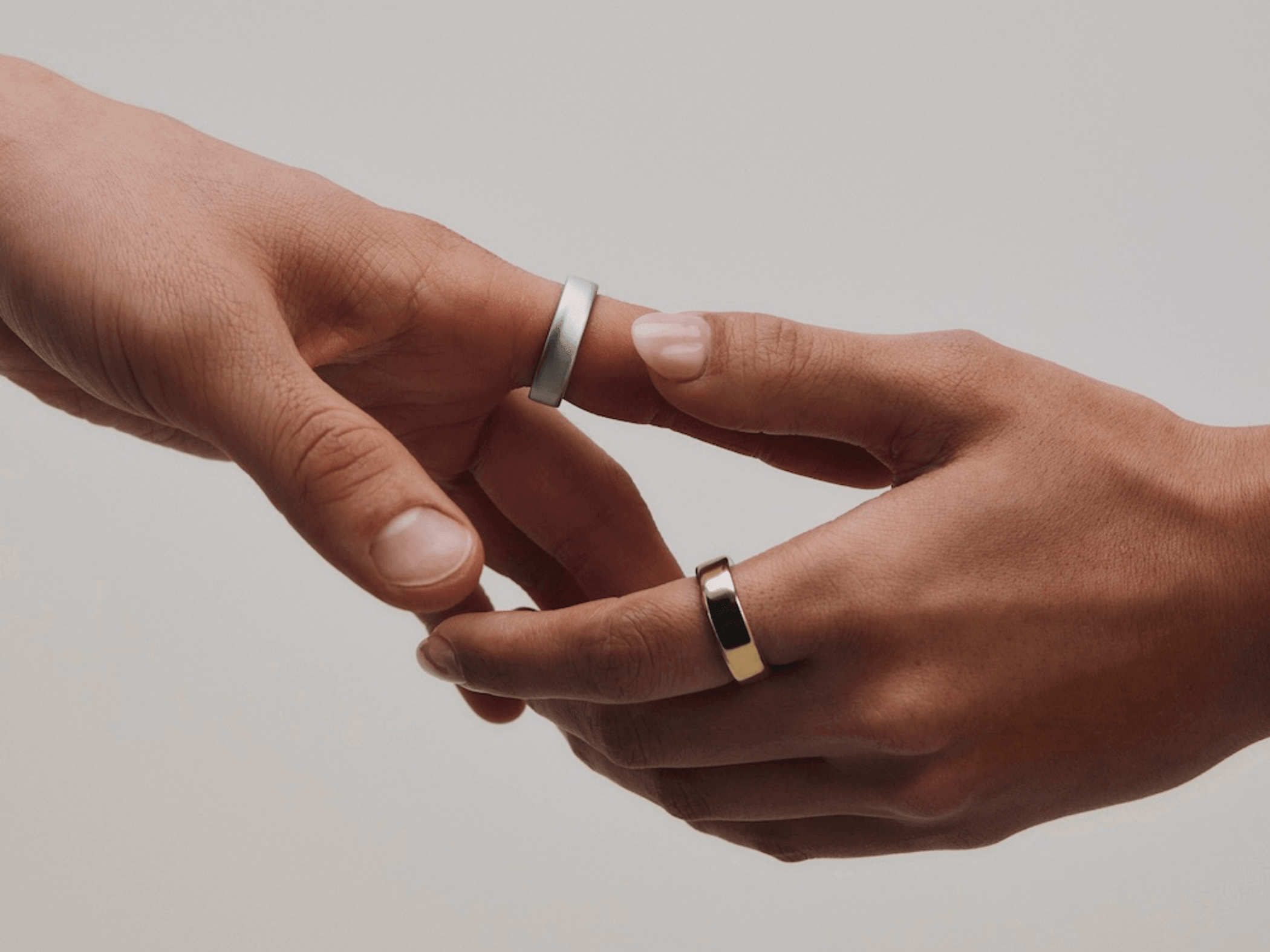
Not every AI wearable sits on your face. The Oura Ring 5, launched in May 2026, is 40% smaller than the Ring 4 and tracks over 50 health metrics, including sleep, heart rate and new blood pressure trend signals.
It starts at $399 / £399 for silver and black, and $499 / £499 for premium finishes such as gold and Deep Rose, plus a $5.99 / £5.99 monthly membership.
Why it matters for fashion: smart rings prove that health technology can be as discreet and personal as fine jewellery.
10. Apple smart glasses: the one to watch in 2027
Apple has not announced its smart glasses, but reports from Bloomberg's Mark Gurman suggest they are coming. According to Macworld's coverage in November 2026, Apple could unveil its first glasses at WWDC in June 2027, with shipments before the end of 2027.
The first model is expected to have cameras, microphones and AI, but no in-lens display. Like Meta's Ray-Bans, it will reportedly focus on design and style first.
Why it matters for fashion: if Apple repeats its watch strategy, smart glasses could become a mainstream fashion accessory almost overnight.
Five trends shaping smart glasses and AI wearables in 2027
- Displays move into the lens. Most smart glasses today can see and hear but cannot show anything. IDC expects display-enabled glasses to gain momentum by 2027, led by products such as Meta Ray-Ban Display and Even Realities G2.
- Fashion houses lead the design. EssilorLuxottica, Warby Parker and Gentle Monster now shape what smart glasses look like. The result is more frames, more colours and prescription options that make AI eyewear feel like real eyewear.
- Celebrity and limited-edition drops. Collaborations with LISA and Kylie Jenner, limited runs such as Meta Fury and campaign films such as Gentle Monster's with Joaquin Phoenix bring smart glasses into fashion's drop culture.
- Prices fall and choice widens. Meta's cheapest camera glasses now start at $249, and IDC expects average selling prices to fall from about $376 today to around $229 by 2030, bringing smart eyewear to far more buyers.
- Privacy becomes a design feature. Camera-free models such as Ray-Ban Meta Audio and Even Realities G2, recording indicator lights and new privacy controls from Google show that brands now compete on trust as well as features.
Privacy remains the biggest open question. Camera-equipped glasses raise concerns about filming in public, and AI wearables collect sensitive data, from what we see to how we sleep. As Bernard Marr argues, the brands that win in 2027 will be those that can show, not just claim, that they protect the people wearing their products and the people around them.
Conclusion: the future of fashion is intelligent
In 2027, the most important wearable technology may be the one that looks least like technology. Smart glasses have moved from gadget to accessory, shaped by eyewear houses, celebrity designers and everyday optical stores.
For the fashion industry, this opens a new category where design, data and AI meet. The brands that succeed will combine beautiful frames, genuinely useful AI and strong privacy, so people feel as comfortable wearing their glasses as they do around others who wear them.
Frequently asked questions
What are the best smart glasses to buy in 2026? Ray-Ban Meta (Gen 3) is the most popular all-round choice at $449. For a built-in display, Meta Ray-Ban Display ($799 / £749) and Even Realities G2 ($599 / £599) are the leading options.
Are Google's smart glasses available in the UK? Not yet. Google and Samsung's Intelligent Eyewear with Warby Parker and Gentle Monster launches on 10 December 2026 in the US and South Korea only.
Are there smart glasses without a camera? Yes. Ray-Ban Meta Audio ($349) and Even Realities G2 ($599) have no camera, which makes them a popular choice for privacy-conscious buyers.
When will Apple release smart glasses? Apple has not confirmed a date. Reports suggest an announcement at WWDC in June 2027, with shipping before the end of 2027.
How big is the smart glasses market? IDC forecasts around 13.6 million smart glasses shipped in 2026, generating about $5.1 billion in revenue, with Meta holding 69.2% of the market in the first quarter of 2026.
Sources
Market data and trends
- IDC: Smart Glasses Surge, the XR Market Is Rewriting Its Own Rules (June 2026)
- IDC: Augmented and Virtual Reality market insights, 2026 forecast
- IDC: Smart Glasses Growth Cools to 35% as Meta Doubles Down on Distribution (September 2026)
- IDC: XR Market Grew 44.4% in 2025 as Smart Glasses Redefine the Category
Meta, Ray-Ban and Oakley
- Meta: Introducing Ray-Ban Meta Audio and Our Deepest Lineup of AI Glasses Yet
- Meta Newsroom: Introducing Ray-Ban Meta Audio and More AI Glasses Styles
- Meta: Making Meta Ray-Ban Display More Useful to More People
- Mixed: Meta Ray-Ban Display goes on sale in the UK at £749
- Engadget: Everything announced at Meta Connect 2026
- Mixed: Meta's cheapest AI glasses are a $249 Meta Adventurer
- Meta: Oakley Meta Vanguard product page
- T3: Oakley Meta Vanguard review (price and availability)
Google, Samsung, Warby Parker and Gentle Monster
- Google: Intelligent eyewear is coming this fall (Google I/O 2026)
- Vision Monday: Warby Parker reveals full collection of Intelligent Eyewear
- The Next Web: Google and Samsung's Gemini smart glasses go on preorder from $395
- Thurrott: First Android XR smart glasses from Warby Parker and Gentle Monster launching in December
- Gagadget: Gentle Monster's Gemini glasses open for pre-order
Even Realities, Oura and Apple
- Android Authority: Even Realities G2 and R1 launch
- Hypebeast: Even Realities unveils G2 smart glasses and R1 smart ring (UK pricing)
- MacRumors: Oura Ring 5 unveiled with smaller design and blood pressure tracking
- T3: Oura Ring 5 review (pricing)
- Macworld: Report claims Apple's smart glasses will launch in June (November 2026)
- Digital Trends: Apple's smart glasses expected closer to the end of 2027


