
resources
Understanding UK Cities Population Trends in 2025
Industry Expert & Contributor
10 Jul 2025

So, you’re probably wondering what’s up with UK cities and their populations, right? It’s a pretty interesting topic, especially as we get closer to 2025. We’re talking about how these places are changing, who’s moving where, and what that means for everyone living there. From the big, busy spots to the up-and-coming towns, each one has its own story about growth and what comes with it. Let’s take a look at what’s going on and what we might expect.
Key Takeaways
- Many UK cities are seeing their populations go up, mostly because people are moving there and more babies are being born.
- Big cities like London are still growing a lot, but other places like Birmingham and Manchester are also getting bigger.
- Some specific cities, like Cardiff and Coventry, are growing really fast, often because they have good jobs or attract younger people.
- More people in cities means we need more houses, and public services like schools and hospitals get busier.
- Looking ahead, cities are trying to plan for this growth so they can keep things running smoothly and everyone has a good place to live.
Understanding UK Cities Population Dynamics
Factors Driving Urban Growth in the UK
So, what’s making UK cities swell up? It’s a mix of things, really. Jobs are a big one – cities tend to be where the action is when it comes to employment. Then there’s the whole lifestyle thing; cities offer a certain buzz that smaller towns often can’t match. Plus, birth rates sometimes play a role, with more babies being born than folks passing away. It’s a pretty simple equation, but the results are complex. Understanding UK town populations is key to grasping these dynamics.
- Job opportunities attract people.
- Lifestyle and cultural attractions draw in residents.
- Birth rates contribute to growth.
Managing Population Influx in UK Cities
Okay, so everyone’s moving to the city. Now what? Well, cities have to figure out how to handle all these new people. That means improving public services, like schools and hospitals. It also means building more homes – and not just any homes, but affordable ones. And let’s not forget about transportation; nobody wants to spend their life stuck in traffic. Cities need to plan ahead to make sure everyone can live comfortably.
| Area | Strategy | Outcome |
|---|---|---|
| Housing | Affordable housing developments | Increased housing supply, reduced homelessness |
| Public Services | New schools, hospitals | Improved quality of life, healthier population |
| Transportation | Improved public transit, road upgrades | Reduced congestion, better connectivity |
Challenges Faced by Growing Urban Centers
It’s not all sunshine and roses when a city grows. More people means more problems. Overcrowding is a big one, and it puts a strain on everything from housing to public transportation. Then there’s the issue of affordable housing – as more people move in, prices tend to go up, making it harder for people to find a place to live. And let’s not forget about the environment; cities need to find ways to grow without destroying the planet.
Managing growth sustainably is a big deal. It means planning carefully and making sure everyone has a fair shot. City leaders have a tough job making sure growth benefits everyone.
Population Trends in Major UK Cities
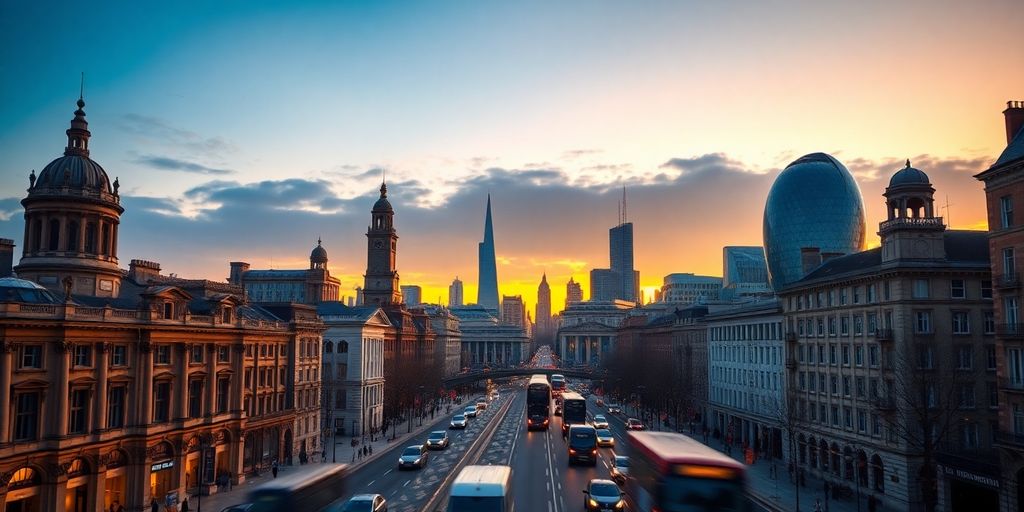
London: The Epicenter of Growth
London’s growth is showing no signs of slowing down. It remains a primary destination for young professionals and international migrants, largely due to its status as a global business hub. This constant influx brings both advantages and disadvantages. On one hand, it fuels economic activity and enriches the city’s cultural diversity. On the other, it puts immense pressure on housing, transportation networks, and public services. Effective urban planning is crucial to manage this growth sustainably.
Birmingham and Manchester: Emerging Urban Hubs
Birmingham and Manchester are experiencing consistent population increases, solidifying their positions as significant urban centers. Manchester, with its industrial heritage, offers a unique blend of history and modernity. These cities are attracting businesses and residents alike, contributing to regional economic growth. Manchester’s past is pretty interesting:
Manchester has a rich history tied to the Industrial Revolution. You can still see old mills and canals that remind you of its past. The city’s business spirit, especially in textiles, earned it the nickname "Cottonopolis." All that manufacturing helped the British Empire get rich. But the Industrial Revolution also created a working class and brought attention to problems like poverty and bad working conditions.
Other Significant UK Urban Centers
Beyond London, Birmingham, and Manchester, several other UK cities are experiencing notable population trends. These include:
- Leeds: A major financial and commercial center in the North.
- Glasgow: Scotland’s largest city, known for its culture and industry.
- Liverpool: A city with a rich maritime history and vibrant arts scene.
These cities contribute significantly to the UK’s overall population distribution and economic activity. Here’s a quick look at some population stats:
| City/Town | Population (2025 est.) |
|---|---|
| London | 9,000,000+ |
| Birmingham | 1,150,000+ |
Top UK Cities for Population Growth
It’s interesting to see which cities are really booming in the UK right now. Forget the usual suspects for a minute; some places are experiencing serious growth spurts. Let’s take a look at some of the top contenders and what makes them so appealing.
Cardiff’s Leading Growth Trajectory
Cardiff is really making waves! It’s leading the pack with impressive population growth. The Welsh capital is attracting new residents thanks to its dynamic economy, a thriving cultural scene, and excellent transport links. It’s not just about jobs, though; Cardiff offers a vibrant lifestyle that’s drawing people in. The city’s growth is a testament to its ability to blend opportunity with quality of life. Cardiff is a great place to find employment.
Coventry’s Appeal to Young Demographics
Coventry is doing something right when it comes to attracting and keeping young people. It’s not just growing; it’s holding onto its youth, specifically those aged 21-32. What’s the secret? A strong jobs market, affordable housing, and a location that puts it within easy reach of major UK hubs like Birmingham and London. It’s a smart choice for young professionals looking for opportunity without the London price tag.
Milton Keynes: Modern Infrastructure and Economy
Milton Keynes is known for its modern infrastructure and growing economy, and it’s definitely paying off in terms of population growth. The city’s strong jobs market is a major draw, and its affordability compared to London makes it an attractive alternative. The planned city structure and green spaces are also a big plus for young professionals and families. It’s a city designed for modern living, and people are taking notice. Here are some of the reasons why people are moving to Milton Keynes:
- Strong job market
- Affordable housing compared to London
- Planned city structure with green spaces
Milton Keynes has consistently outperformed its peers over the past decade, indicating a long-term trend rather than a short-lived spike in growth. This stability and consistent growth make it an attractive option for those seeking a place to settle down and build a future.
Leicester’s Diverse Appeal
Leicester’s growth reflects its appeal to a wide range of people. It’s a city with a diverse population and a growing economy. Leicester is leveraging affordability as a competitive edge, making it more accessible to a wider demographic. The city’s cultural richness and community spirit also play a role in attracting new residents. It’s a place where people from all walks of life can find a home. The city is working hard to manage population influx.
Impact of Population Growth on Urban Infrastructure
Housing Demand and Affordability
Okay, so more people moving into cities means one big thing: we need more houses. And not just any houses, but houses people can actually afford. The pressure on housing is intense, driving up prices and rents, making it tough for many to find a decent place to live. It’s a classic supply and demand problem, but with real-life consequences. We’re talking about people struggling to make ends meet, facing longer commutes, or being forced to live in overcrowded conditions. It’s not just about building more units; it’s about building the right kind of units in the right places. Government policies are crucial for sustainable city development.
Strain on Public Services
Think about it: more people means more demand on everything. Schools get crowded, hospitals get busier, and libraries are packed. Public services, already stretched thin in many areas, feel the squeeze even more when populations boom. It’s not just about having enough resources, but also about distributing them fairly. Are we investing enough in these essential services to keep up with the growth? Are we making sure that everyone, regardless of their background or location, has access to quality education, healthcare, and other vital services? These are the questions we need to be asking.
Here’s a quick look at how population growth can affect public services:
- Increased class sizes in schools
- Longer wait times at hospitals
- Overcrowding on public transportation
- Higher demand for social services
The challenge is to balance the needs of a growing population with the resources available. It requires careful planning, efficient management, and a willingness to invest in the future. It’s about creating cities that are not only bigger but also better.
Transportation Challenges and Solutions
Getting around a city can be a nightmare even without a population surge. Add more people into the mix, and you’ve got gridlock, packed buses, and overflowing trains. Transportation infrastructure needs to keep pace with population growth, or else we’re all stuck in traffic. Investing in efficient public transportation networks is key. But it’s not just about building more roads or adding more buses. It’s about creating a transportation system that’s sustainable, accessible, and convenient for everyone. Think about bike lanes, pedestrian-friendly streets, and smart traffic management systems. It’s about making it easier for people to get where they need to go, without adding to congestion or pollution.
Here’s a table showing the impact of population on transportation:
| City | Population | Average Commute Time | Public Transit Usage |
|---|---|---|---|
| London | 9,000,000+ | 60 minutes | 37% |
| Birmingham | 1,150,000+ | 45 minutes | 22% |
| Manchester | 550,000+ | 40 minutes | 28% |
Future Projections for UK Cities
Anticipated Population Changes by 2025
Okay, so what’s next for UK cities? It’s a big question, and honestly, nobody has a crystal ball. But we can look at current trends, throw in some educated guesses, and get a decent idea of what the future might hold. The UK’s growth potential is centered in its cities, and city leaders face the challenge of fostering an environment that enables this growth to thrive.
Here’s a quick look at some population figures:
| City | Population | Population Density (people/km²) |
|---|---|---|
| London | TBD | TBD |
| Birmingham | TBD | TBD |
| Manchester | TBD | TBD |
As cities expand, they face the challenge of managing growth sustainably. It requires thoughtful planning and a commitment to creating inclusive environments. The UK’s growth potential is centered in its cities, and city leaders face the challenge of fostering an environment that enables this growth to thrive.
Sustainable Growth Strategies
Sustainable growth is the name of the game. It’s not just about getting bigger; it’s about getting better. Cities need to think about the environment, the economy, and the people who live there. It’s a balancing act, for sure. Here are some things cities are trying to do:
- Green spaces: More parks and trees. It makes the city nicer and helps with pollution.
- Public transport: Better buses, trains, and bike lanes. Less traffic, less pollution.
- Energy efficiency: Buildings that use less energy. Saves money and helps the planet.
Economic Indicators and Long-Term Viability
It’s not just about people; it’s about money, too. Cities need to be economically healthy to survive. That means jobs, businesses, and a good quality of life. If the economy is bad, people will leave. Here are some things that make a city economically strong:
- Job opportunities: Lots of different kinds of jobs. London’s population is projected to grow significantly, reaching 9.97 million by 2047, an increase of nearly 700,000 from 2025.
- Education: Good schools and universities. Attracts smart people and creates new ideas.
- Infrastructure: Good roads, internet, and other services. Makes it easier to do business.
Here’s a table showing some potential economic indicators:
| Indicator | Description
Regional Variations in UK Cities Population
It’s interesting to see how population changes aren’t uniform across the UK. Some regions are booming, while others face stagnation or decline. This section will explore these differences, looking at Scotland, Wales, and Northern Ireland.
Growth in Scottish Urban Centers
Scotland’s urban landscape is diverse. Edinburgh and Glasgow are the main hubs, but other cities like Aberdeen and Dundee also play important roles. Glasgow’s population statistics are particularly interesting, showing a different trend compared to Edinburgh.
- Edinburgh: Attracts many young professionals and those in the financial sector.
- Glasgow: Has a strong industrial heritage and is working to revitalize its economy.
- Aberdeen: Heavily influenced by the oil and gas industry.
Population Shifts in Welsh Cities
Wales presents a unique picture. Cardiff is experiencing significant growth, but other areas face different challenges. Migration patterns and economic opportunities play a big role in shaping these trends. The Welsh government’s policies also influence urban development.
Understanding the nuances of population change in Wales requires looking at factors like rural-to-urban migration and the impact of Brexit on local economies. These elements combine to create a complex demographic landscape.
Northern Ireland’s Urban Development
Northern Ireland’s urban development is concentrated around Belfast and its surrounding areas. The region’s history and political situation have shaped its population distribution. Economic investment and infrastructure projects are key to future growth. Belfast’s house prices are relatively affordable compared to other UK cities, which can be a draw for some.
- Belfast: The main urban center, with a focus on technology and services.
- Derry/Londonderry: An important city in the northwest, with a growing university sector.
- Other towns: Face challenges related to economic development and connectivity.
Wrapping Things Up: What 2025 Means for UK Cities
So, as we finish up our look at UK city populations, it’s pretty clear these places are always changing. From the busy streets of London to the unique feel of Edinburgh, every city has its own story. The shifts we’re seeing in these cities show bigger trends in how people live and work. Looking ahead to 2025, it’s good to get a handle on these changes, because they bring both tough spots and chances for growth. Whether you’re thinking about visiting, moving, or just curious, UK cities have a lot going on. They mix old history with new life, and there’s always something new to find.
Frequently Asked Questions
Why is London the largest city in the UK?
London is the biggest city in the UK because it offers many job opportunities, excellent schools, and exciting places to visit. Its rich history and diverse culture attract people from all over the world.
What causes UK cities to grow so rapidly?
UK cities grow quickly because they offer lots of jobs, attract new residents, and have more babies being born than people passing away. Cities like London and Manchester are popular for their exciting lifestyles and job options.
How do cities in the UK handle the influx of new residents?
Cities manage the increase in population by improving public services, building more homes, and making transportation better. They also create plans to make sure everyone can live comfortably.
What challenges do growing cities face?
Growing cities face challenges like becoming too crowded, putting a strain on public services, and needing more affordable homes. They also have to find ways to keep the environment safe while developing.
What are some major cities in Scotland?
Some of the biggest cities in Scotland include Glasgow, Edinburgh, and Aberdeen. Each has its own special culture and history that add to its population.
What is the expected population change in UK cities by 2025?
By 2025, many UK cities are expected to see their populations grow because of things like new jobs and people moving there. However, some areas might see fewer people if job opportunities go down.


