
resources
Unveiling the Largest Cities in the United States: A 2025 Population Overview
23 Oct 2025

As we examine the demographic projections for 2025, a fascinating picture emerges regarding the largest cities across the U.S. These urban centers, often at the forefront of national discourse, are undergoing significant shifts in population, reflecting evolving preferences for where individuals and families choose to establish themselves. Our exploration will delve into the dynamics of urban expansion, identifying which cities are experiencing notable growth and the underlying factors driving these changes. Indeed, it’s not solely about sheer population figures, but also about the broader trends shaping the character and future of our major metropolitan areas. Let’s carefully review the data to uncover what it reveals about America’s most populous cities.
Key Takeaways
- New York City consistently retains its position as the largest U.S. city, demonstrating sustained population growth year after year.
- Regions in the Southern and Western United States are witnessing substantial population influxes, leading to significant transformations in these burgeoning areas.
- Several cities have reached pivotal population milestones, such as surpassing the one-million-resident mark, underscoring their considerable development.
- The fastest-growing cities are proving attractive for a variety of reasons, contributing to a dynamic and ever-evolving urban landscape.
- Reliable annual data from the U.S. Census Bureau is essential for accurately monitoring these demographic shifts and comprehending population trends in our nation’s key urban centers.
Understanding the Scale of America's Largest Cities
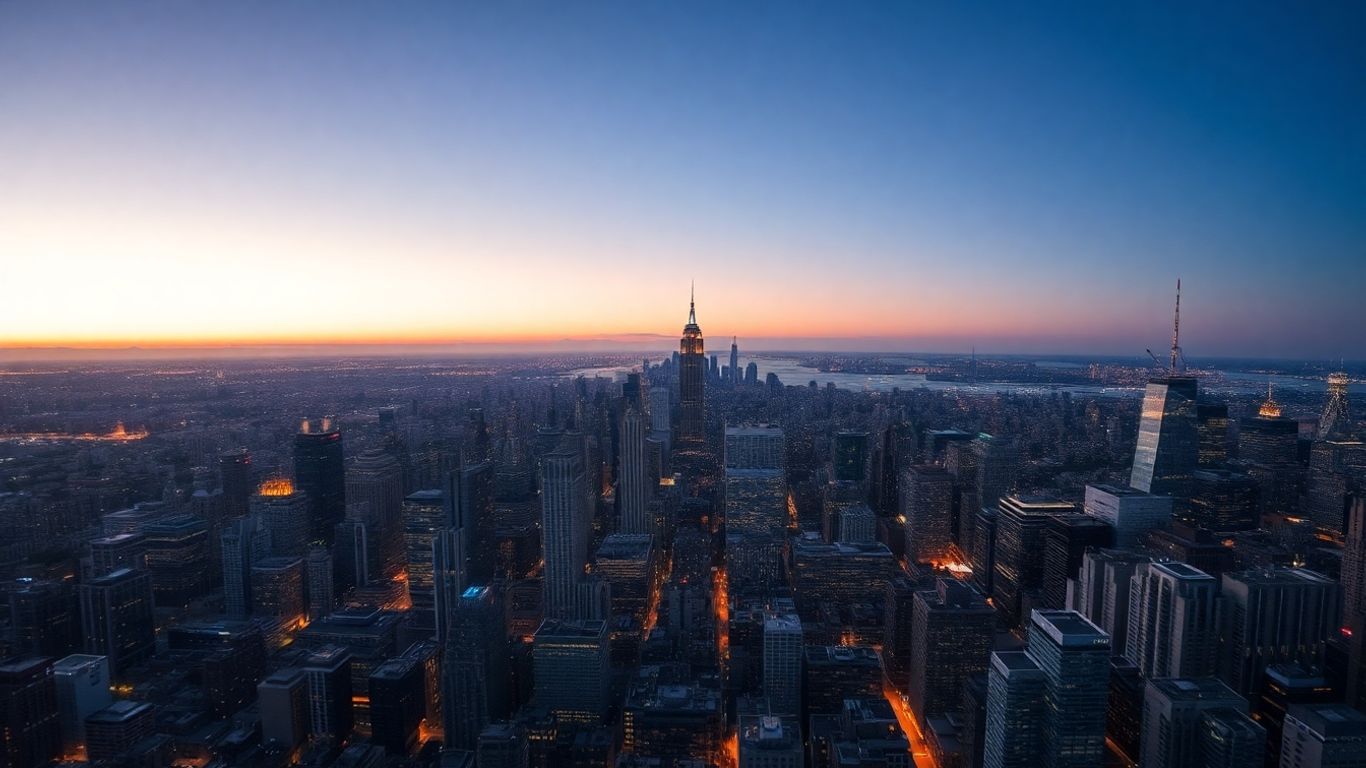
When discussing the largest cities in the United States, we’re moving beyond mere statistical figures. These places represent the vibrant, pulsating cores of American civilization, serving as powerful engines of culture, economic activity, and innovation. They are, in essence, where much of the nation’s energy and development are concentrated. Consequently, grasping their immense size and far-reaching influence is fundamental to understanding the trajectory of the country itself. It truly encompasses more than just resident counts; it’s about the profound impact these urban behemoths exert.
New York City: The Enduring Metropolis
Year after year, New York City steadfastly maintains its status as the most populous city in the U.S. It is a magnet, consistently drawing people in and exhibiting steady growth that firmly entrenches its position at the zenith. This enduring prominence is hardly coincidental; rather, it reflects the city's unparalleled economic opportunities, its vast cultural tapestry, and its undeniable global appeal. For anyone analyzing the demographic landscape of the United States, New York City stands as the undisputed initial point of reference.
Defining Major Urban Centers
What exactly makes a city a 'major urban center,' you might ask?
Regional Dynamics in Population Growth
It has become unequivocally clear that the patterns of internal migration within the U.S. are undergoing a notable transformation. We are observing a distinct geographical shift, with significant population growth increasingly concentrated in the South and West. These regions are attracting new residents at a truly impressive pace, fundamentally reshaping local communities and fostering novel opportunities.
Southern Cities Experience Remarkable Influx
The South, in particular, is experiencing an undeniable boom. Cities across states such as Texas and Florida are expanding at rates that surpass many other areas nationwide. This phenomenon isn't confined solely to major metropolitan hubs, either; smaller towns and mid-sized urban areas are also welcoming a substantial number of new inhabitants. Such rapid expansion frequently necessitates the emergence of new businesses and a pressing demand for increased housing infrastructure to accommodate the influx.
Here's a snapshot of some cities showing significant growth:
| Rank | Area Name | State Name | Percent Increase | 2024 Total Population |
|---|---|---|---|---|
| 1 | Princeton city | Texas | 30.6 | 37,019 |
| 2 | Fulshear city | Texas | 26.9 | 54,629 |
| 3 | Leesburg city | Florida | 18.5 | 37,815 |
| 4 | Celina city | Texas | 18.2 | 51,661 |
| 5 | Anna city | Texas | 14.6 | 31,986 |
Several contributing factors appear to be at play. A comparatively lower cost of living than in other parts of the country, a generally business-friendly environment, and a warmer climate collectively present compelling advantages for many individuals seeking a change of scenery or improved quality of life.
Western Expansion and Emerging Hubs
Out West, urban centers are also experiencing robust growth, albeit sometimes at a slightly different velocity than those in the South. Major conurbations like Los Angeles consistently draw new residents, and even smaller cities across states such as California and Colorado are undergoing notable expansion. This growth injects fresh vitality into these communities, often sparking innovation and development.
Factors Driving Regional Shifts
So, what exactly underpins these significant population movements? Typically, it's a confluence of various elements. Individuals are often seeking enhanced job opportunities, a more affordable place to reside, or simply a different lifestyle that aligns better with their aspirations.
The movement of people across regions is a multifaceted narrative. It's propelled by individual decisions regarding career advancement, family considerations, and overall quality of life—all coalescing into profound shifts in where Americans opt to establish their homes. Grasping these patterns helps us discern how the country's demographic mosaic is continually evolving.
These demographic shifts carry substantial implications for the entire nation, influencing everything from political representation to the critical need for new infrastructure and public services. The U.S. Census Bureau diligently monitors these trends, providing invaluable data that helps us comprehend the evolving population map of our nation.
Key Population Milestones and Their Significance
Surpassing the Million Resident Mark
Cities don't merely expand; they frequently cross important thresholds that signify a new phase of development. Achieving a population of one million people is, without question, a momentous accomplishment. It represents more than a mere numerical achievement; it indicates that a city has matured into a significant hub with a high degree of complexity and activity. Consider, for instance, the implications this scale has for essential services like public transportation, housing availability, and even the fluidity of daily movement within the urban fabric. It unquestionably introduces an additional layer of challenge and responsibility for city leaders.
In the past year, we’ve witnessed a handful of cities officially entering the esteemed "million-plus club." This achievement stands as a powerful testament to the widespread growth occurring across the nation. For example, Jacksonville, Florida, and Fort Worth, Texas, both successfully crossed this significant benchmark. Their respective successes demonstrate that substantial population increases are indeed occurring in diverse regions throughout the U.S.
Growth Beyond Major Metropolises
It isn't exclusively the largest cities that are experiencing expansion. A considerable number of smaller cities and towns are also seeing a significant influx of new residents. This broad trend suggests that population growth is a distributed phenomenon, occurring in many varied locations rather than being confined to just a few colossal urban centers. It's quite intriguing to observe how widely this demographic expansion is spread.
Here's a look at some cities that have recently passed the 100,000-person mark, indicating their emergence as more established urban areas:
- Deltona, Florida
- Plantation, Florida
- Sunrise, Florida
- Georgetown, Texas
- San Angelo, Texas
- Tracy, California
- Federal Way, Washington
Implications of Population Thresholds
Crossing these critical population markers is about far more than just civic accolades. It frequently necessitates that a city fundamentally re-evaluate its operational framework. Elements such as infrastructure development, the provision of public services, and urban planning initiatives must be reconfigured to effectively manage a larger populace. While undeniably a positive sign of a thriving community, such growth simultaneously introduces new complexities that city officials must adeptly navigate.
These population figures function as vital indicators, revealing where people are migrating and precisely what types of locations are proving most attractive to them. They collectively paint a comprehensive portrait of how America's urban areas are transforming over time.
When examining population changes, it's easy to become preoccupied with the sheer magnitude of the numbers. However, what truly lies beneath those statistics? Often, it's a story of economic opportunity, improved prospects, and individuals seeking a better quality of life. A city experiencing rapid growth, for instance, might be benefiting from the establishment of a new industry, thereby generating a wealth of job opportunities—a significant impetus for relocation. Ultimately, all these individual choices cumulate into profound shifts in residential patterns.
The Evolving Urban Landscape
America's Most Populous Cities in 2025
As we consider the projections for 2025, it's evident that the demographic map of America's largest cities remains in a state of flux. While certain urban giants consistently hold their top positions, others are expanding rapidly, fundamentally reshaping preferences for residential locations. The narrative extends beyond mere population size to encompass the pace of growth and its implications for the cities themselves.
New York City undeniably continues to hold its title as the nation's most populous city, with its numbers reflecting a consistent upward trajectory. Yet, the more compelling story lies in the dynamic shifts occurring throughout the country. Cities across the Southern and Western regions, in particular, are witnessing a substantial influx of new residents. This isn't an arbitrary phenomenon; it's a direct result of a combination of job availability, desirable lifestyles, and relative affordability.
The Dynamic Nature of Urban Centers
Cities, in essence, are never truly static entities. One might liken them to living organisms—perpetually growing, adapting, and transforming. This ceaseless evolution means that what defines an urban center today may very well differ tomorrow. The process encompasses more than simply adding residents; it involves the intricate ways neighborhoods change, how transportation systems must evolve to keep pace, and how communities organically develop.
Several key factors contribute to this ongoing metamorphosis:
- Job Markets: The emergence of new industries or the expansion of existing ones acts as a powerful magnet, drawing people seeking employment.
- Quality of Life: Elements such as excellent educational institutions, accessible healthcare, and ample recreational opportunities are highly valued. Individuals aspire to live in places where they can genuinely thrive.
- Cost of Living: While not always the primary motivator, cities that strike a favorable balance between economic opportunities and expenses tend to attract a broader demographic.
- Infrastructure: Well-maintained roadways, reliable public transit networks, and efficient utilities significantly enhance a city's livability and overall appeal.
The manner in which cities grow and change represents a complex interplay between powerful economic forces, myriad individual choices, and the availability of essential resources. It’s an unbroken, continuous process that profoundly shapes the very fabric of urban existence.
Forecasting Future Demographic Trends
Looking to the horizon, the data meticulously compiled by the U.S. Census Bureau provides an invaluable baseline for analysis. We can identify which cities are experiencing population gains and endeavor to understand the causal factors. Are they primarily attracting young families, or is there a more diverse demographic appeal? Deciphering these patterns assists us in projecting what cities might resemble in the coming years. Will current growth trends persist, or might new factors emerge to alter the established picture? It remains a truly fascinating demographic puzzle to observe as it unfolds.
Here's a look at some general trends:
| Region | 2025 Population Trend | Key Drivers |
|---|---|---|
| Northeast | Moderate Growth | Established economies, cultural hubs |
| South | High Growth | Job opportunities, lower cost of living |
| Midwest | Mixed Growth | Varies by city, some industrial resurgence |
| West | High Growth | Tech sector, lifestyle appeal, expansion |
Naturally, predicting the future is inherently complex. Unforeseen events, shifts in national policy, or breakthrough technological advancements could all significantly alter these projections. Nevertheless, by closely monitoring population movements and the underlying reasons, we can develop a more informed perspective on the direction in which America's urban centers are headed.
Components of Population Change

Cities are not static entities; rather, they are dynamic environments in a perpetual state of transformation—much like living organisms themselves. They expand, they adapt, and on occasion, they even contract. It isn't simply about tallying residents, however. A deeper understanding requires us to discern the driving forces behind people's decisions to relocate to a place, as well as the reasons they may choose to depart.
Analyzing Numeric Increases
When reviewing population statistics, it's easy to become engrossed in the sheer magnitude of the figures. But what truly underpins these numbers? More often than not, it's a narrative woven from economic opportunities, individual prospects, and the pursuit of an improved quality of life. Consider a city experiencing a sudden, significant population surge. Frequently, this coincides with the establishment or expansion of a new industry, generating a wealth of job opportunities—an incredibly powerful draw for prospective residents. People move for employment, for educational pursuits, or to be geographically closer to family. It's an intricate mosaic of individual choices that collectively culminates in substantial shifts in residential distribution.
Understanding Growth Drivers
So, what specific factors genuinely contribute to an increase in a city's population? There are several primary components:
- Natural Increase: This refers simply to a period when a city experiences more births than deaths. It's a steady, organic mechanism for population growth.
- Net Migration: This represents the differential between the number of people moving into a city and the number of people moving out. If more individuals arrive than depart, the city's population expands due to migration.
- Economic Opportunities: As previously noted, the presence of new jobs or burgeoning industries serves as an immense pull factor. Individuals frequently follow the prospects for work.
- Quality of Life: This broad category can encompass elements such as affordable housing options, high-quality educational systems, a desirable climate, or convenient access to recreational activities. These factors collectively render a city an appealing place to establish roots.
The dynamic interplay of births, deaths, and the ebb and flow of migration collectively crafts the unique population narrative of any given city. It's a delicate balance that continually shifts over time.
The Role of the U.S. Census Bureau
Monitoring all these intricate population dynamics is a monumental undertaking, and this is precisely where the U.S. Census Bureau plays its indispensable role. They serve as the definitive, official source for population data across the United States. Every ten years, a comprehensive census is conducted, accounting for every individual. However, they also administer ongoing surveys and generate estimates throughout the intervening decade to track changes more frequently. This information is critically important for numerous applications, including:
- Government Planning: Essential for strategic decisions regarding the construction of new roads, schools, and healthcare facilities.
- Political Representation: Fundamental for determining the equitable allocation of representatives for each state in Congress.
- Business Decisions: Aids companies in making informed choices about optimal locations for operations and identifying target customer bases.
- Academic Research: Facilitates scholarly and other investigations into population trends and their far-reaching societal effects.
Without the meticulous work of the Census Bureau, our ability to gain a clear and accurate understanding of how our cities are growing and transforming would be severely hampered.
The Shifting Sands of American Cities
As we conclude our examination of the U.S.'s most populous cities for 2025, one point becomes abundantly clear: the urban landscape is in a perpetual state of evolution. New York City, predictably, continues to hold its prominent position at the top. However, what truly captivates attention is the substantial growth witnessed throughout the Southern and Western regions. Individuals are migrating to these areas for a diverse array of reasons, profoundly reshaping the geographical distribution of residential preferences across the nation. Moreover, this expansion isn't confined solely to mega-cities; smaller towns are also experiencing significant development. Maintaining a vigilant watch on these population statistics, thanks to the invaluable efforts of the U.S. Census Bureau, provides crucial insights into the country's demographic trajectory. It will undoubtedly be compelling to observe how these trends further unfold in the coming years.
Frequently Asked Questions
What makes a city a 'major urban center'?
A major urban center is typically characterized by a substantial population density, a robust economic infrastructure, and a significant concentration of businesses and cultural institutions. These areas often serve as critical hubs for commerce, innovation, and cultural exchange, driving much of the nation's progress.
Which U.S. city has the most people in 2025?
New York City is projected to remain the most populous city in the U.S. in 2025. It boasts a population well exceeding 8 million residents and consistently demonstrates ongoing growth.
Are cities in the South and West growing faster than others?
Yes, many urban centers in the southern and western regions of the U.S. are experiencing considerable population growth. These areas often attract new residents due to factors such as more favorable climates, a lower cost of living, and emerging economic opportunities.
What's the big deal when a city gets over a million people?
When a city surpasses a population of one million, it signifies a major developmental milestone. This growth often necessitates significant adjustments to urban infrastructure and public services, including transportation networks and housing, to accommodate the expanded resident base and maintain efficiency.
Why does the U.S. Census Bureau track population numbers?
The U.S. Census Bureau collects population data for several vital reasons. This information is fundamental for apportioning congressional representation among states and for guiding the allocation of federal funding for essential services like education and infrastructure. Their annual updates offer a clear understanding of urban demographic shifts.
Do most Americans live in big cities?
While large cities are home to millions, the majority of Americans actually reside in smaller cities, suburban areas immediately adjacent to major metropolises, or towns. Only a distinct segment of the national population lives within the very largest urban centers.
Share

citiesabc resources
Citiesabc is a digital transformation platform dedicated to empowering, guiding, and indexing cities worldwide. Established by a team of global industry leaders, academics, and experts, it offers innovative solutions, comprehensive lists, rankings, and connections for the world's top cities and their populations


