


resources-impakt
Voice of Farmer: He Grows It. Others Price It
16 Apr 2026

"Voices from the Chain" is an eight-part series in The Capital Signal that highlights key actors in India's farm-to-fork system. This article focuses on farmers, illustrating their experiences, challenges, and the breakdowns they face in the food chain. It builds on the gap framework from "The Price of Ignorance", which identified 12 structural failures costing Indian agriculture trillions, providing a human perspective on these issues.
A Farmer’s Story
As the early morning darkness envelops the fields, Raju steps onto his land with a sense of purpose. Each day before the sun fully rises, he walks methodically through his cotton crop, just as his father and grandfather did before him. With each row he examines, he reads the leaves and feels the soil with his hands, always vigilant for the first signs of trouble.
For decades, Raju has tended to these four acres in Vidarbha, developing an intimate bond with the land that most people might not achieve in a lifetime. He possesses an incredible ability to detect water's presence by looking at a leaf's colour. He can even sense the approach of rain, long before dark clouds gather in the sky. Raju knows exactly which corner of his field struggles with drainage and plants his crops accordingly, reflecting a deep understanding of the land's needs.
Yet, on this particular October morning, Raju faces a significant challenge. He does not know the cotton prices at the Akola mandi, just 11 kilometres away. This lack of information isn't due to any oversight on his part; rather, it highlights a stark imbalance in the system. His phone is too old to receive price alerts, and he lacks a connection with a trader in Akola who might keep him informed. The cooperative that once supported him crumbled three years ago when its secretary absconded with the funds meant for farmers like him. Meanwhile, the dealer who supplies his seeds and fertiliser, and who will buy his cotton, has access to digital tools that provide updates on commodity prices every 15 minutes.
This disparity between Raju's deep knowledge of his land and the trader's awareness of market prices isn't just a personal dilemma. It reflects a broader systemic issue. It serves as a poignant reminder of the challenges faced by farmers who are heavily reliant on their surroundings yet often left in the dark about the market that ultimately determines their livelihoods. This article will explore the implications of this systemic imbalance.
140 Million Households. One Broken System
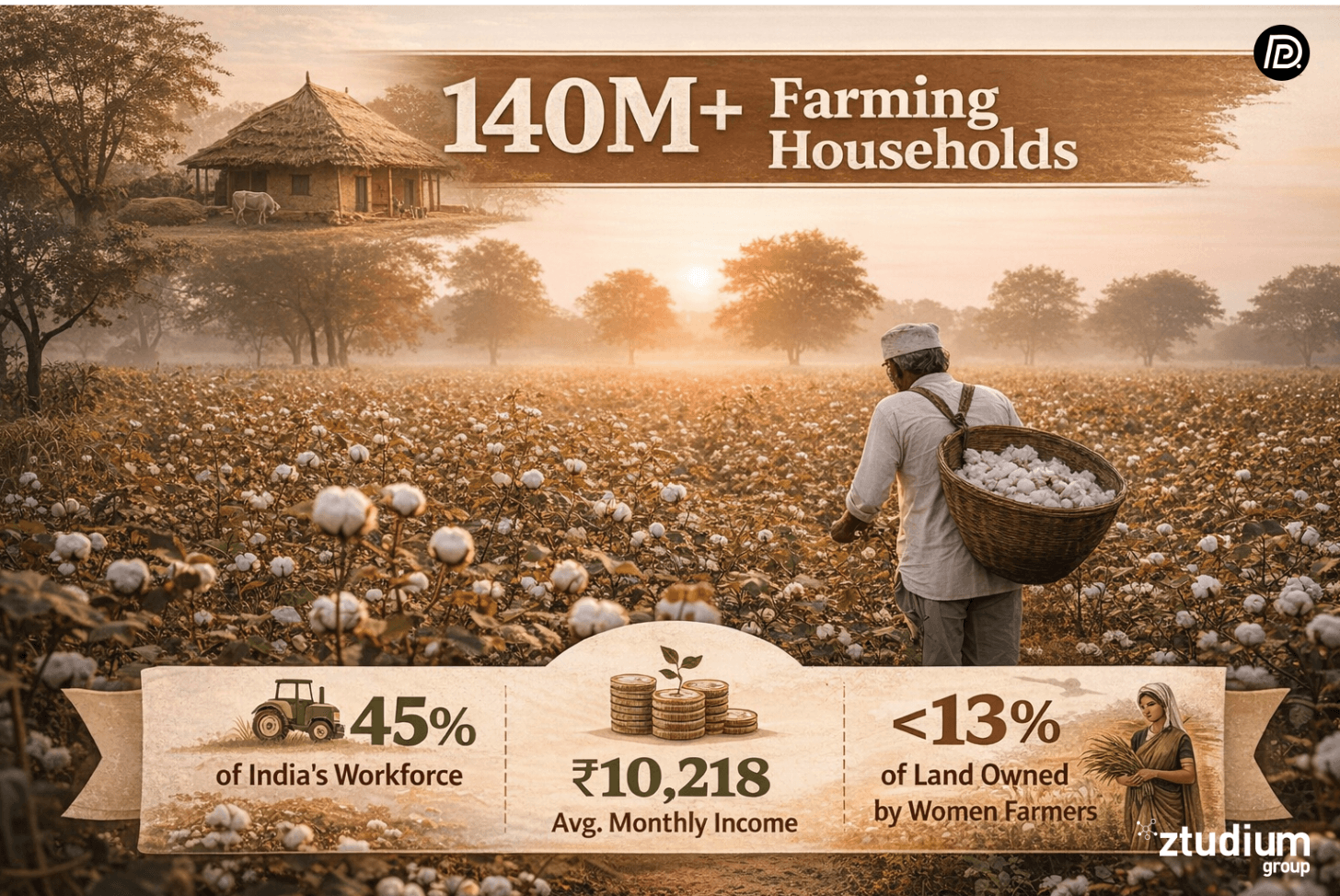
Before we delve into Raju's story, it's important to recognise the scope of the discussion. India is home to over 140 million farming households, and agriculture employs around 45 per cent of the workforce. This sector is crucial for ensuring food security for the nation's 1.4 billion people. However, recent findings from NABARD's All India Rural Financial Inclusion Survey reveal that the average net monthly income of an agricultural household is approximately ₹10,218 (US$110) - a stark contrast to that of entry-level urban professionals, who often earn three to five times that amount.
This income situation is not just a temporary challenge but reflects a systemic issue where agriculture has historically been undervalued. It's vital to acknowledge that farmers are not to blame for these struggles. Rather, it is the system that is failing them. This article aims to explore this distinction with the clarity and depth it deserves.
What's particularly noteworthy about this income figure is not just the number itself but what it masks. The average encompasses a wide range of farming conditions, from irrigated to rain-fed land, and includes both commercial horticulture and subsistence farming. This broad spectrum includes farmers with monthly incomes of ₹25,000 (US$268) as well as those earning just ₹3,000 (US$ 33). The average provides limited insight into the true realities of individual farmers. Ultimately, it reveals that, collectively, the system is not providing adequate support and returns to those who form its foundation.
Understanding this complexity is crucial for fostering a more supportive and equitable agricultural landscape.
The farmer is not India's agricultural problem. Instead, the farmer is a skilled practitioner navigating a system carefully structured by information asymmetry, credit dependency, and market dynamics to harness their potential rather than uplift them.
Decision Poverty: Flying Skilled and Blind
To gain insights into the consistently low incomes of farmers like Raju, it's beneficial to analyse their decisions throughout a single season. By examining the information available to them and identifying the additional information they require for optimal decision-making, we can gain a clearer understanding of their challenges. This analysis leads to a concept I would like to define as decision poverty.
Decision Poverty: The challenge of making important decisions about what to plant, how much input to use, when to harvest, where, and at what price to sell can be daunting, especially without the necessary data, advice, or market intelligence. This situation, often referred to as decision poverty, highlights the need for improved infrastructure that can transform knowledge into effective action. By enhancing access to information and resources, we can empower decision-makers to make informed choices that lead to better outcomes.
Walk through Raju's season with that definition in mind.
Decision One: What to Plant
Every October, Raju embarks on the important task of deciding what to plant for the upcoming Kharif season, a choice that will shape his income for the next eight months. While he has access to certain information, such as what worked well last year, what his neighbours are planting, the seeds recommended by his input dealer, and some market price insights gathered from local conversations, he still faces challenges.
To make a more informed decision, Raju would benefit greatly from additional information, including projected commodity prices at harvest time, specific performance data on crop varieties suited to his land profile, forecasts of water availability for the season, and an unbiased comparison of seed varieties not influenced by sellers' interests.
Fortunately, there is a wealth of relevant data available in India. Agricultural universities provide valuable insights into crop variety performance, commodity exchanges offer price forecasts, and weather services share seasonal outlooks. However, the challenge lies in creating an effective system to deliver this information to Raju in a manner that is accessible, in his language, and actionable at the right time.
By developing reliable channels to communicate this critical information, Raju could make his planting decisions based on comprehensive data rather than solely on instinct or tradition. With the right support, he would be empowered to optimise his yields and enhance his financial stability.
Decision Two: How Much Input to Apply
Once Raju has planted his crop, he faces numerous decisions throughout the growing season regarding fertiliser application, irrigation, and pest management. Each choice carries both a direct cost, related to the inputs used, and an indirect cost. If the decision proves suboptimal, this could include reduced yield, soil degradation, or potential chemical residue issues that may affect future crops and, crucially, the health of those who consume them.
Currently, Raju’s decision-making is informed by several sources: his past application data, recommendations from his input dealer, instructions on product packaging, and practices observed among his neighbours. However, there are key pieces of information that he lacks, such as the latest nutrient levels in his soil (since his Soil Health Card is often outdated and not well-explained), specific pest pressures his field is facing, the minimum effective input doses tailored for his crop variety and soil type, and the necessary residue clearance period before harvest.
This situation presents an opportunity for improvement, as closing the knowledge gap can also help bridge health and economic disparities. For instance, a study on Indian cotton farming shows that many farmers, including Raju, tend to apply two to three times the recommended rate of certain pesticides, not out of recklessness but out of a belief that higher doses offer greater protection. It can lead to increased costs that squeeze their profit margins, while residual chemicals affect both the cotton and the soil’s health in the long run.
By enhancing access to accurate, timely information and better agricultural practices, Raju and his fellow farmers can optimise their decisions, improve crop health, and safeguard their livelihoods for the future.
The Diagnosis Without A Test: A doctor who diagnoses without tests, a pilot who flies without instruments, an engineer who designs without data, this is akin to a farmer navigating with extraordinary skill but within the confines of limited information. The skill is undeniable, yet the challenge lies in a system that has yet to prioritise the creation of an information infrastructure capable of unlocking the potential for precision.
Decision Three: When to Harvest
The timing of the harvest is a crucial decision for any farmer, with significant implications for yield and quality. Harvesting too early can lead to lower yields and diminished quality, while waiting too long may expose the crop to the risks of rain or pest damage. For Raju, who cultivates cotton, the optimal harvest window is often just two to three weeks.
To make an informed decision, Raju would benefit from access to real-time satellite imagery that indicates which plots are at peak maturity. Additionally, a short-range weather forecast tailored to his village would provide him with the reliability needed to make timely choices. Having access to a certified grading centre to assess the quality of his lint before selling would also greatly enhance his decision-making process. Currently, Raju relies on his observations, the weather, and advice from his input dealer, but with the right tools, he could significantly improve his harvest outcomes.
Decision Four: Where and at What Price to Sell
This situation highlights a critical area for improvement in the agricultural supply chain. Raju's cotton harvest needs timely movement, but he lacks the storage facilities and working capital to wait for potentially better prices. With financial obligations to his input dealer, who happens to be the most accessible buyer, Raju faces a tough decision. This week, the local price is ₹5,400 per quintal (US$ 58 per 1000 Kg), while nearby Akola mandi offers ₹6,100 (US$ 65), and a trader in Nagpur, accessible via thirty-day credit, proposes ₹6,400 (US$ 69).
For Raju, opting to sell locally means missing out on a difference of ₹12,000 compared to selling in Nagpur, a sum that exceeds his average monthly household income. This gap represents not only his daughter's education fees for the next semester but also an opportunity to reduce his input loan rather than rolling it into the next season.
Raju chooses to sell locally, not because of a lack of awareness of better prices, but because the challenges of transport costs, reliance on credit, and limited connections with distant buyers create significant barriers. The issue at hand is not merely one of information. It also involves infrastructure and power dynamics, which require more focused solutions. By addressing these challenges, we can help farmers like Raju access better market opportunities.
If you grew food for a living and the system worked this way, where every decision was made without the information you needed, where the person who advised you also profited from your purchases, and where the buyer knew the price and you did not, what would you do differently? And who would you blame for the outcome?
The Generation That Stayed and the Generation That Is Leaving
Examining the gap over time can be insightful when viewed through the experiences of two farmers: one older, accustomed to traditional practices, and one younger, eager to explore innovative approaches for the future. This comparison highlights how the system influences each of their journeys and decisions.
Raju, 52, A Conventional Farmer After twenty-two years of farming the same land, he has developed a deep understanding of his soil, climate, and crops. Although he has consistently used the same chemical inputs recommended by his dealer year after year, he has noticed a gradual decline in his yield over the past 6 years, which he believes is due to weather changes. However, comprehensive soil data would likely reveal important factors such as compaction and organic matter depletion that could be impacting his productivity. He possesses a Soil Health Card, yet it hasn't been explained to him in a way that could influence his farming practices. In the past, he attended a government training on drip irrigation but found the terminology challenging. He places his trust in his input dealer, who provides credit when needed, fostering a reliable relationship. With access to more education and alternative farming methods, he could enhance his practices and sustainably improve his yields. | Suresh, 28, Farmer's Son Returning Raju's son has recently completed a BSc in Agriculture from the state university and gained valuable experience working in Pune for two years. Upon returning home to support his family during his father's health challenges, he brings with him a wealth of knowledge and modern insights. He is enthusiastic about exploring natural farming techniques on his YouTube channel and is curious about incorporating precision agriculture to enhance the family's profitability. While he currently faces the challenge of carrying ₹4 lakh (US$ 4,288) in student loan debt, he is committed to finding sustainable solutions without the risk of crop failure. This places him in the ideal demographic for the Citiesabc Impakt Platform's skills development programme. The programme is tailored for individuals who are educated, digitally connected, and eager to learn, yet navigate economic constraints that limit their ability to take risks. Raju's son would greatly benefit from access to tools, advisory services, and market connections that can help him safely explore innovative agricultural practices. |
The contrast between Raju and Suresh exemplifies the evolving landscape of Indian agriculture. Raju symbolises the 140 million farming households making decisions today, often relying on an information framework that has not changed significantly in 30 years. In contrast, Suresh embodies the potential for positive change, a transition that necessitates a supportive system to ensure his success.
As India's farming population ages, with the average farmer now over fifty, Suresh stands out as a young individual who has returned to the land. Unfortunately, many of his peers choose not to return, raising important questions about the future of food production in the country. If the current generation of experienced farmers ages out and their children pursue other opportunities, who will cultivate India's crops in the next thirty years?
To address this challenge, it is crucial to empower the younger generation within agricultural families by equipping them with modern knowledge, technologies, tools, and direct market access. By doing so, we can attract more innovative, technically skilled individuals into the field or skill next generation, ensuring a sustainable future for Indian agriculture.
The generational gap in Indian agriculture is not merely a trend; it is a clarion call. Each season that passes without making farming viable for the next generation brings us closer to a future in which our food system will be shaped by those who remain, and those will not include smallholder farmers. Let us embrace change and work together to empower the future of agriculture!
Twelve Gaps, One Farmer, How They Compound
In 'The Price of Ignorance,' I highlighted twelve interconnected structural gaps within Indian agriculture. By closely examining the journey of a single farmer over a season, we can see how these gaps interact, leading to increasingly complex challenges. Together, they form a system that presents significant obstacles. However, by acknowledging and addressing these interrelated gaps, we can build a more sustainable and resilient agricultural framework. Embracing this approach can pave the way for positive change and improved outcomes for farmers and communities alike.
The Information Gap Creates the Price Gap
Raju does not know the Akola price. The reason he does not know it, despite it being technically available on a government platform, is that the platform is not integrated with any alert system that reaches him, is not available in Marathi, and was not designed around the specific decision timeline of a cotton farmer in harvest week. The information gap makes the price gap structurally inevitable, not accidental.
The Price Gap Deepens the Credit Gap
Raju's decision to consistently sell at below-market prices reduces his net income for the season, compared to what it could be in a more balanced market. This reduced income limits his ability to save, creating a cycle in which lower savings lead to greater reliance on credit for inputs in the following season. The most easily accessible credit comes from the same input dealer who purchases his cotton at these lower rates. While this situation may seem challenging, it highlights a structural pattern where each factor influences the next, gradually narrowing Raju's options each year. Understanding this cycle opens the door to exploring solutions that could enhance his financial stability and increase his growth opportunities.
The Credit Gap Sustains the Knowledge Gap
Raju faces a challenging situation in which he must carefully weigh the advice he receives on improving soil health. While natural farming advocates suggest reducing chemical inputs for long-term benefits, Raju feels he cannot take this risk right now. He understands the science behind it, but a potential yield reduction of even fifteen per cent would jeopardise his financial stability. This illustrates how practical constraints can hinder access to better agronomic knowledge. Raju's decision-making is not a matter of ignorance; rather, it reflects a thoughtful response to his current circumstances. Finding ways to support farmers like Raju in transitioning to sustainable practices, while ensuring their immediate needs are met, could pave the way for more resilient farming systems in the future.
The Knowledge Gap Maintains the Trust Gap
Raju faces challenges verifying the quality of his produce due to a lack of access to a certified grading centre that would provide him with a documented quality score. This documentation is essential for demonstrating to food companies and premium buyers that his cotton is cleaner and higher quality than that from other sources. By establishing this proof, Raju can help bridge the trust gap between producers and buyers. Closing this trust gap would enable access to quality premiums, making it financially viable for him to invest in better practices.
All Gaps Combine into the Dignity Gap
There is a crucial gap between how individuals like Raju are perceived in rural development initiatives and how they view themselves. While often seen as a beneficiary or statistic, Raju sees himself as a skilled practitioner, a land caretaker, and a provider of nourishment for others. When development schemes are designed with the assumption that farmers need instructions rather than support for their existing knowledge and skills, it can undermine their motivation, initiative, and self-belief.
Raju is not merely a challenge to address; he is a talented individual operating within a system that frequently overlooks the value of his work. This disconnect can perpetuate poverty among farming households. The dignity gap is significant. It plays a vital role in why technical solutions like better seeds, innovative apps, and new schemes often struggle to succeed. When those delivering solutions engage with farmers as partners rather than targets, it fosters collaboration and enhances the likelihood of positive outcomes. Engaging with farmers as collaborators can lead to more effective solutions and a stronger sense of agency among the communities they serve.
No technology or market reform can replace the recognition of farmers as intelligent, capable adults. Their traditional knowledge is not a limitation to overcome but a vital asset to build upon. This belief is not merely a sentiment. It is a fundamental design principle.
What Raju Actually Needs
I want to approach this thoughtfully. The history of Indian agricultural development shows us that effective solutions often emerge from a deep understanding of the underlying issues. What follows is not a set of prescriptions but rather an outline of the gaps identified in Raju's story. This framework will enable the reader to assess any proposed solution in relation to the structural challenges it aims to address.
On Decision Poverty: The Information Infrastructure Problem
Bridging the information gap presents an opportunity that extends beyond technology alone. While tools like satellite imagery, soil sensors, weather stations, and market price feeds are becoming more accessible, the real challenge lies in effective last-mile delivery. Farmers like Raju require information tailored to their specific conditions, such as soil type, crop variety, location, and the season. Moreover, this information should be available in languages they understand, like Marathi, and delivered proactively on basic smartphones, rather than relying on platforms they must actively seek out.
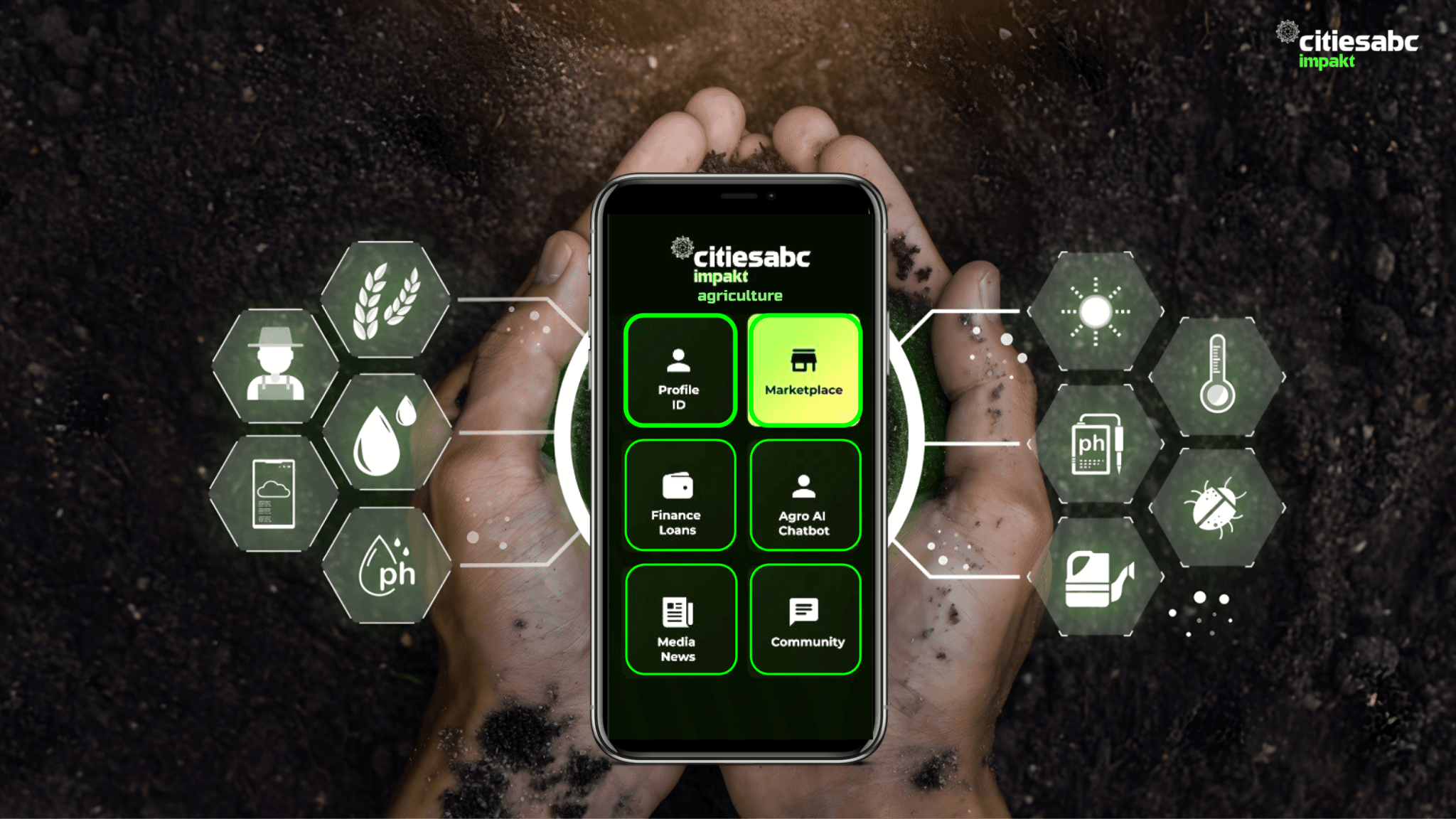
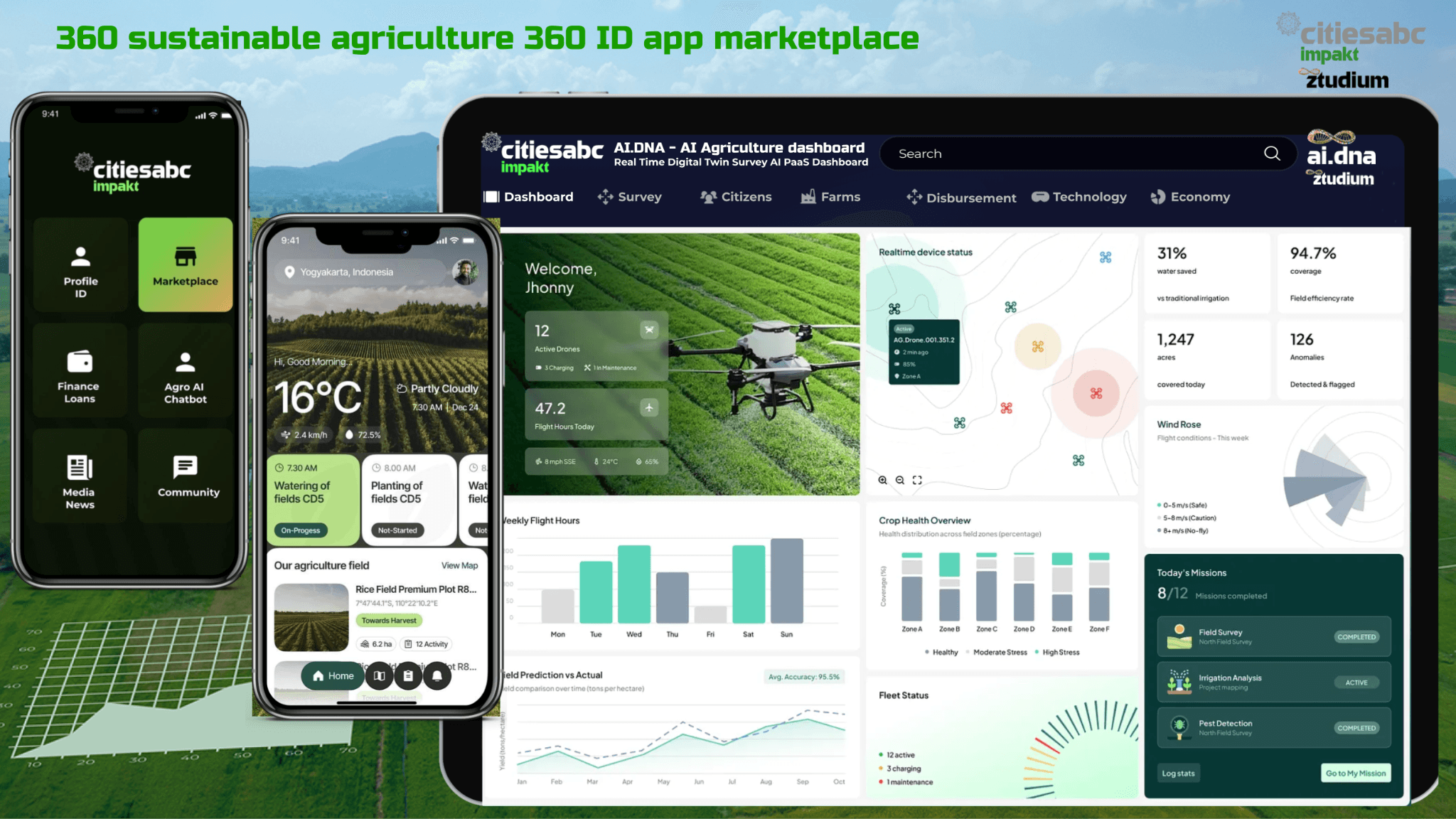
The approach taken by the Citiesabc Impakt Platform, which involves deploying trained local AgriTech field agents from farming communities, represents a promising path forward. These agents, equipped with AI-driven advisory tools tailored to local conditions, provide the human connection that is crucial for translating technology into actionable insights for farmers. Many previous platforms that struggled to reach the last mile often assumed farmers would seek out information themselves. Still, the key is to ensure that the information arrives where it’s needed most directly in the hands of the farmer. By focusing on this human layer, we can enhance the effectiveness of agricultural advice and support for farmers.
On the Price Gap: The Market Access and Traceability Problem
Closing the price gap requires two parallel interventions. The first is the collective selling power of FPOs and cooperatives, which allows smallholder farmers to aggregate volume and negotiate from a stronger position. A single farmer with twelve quintals of cotton has no bargaining power. An FPO with 500 members and 6,000 quintals (600,000 Kg) can negotiate directly with processors and exporters.
The second is traceability. When Raju can prove with a documented, blockchain-anchored record that his cotton was grown with specific inputs, tested at a certified facility, and meets defined quality standards, he stops selling a commodity. He starts selling a verified product. That shift is the mechanism through which the quality premium gap closes. The premium is not charity. It is the market working correctly, pricing quality that it can finally see.
On the Credit and Insurance Gap: The Financial Infrastructure Problem
Addressing the credit dependency that often restricts farmers like Raju from receiving fair prices is essential, and developing a viable alternative credit source is a key step. While Kisan Credit Cards are available in policy, improving their penetration, timeliness, and accessibility for smallholder farmers, especially those with limited documentation and no collateral, can make a significant difference.
Moreover, implementing smart crop insurance triggered by verified weather event data from IoT sensors and linked to the farm's actual growing records can transform the landscape for farmers like Raju and Suresh. If Suresh can rely on prompt, fair insurance payouts in the event of crop failures due to unseasonal rains, he will be more inclined to explore and adopt natural farming techniques. With such a safety net in place, experimentation becomes a viable option, bridging the knowledge gap not out of ignorance but by empowering farmers to act on their insights without the fear of financial repercussions.
On the Generational Gap: The Skills and Viability Problem
Suresh has returned to his community with a fresh perspective. However, the current agricultural system presents challenges that may deter him from staying in the field. To create a future where the next generation is drawn to agriculture not out of obligation but as a viable option, significant changes in the industry's economics are essential. Enhancements such as premium incentives from traceability, income from carbon credits, and a redefined professional identity that elevates roles to AgriTech field agents rather than merely 'farmers' can make agriculture more appealing to individuals like Suresh, who have diverse educational backgrounds and career options.
Implementing skills development programs that integrate agronomic expertise with technological know-how, such as drone operation, sensor calibration, AI advisory interpretation, and blockchain label generation, can pave the way for exciting new career pathways. These initiatives will not only empower individuals but also establish the human infrastructure needed to ensure that every technological advancement in agriculture effectively reaches and benefits the communities it aims to serve.
The Gap the Consumer Can Close
This article is primarily aimed at readers who may not be familiar with farming. Understanding this perspective is important because the journey from farm to fork culminates with the consumer. The various gaps identified in this article, the price gap, knowledge gap, trust gap, and quality premium gap, persist in part because consumers often do not demand change.
This observation is not meant to place blame but rather to highlight how markets operate. When consumers cannot discern the quality differences between tomatoes cultivated with careful management and those treated with excessive pesticides, they aren’t making informed choices; instead, they are purchasing without adequate knowledge. Consequently, the market fails to send a strong price signal to farmers that would encourage sustainable practices.
Innovative solutions, such as blockchain-powered traceability integrated into the Citiesabc Impakt Platform, can help bridge this gap. When consumers can scan a QR code to confirm that the tomato they are holding was grown by a specific farmer on specific land, with documented inputs, quality test results, and a nutritional profile based on those inputs, trust is established. This trust is built on verified data rather than goodwill.
Take Raju, for instance, who has consistently produced high-quality cotton. Unfortunately, he has not been able to prove his quality, resulting in his excellent skills being undervalued in the market. By equipping Raju with tools to demonstrate the quality of his work, we are not simply adding a technological feature; we are fostering economic fairness and recognising the hard work and dedication of farmers like him.
What Raju Deserves
It is still dark when Raju finishes his morning walk, a routine that connects him to the earth. He has discovered two plants in the north-east corner of the field showing early signs of bollworm pressure. This afternoon, he will acquire the recommended pesticide from his dealer, who will guide him on the dosage. Raju plans to apply slightly more than advised, a practice born from experience that gives him a sense of security. The cost will impact this season's margin, and the residue will inevitably enter the soil and, in trace amounts, the food chain.
None of this makes Raju a bad farmer. Rather, it showcases his resilience as he navigates a system that provides inadequate information, leaves him financially constrained, and offers little means to verify whether the advice is truly in his best interest. He is doing the best he can with the resources available to him.
This article makes a powerful case: Raju deserves better, not as an act of charity but as a recognition of the vital contributions farmers make to a society that relies on their harvests. He deserves better information, improved market access, verified prices, accessible credit, and the dignity of acknowledgement.
The Impakt Platform does not claim to have all the answers. No single platform can. However, it is founded on a crucial understanding that these gaps are structural, and addressing them requires a connected ecosystem of tools, relationships, and institutions that work harmoniously in the farmer's interest.
Tomorrow morning, Raju will walk his field again, a testament to his unwavering dedication. The hope is that by the time Suresh takes over that walk, the surrounding system will have evolved enough to make the journey truly worthwhile.
Every plate of food served anywhere in India today carries an invisible cost, a stark reminder of the difference between what the farmer who grew it received and what they could have realised in a just system. This cost is not settled at the table. It is paid in Vidarbha, in Jharkhand, in Rajasthan. Every morning. Before sunrise.
Your Perspective on this
Imagine you're a farmer dependent on your crops, but vital information isn't reaching you. If the advice you receive benefits the advisor primarily, while buyers have access to pricing details that you lack, how would you tackle this? What steps would you take to enhance your situation? Reflecting on your response can highlight needed changes for a more equitable and transparent system for all stakeholders.
Keep vouching for this space as I strive to share more of my insights on the topic. I will delve into understanding your soil's needs. Bridging the Gap: An exploration of India's agricultural knowledge system reveals the incredible potential for world-class research to benefit farmers in the field meaningfully. By addressing the knowledge gap, enhancing communication, and overcoming the last-mile challenges, we can empower agronomists to connect effectively with farmers. Furthermore, by addressing structural incentives, we can ensure that expert guidance reaches those who need it most, fostering a collaborative environment where agronomists become pivotal players in the journey toward agricultural success.
About This Series
“Voices from the Chain is an important addition to the Agriculture Gap Series, building on the insights from 'The Price of Ignorance: Mapping the Gaps That Cost Indian Agriculture Trillions,' which can be found at impakt.citiesabc.com. Over the past year, I have engaged deeply with the agricultural community by visiting farms, attending agri-sector seminars, and connecting with FPO leaders, agronomists, and input dealers throughout Maharashtra and beyond. This experience has been instrumental in shaping the Citiesabc Impakt Platform, which aims to address the gaps identified in our findings and enhance the agricultural landscape.”


