


resources
Your Complete 50 US States and Capitals List: A Quick Reference
21 Feb 2026

Keeping tabs on all 50 U.S. states and their respective capitals can certainly feel like quite the undertaking, wouldn't you agree? Whether you're preparing for an exam, mapping out an epic road trip, or simply aiming to deepen your geographical knowledge, having a readily accessible compilation proves incredibly useful. This comprehensive list of U.S. states and capitals is designed to simplify that process. We've meticulously organized the information, allowing you to locate what you need with utmost ease. Consider it your indispensable reference for American geography.
Key Takeaways
- This compilation encompasses all 50 U.S. states and their respective capital cities.
- It's meticulously designed as a straightforward reference for rapid information retrieval.
- Possessing knowledge of states and capitals is genuinely beneficial for academic pursuits and enhancing general awareness.
- This data can significantly aid in geography quizzes or when planning your next journey.
- Keeping this comprehensive list of U.S. states and capitals readily available undeniably streamlines the learning process.
1. Alabama - Montgomery
Alabama, a state widely celebrated for its rich history and quintessential Southern charm, proudly designates Montgomery as its capital city. This city, without a doubt, occupies a significant place in American historical narratives, particularly concerning the Civil Rights Movement. Indeed, Montgomery was the first capital of the Confederate States of America in 1861.
To provide a deeper insight, here are several compelling facts about Montgomery:
- It notably served as the epicenter of the Montgomery Bus Boycott, a pivotal event in the Civil Rights Movement that commenced in 1955.
- The city is home to the revered Rosa Parks Museum, a tribute dedicated to the "mother of the Civil Rights Movement."
- Montgomery also played a crucial, indelible role in the historic Selma to Montgomery marches for voting rights.
Alabama's capital has experienced several relocations throughout the state's formative years. Earlier capitals included St. Stephens, Huntsville, and Tuscaloosa, preceding Montgomery's permanent establishment as the seat of government in 1846.
2. Alaska - Juneau
Alaska, famously recognized as the largest state in the U.S. by sheer area, proudly maintains its capital in Juneau. What makes Juneau truly stand out is its somewhat unique character, wouldn't you agree? Unlike many other state capitals, Juneau isn't reachable by road from the rest of the mainland; access is exclusively by air or sea. This very isolation, in fact, contributes significantly to Juneau's distinct allure and identity.
Historically, Juneau officially became the capital of Alaska in 1906. Prior to this, the seat of government was located in Sitka, and even further back, it resided in Novo-Arkhangelsk during Alaska's tenure under Russian rule. This transition to Juneau marked a pivotal stage in Alaska's evolution, first as a territory and subsequently as a state.
To offer a clearer picture, here are a few salient points about Juneau:
- It's strategically located in the Alaska Panhandle, gracefully nestled between towering mountains and the serene Gastineau Channel.
- Its economic foundation heavily relies on sectors such as government services, the vibrant tourism industry, and mining operations.
- Moreover, it's a particularly sought-after destination for cruise ships, especially during the peak summer months.
The decision to designate Juneau as the capital was largely swayed by its burgeoning importance as a nexus for governmental administration and commercial activity within the region. It symbolized a concerted effort towards establishing a more enduring and readily accessible seat of power for the developing territory.
3. Arizona - Phoenix
Arizona, affectionately known as the Grand Canyon State, proudly claims Phoenix as its capital. This dynamic city officially ascended to capital status in 1889, remarkably, even before Arizona formally achieved statehood in 1912. Phoenix isn't merely the political epicenter; it also stands as the most populous city in Arizona, functioning as a significant hub for business, culture, and technological innovation across the American Southwest.
Indeed, Phoenix is widely recognized for its consistently warm, year-round climate and its breathtaking desert landscapes.
Allow us to delve into some compelling facts about Phoenix:
- Founding: Although Phoenix began as a humble settlement in 1868, it officially transitioned to the territorial capital in 1889. Its role was subsequently affirmed as the state capital upon Arizona's admission to the Union.
- Size: It's worth noting that Phoenix ranks among the largest cities in the United States by sheer land area, encompassing more than 517 square miles. This extensive footprint certainly contributes to its characteristic sprawling urban development.
- Economy: The city boasts a notably diverse economy, benefiting from substantial contributions across sectors such as technology, the vibrant tourism industry, healthcare, and finance. It has solidified its position as a major center for both the semiconductor industry and aerospace innovation.
Phoenix's trajectory of growth has been nothing short of remarkable. Truly, it's a city that encapsulates the very spirit of the desert, masterfully blending cutting-edge modern innovation with a deeply rooted history.
The majestic Sonoran Desert envelops Phoenix, presenting a unique tapestry of flora and fauna. This distinctive desert environment fundamentally shapes much of the region's inherent character and its abundant recreational offerings, ranging from scenic hiking trails to truly unique geological formations.
4. Arkansas - Little Rock
Little Rock, the esteemed capital of Arkansas, boasts a history as captivating as its distinctive name. The very pronunciation of "Arkansas" has, in fact, been a point of considerable discussion for generations, culminating in the state's official decree on its specific articulation back in 1881. It's correctly pronounced with three syllables, with the final "s" remaining notably silent.
Little Rock assumed its role as the capital in 1821, a relatively short period after the territory's formal organization. Prior to this, the seat of government resided at Arkansas Post—a location quite a distance from present-day Little Rock. The city's advantageous position along the Arkansas River naturally fostered its growth as a pivotal hub for both trade and travel.
To provide further detail, here are a few key facts about Little Rock:
- It's strategically situated on the Arkansas River, a waterway that has historically been — and remains — immensely significant for transportation.
- The city proudly hosts several important historical sites, including the Little Rock Central High School, recognized as a National Historic Site.
- As the largest city in Arkansas, it serves as the unequivocal political and economic nerve center of the state.
The strategic progression towards establishing Little Rock as the capital entailed the relocation of the seat of government from Arkansas Post. This significant shift underscored the burgeoning development and organizational efforts of the region as it steadily advanced towards statehood.
5. California - Sacramento
California, widely revered as the Golden State, proudly identifies Sacramento as its capital. It's a city steeped in rich history, particularly—and quite indelibly—linked to the transformative Gold Rush era. Sacramento officially ascended to the status of state capital in 1854, though its governmental role has, in fact, experienced several shifts over the decades.
Indeed, Sacramento's path to becoming the permanent capital wasn't a direct or straightforward trajectory. Prior to its designation, a number of other locales briefly served as temporary or de facto capitals. This fluidity largely stemmed from the state's rapid population growth and its continually evolving needs during those formative early years.
For a concise overview, here's a quick look at some pivotal facts about Sacramento:
- Established as Capital: 1854
- Nickname: Affectionately known as "The City of Trees"
- Notable Event: Famously served as a temporary capital in 1862, necessitated by significant flooding in San Francisco.
The ultimate selection of Sacramento as the enduring capital was significantly influenced by its strategic geographical location and its pivotal role as an emerging transportation hub, particularly solidified with the advent of the railroad. This positioning rendered it an ideal central nexus for all state government operations and vital communication.
California's capital undoubtedly holds a singular place in the state's profound development, beautifully reflecting its dynamic past and its sustained, impressive growth as a major economic and cultural powerhouse within the United States.
6. Colorado - Denver
Denver, famously known as the Mile High City, has proudly served as the capital of Colorado ever since its statehood in 1876. Prior to this, it held the distinction of being the capital for the extralegal Territory of Jefferson starting in 1859, subsequently transitioning to the official Territory of Colorado's capital from 1861.
One might say that Denver's rich history as a capital city is inextricably linked to the broader development of the entire region.
For a concise overview, here's a quick look at Denver's evolution in capital status:
- 1859: It first rose to prominence as the capital of the Territory of Jefferson.
- 1861: It was officially designated the capital of the Territory of Colorado.
- 1876: It definitively became the capital upon Colorado's achievement of statehood.
The city's strategic placement at the confluence of the South Platte River and Cherry Creek naturally established it as a pivotal gathering point for early pioneers and a burgeoning hub for trade and transportation, thereby solidifying its indispensable role as a political epicenter.
7. Connecticut - Hartford
Hartford, Connecticut's venerable capital, boasts a storied past as a significant colonial hub. Established as a nascent settlement in 1635 by English colonists, it swiftly began serving as the capital of the Connecticut Colony by 1639. For an extended period, Hartford actually shared this important governmental role with New Haven, with the colonial assembly convening in both cities at various points throughout the year. This unique arrangement persisted even after Connecticut achieved statehood in 1776, with Hartford and New Haven operating as joint capitals until Hartford finally assumed sole capital status in 1875.
Presently, Hartford is widely recognized as a major nexus for insurance companies, rightfully earning it the moniker — "The Insurance Capital of the World." Beyond its economic prowess, it's also a city brimming with a rich cultural scene, proudly featuring a diverse array of theaters, museums, and historic sites.
For a concise overview, here's a quick look at some pivotal facts:
- Established: 1635
- Became Capital: 1639 (as the capital of the Colony of Connecticut)
- Sole Capital Status: 1875
- Nickname: The Insurance Capital of the World
The city's strategic placement along the Connecticut River undeniably played a crucial role in its nascent development, establishing it as a thriving center for trade and commerce long before its official designation as the state's capital.
Hartford's evolution from a foundational colonial settlement to a dynamic modern capital city is a compelling narrative of adaptation and sustained growth, truly reflecting the broader historical tapestry of New England.
8. Delaware - Dover
Delaware, holding the distinction of being the very first state to ratify the U.S. Constitution, proudly claims Dover as its capital city. This locale is steeped in a rich, extensive history, with its origins tracing back to the colonial era. Dover officially received its designation as the capital in 1777, yet its foundational roots stretch back even further, to the 1680s, when it was initially established as a burgeoning town.
Dover's historical narrative is deeply interwoven with the nascent days of English settlement across the region, functioning as a vital administrative hub even before Delaware achieved formal statehood.
For a concise overview, here's a quick look at some salient facts about Dover:
- Established: 1683
- Became Capital: 1777
- Area: Approximately 21 square miles (54 km²)
- Population: Around 39,000 residents
It's quite fascinating to note that prior to Dover, other locations, such as New Castle, actually served as crucial centers for the nascent colonial government. The strategic transition to Dover ultimately cemented its role as the permanent seat of government for the state.
9. Florida - Tallahassee
Florida's capital city is Tallahassee, strategically positioned in the Florida Panhandle, conveniently close to the Georgia border.
Tallahassee officially ascended to capital status in 1824, effectively serving as the seat of government for the Florida Territory well before Florida's formal admission as a state in 1845. Interestingly, prior to Tallahassee, the capital resided in St. Augustine, a city that had long functioned as a colonial capital, with its origins stretching back to 1565 when it was part of Spanish Florida. It's quite intriguing how the capital eventually migrated inland, most probably to ensure more central accessibility as the territory continued to expand.
For a brief overview, here's a quick look at some key facts about Tallahassee:
- Founded: 1824
- County: Leon County
- Nickname: "The Tallahassee Trail"
The city proudly hosts both Florida State University and Florida A&M University, which collectively infuse it with a vibrant, youthful energy. Moreover, it's celebrated for its picturesque natural surroundings, boasting an abundance of parks and springs in close proximity.
Tallahassee possesses a history deeply intertwined with the Seminole people, and its very name is thought to originate from a Seminole word signifying "old town" or "abandoned fields." This profound connection to the land and its indigenous inhabitants forms a significant, cherished component of the city's identity.
10. Georgia - Atlanta
Georgia, affectionately known as the Peach State, proudly identifies Atlanta as its capital. This incredibly vibrant city isn't merely the political nerve center; it also stands as a paramount hub for commerce, culture, and transportation across the entire southeastern United States.
Atlanta's journey to becoming the capital is, without question, quite fascinating. It officially assumed the role of state capital in 1868, succeeding Milledgeville. Prior to this, the capital seat was rather peripatetic, relocating several times, with cities such as Savannah and Augusta fulfilling the role at various junctures.
For a concise overview, here's a quick look at some pivotal facts about Atlanta:
- Founded: 1837 (initially as Marthasville, later renamed Atlanta in 1845)
- Became State Capital: 1868
- Known For: Its global corporate giants like Coca-Cola and CNN, the immensely busy Hartsfield-Jackson Atlanta International Airport, its profound civil rights history, and a flourishing film industry.
The city's trajectory of growth has been truly extraordinary, evolving from a modest railroad town into a sprawling, dynamic metropolis that exerts considerable influence in both national and international affairs. Its strategic geographical location and abundant economic opportunities consistently attract individuals from across the globe.
Atlanta is, indeed, a city that masterfully harmonizes its rich historical foundations with an undeniably forward-looking perspective. It's a unique destination where one can delve into significant landmarks from the Civil Rights Movement and then, perhaps just hours later, immerse themselves in the cutting edge of modern urban life—all within the same memorable day.
11. Hawaii - Honolulu
Aloha! Let's delve into the enchanting realm of Hawaii and its captivating capital, Honolulu. Gracefully nestled on the island of Oahu, Honolulu transcends being merely the state's political nucleus; it truly is a vibrant nexus of rich culture, profound history, and breathtaking natural beauty. As the most populous city in Hawaii, it also functions as the primary gateway for all visitors embarking on an island experience.
Significantly, Honolulu boasts an extensive history, predating Hawaii's official statehood. It once held the esteemed title of capital for the Kingdom of Hawaii and subsequently for the Republic of Hawaii. This deep, rich past is strikingly evident in the city's distinctive architecture and enduring traditions.
To provide further insight, here are a few compelling points about Honolulu:
- Location: Strategically situated on the picturesque southeastern coast of Oahu, it serves as a major port city.
- Economy: While tourism undeniably constitutes a substantial pillar of Honolulu's economy, the city also maintains a notable military presence and features flourishing sectors in research and technology.
- Culture: The city epitomizes a vibrant melting pot of Polynesian, Asian, and Western influences—a rich tapestry wonderfully expressed in its diverse culinary scene, lively festivals, and everyday rhythms.
Honolulu's remarkable metamorphosis from a regal royal capital to a bustling modern metropolis is, without a doubt, quite a compelling narrative. It has impressively succeeded in preserving its unique island charm even as it has emerged as a significant player on the international stage.
Upon your visit, you'll discover a delightful fusion of historical sites—such as Iolani Palace, notably the sole royal palace in the United States—alongside bustling commercial districts and iconic, beautiful beaches like Waikiki. It's a place where ancient traditions gracefully intersect with contemporary life.
12. Idaho - Boise

Idaho, a state renowned for its majestic, rugged mountains and expansive wilderness, proudly designates Boise as its capital city. Boise has held this distinction since 1865, positioning it as one of the nation's longer-serving state capitals.
Interestingly, Boise also stands as the most populous city in Idaho. This signifies that the capital city is concurrently the primary residential center for the majority of the state's inhabitants—a dynamic not universally true for every U.S. state.
For a brief overview, here's a quick look at some essential facts about Boise:
- Established: 1865 (as capital)
- Area: Approximately 63.8 square miles
- Population (2020 Census): Exceeding 235,000 residents
Boise's trajectory as a capital city commenced when it was chosen as the capital of the Idaho Territory. Upon Idaho's official admission as a state in 1890, Boise seamlessly continued its crucial role as the state capital. The city has, impressively, expanded significantly since then, evolving into a pivotal hub for government, commerce, and culture within the Gem State.
The initial selection of Boise as the territorial capital marked a truly significant moment, unequivocally solidifying its importance in the region's ongoing development. Its strategic geographical location and burgeoning population were instrumental in cementing its esteemed status over the ensuing years.
13. Illinois - Springfield
Alright, let's turn our attention to Illinois and its capital, Springfield. It's a city boasting a rather intriguing history, particularly when one considers that it didn't always hold the capital designation. For a period, Kaskaskia proudly bore that title, then Vandalia assumed the role, before Springfield ultimately became the permanent seat of government in 1837. That's quite an impressive tenure for Springfield, wouldn't you say?
Springfield is far from just an arbitrary location; it's profoundly—and historically—intertwined with Abraham Lincoln. He resided there for many years, established his law practice, and today, his presidential library and museum stand as prominent features within the city. It is, undeniably, a place that deeply reveres and actively preserves its past.
For a concise overview, here's a quick look at some key facts about Springfield:
- Established as Capital: 1837
- Area: Approximately 54.0 square miles (140 km²)
- Population (2020 Census): Approximately 114,394 residents
Furthermore, it forms an integral part of a broader metropolitan area, encompassing adjacent counties and boasting a collective population exceeding 300,000 individuals. Thus, while the city proper maintains a specific size, its influence and reach certainly extend considerably further.
The strategic progression to Springfield assuming capital status involved several governmental relocations, vividly illustrating how state administrations and their central hubs naturally evolve over time. It was by no means a predetermined or immediate decision from the outset.
Upon visiting, you'll discover a city that masterfully harmonizes its immense historical significance with the dynamic, everyday realities of a state capital. It's a unique setting where you can literally walk through history—especially Lincoln's poignant legacy—while still observing a fully functioning government in action.
14. Indiana - Indianapolis
Indianapolis, frequently and affectionately referred to as "Indy," has proudly served as Indiana's capital since 1825. It's a city boasting a rich and fascinating history, having burgeoned from a modest settlement into a prominent Midwestern hub. The pivotal decision to situate the capital here was made in 1820, with the city's official layout completed in 1821. It notably assumed the role from Corydon, which had held the capital designation since 1813.
What truly makes Indianapolis unique is its distinction as one of the largest cities in the U.S. where the capital city also happens to be its most populous urban center. This means the governmental seat simultaneously functions as the most significant metropolitan area in the state.
For a concise overview, here's a quick look at some pivotal facts about Indianapolis:
- Established: 1821
- Became Capital: 1825
- Area: Approximately 361.5 square miles
- Population (2020 Census): Exceeding 887,000 residents
The city's strategically central location proved to be a decisive factor in its selection as the state capital. It was meticulously designed with a grid system, prominently featuring a central monument circle—an iconic landmark that remains a significant characteristic today. Over the decades, Indianapolis has undergone remarkable expansion, evolving into a thriving epicenter for commerce, culture, and sports.
The strategic development of Indianapolis was meticulously planned, emphasizing both accessibility and the creation of a central administrative locus for the burgeoning state. Its sustained growth has been consistent, unequivocally reflecting its enduring importance as a vital transportation and economic nexus.
15. Iowa - Des Moines
Des Moines proudly serves as the esteemed capital of Iowa, a pivotal role it has maintained since 1857. It's strategically situated in Polk County, precisely at the confluence of the Des Moines and Raccoon Rivers. This advantageous central location has undoubtedly fostered its evolution into a significant hub for both commerce and culture within the state.
Intriguingly, the city's distinctive name, Des Moines, is widely believed to originate from the French "Rivière des Moines," which translates to "River of the Monks."
For a brief overview, here's a quick look at some essential facts about Des Moines:
- Established: 1857
- Area: Approximately 75.8 square miles (196 km²)
- Population (2020 Census): 214,133 (city proper)
Des Moines has consistently experienced a steady upward trend in both population figures and robust economic activity over the decades. It's particularly recognized for its formidable insurance industry and an expanding technology sector, collectively rendering it a dynamic and appealing place to reside and pursue professional endeavors.
16. Kansas - Topeka
When contemplating Kansas, one might conjure images of vast, undulating fields of wheat or perhaps even the iconic character of Dorothy from The Wizard of Oz. Yet, this remarkable state also boasts a distinct capital city, and that city is Topeka. Far from being an arbitrary selection, Topeka possesses a governmental history that extends back considerably.
Indeed, Topeka officially ascended to the status of Kansas's capital in 1861, concurrently with Kansas achieving statehood. Prior to this, it was already functioning as the de facto capital of the Kansas Territory. It's quite fascinating to observe that during the territorial era, a considerable contest for capital status unfolded. Other burgeoning towns such as Pawnee, Shawnee Mission, and Lecompton also actively vied for the prestigious title, but Topeka ultimately prevailed.
For a concise overview, here's a quick look at some key facts about Topeka:
- Founded: 1854
- Became Territorial Capital: 1855 (de facto)
- Became State Capital: 1861
- Area: Approximately 56.0 square miles (145 km2)
The strategic progression to establishing Topeka as the enduring capital entailed a degree of political maneuvering and a diversity of viewpoints within the territory. Ultimately, its advantageous strategic location and the widespread support it garnered were instrumental in unequivocally solidifying its position as the paramount center of government for the illustrious Sunflower State.
Today, Topeka continues its vital role as a thriving hub for government and commerce within Kansas, steadfastly serving as the state's capital city.
17. Kentucky - Frankfort
Kentucky's capital city is Frankfort, strategically situated in Franklin County. It has, impressively, served as the state capital since 1792.
Frankfort is gracefully positioned along the Kentucky River and is particularly celebrated for its historic architecture and, of course, its renowned bourbon distilleries. While it may not be the most expansive city in Kentucky, it undeniably occupies a highly significant place in the state's rich history and governmental framework.
For a brief overview, here are a few quick facts about Frankfort:
- Established: 1792
- County: Franklin County
- River: Kentucky River
The process of selecting Frankfort as the capital was, admittedly, a somewhat involved one. While Lexington initially served as a notable early meeting locale for government officials, Frankfort was ultimately and officially chosen, then established as the permanent capital relatively swiftly after Kentucky's admission as a state. It is, unequivocally, a city that has witnessed a substantial portion of Kentucky's pivotal history unfold within its charming borders.
18. Louisiana - Baton Rouge
Louisiana, a state widely celebrated for its distinctive culture and profound history, proudly designates Baton Rouge as its capital city. This vibrant metropolis is gracefully situated along the iconic Mississippi River—a waterway that has, without question, played an immensely significant role in the state's enduring development.
Interestingly, Baton Rouge hasn't always held the capital title. The seat of government for Louisiana has, in fact, been rather migratory over the centuries. Its journey began with prominent locations like New Orleans, which functioned as a major hub even during the colonial era. Subsequently, during the tumultuous period of the Civil War, the capital was compelled to temporarily relocate to places such as Opelousas and Shreveport.
For a concise overview, here's a quick look at some of the historical shifts in Louisiana's capital status:
- New Orleans: Served as a capital during various pivotal periods, including its time as a French and Spanish territory, and later as a state capital.
- Donaldsonville: Experienced a brief, albeit notable, stint as the capital in the early 1830s.
- Baton Rouge: Initially ascended to capital status in 1849, then temporarily reverted to New Orleans, before definitively settling back in Baton Rouge in 1882.
Ultimately, Baton Rouge officially became the permanent capital in 1882. The city's strategic geographical location and burgeoning importance rendered it a quintessential, natural choice.
The process of selecting a state capital frequently encapsulates a delicate balance of political, economic, and geographical considerations. For Louisiana, Baton Rouge's advantageous position on the mighty Mississippi River and its central placement within the state have proven to be decisive factors in its enduring role as the unequivocal center of government.
19. Maine - Augusta
Maine, proudly situated as the northeasternmost state in the U.S., designates Augusta as its capital. It's a city brimming with a rich history, having commendably served as the seat of government for the "Pine Tree State" since 1832. Prior to Augusta's official elevation to capital status, the state government experienced a somewhat nomadic existence, with various towns—including Portland and even some locales outside of Maine—briefly serving as temporary or de facto capitals throughout its formative early territorial and statehood periods.
Augusta's path to becoming the permanent capital wasn't an instantaneous one, to be sure. It was formally designated as the capital in 1832, despite the government having convened there on earlier occasions. The state's broader history is, of course, inextricably linked to its early colonial roots, with both French and English settlements playing profoundly significant roles before Maine ultimately achieved statehood in 1820.
For a concise overview, here's a quick look at some pivotal facts about Augusta:
- Established: Incorporated in 1797, though its governmental history as a capital dates back to 1832.
- Location: Gracefully situated on the Kennebec River in Kennebec County.
- Nickname: Frequently referred to as "The City of Augusta" or simply "Augusta."
The state's capital status has consistently been a focal point of historical interest, with legislative sessions and essential governmental functions concentrated in Augusta, thereby unequivocally solidifying its indispensable role as the political heart of Maine.
20. Maryland - Annapolis
Annapolis, Maryland's venerable capital city, boasts a history that gracefully extends back to the colonial era. Initially christened Anne Arundel's Towne, it officially adopted the name Annapolis in 1694. This distinguished city wasn't merely a colonial hub; it also notably served—for a brief yet profoundly significant period—as the capital of the United States itself.
Indeed, Annapolis holds the exceptional distinction of having been the capital of the United States from 1783 to 1784. During this crucial timeframe, the Continental Congress convened here, transforming it into an undisputed epicenter of national decision-making.
For a deeper understanding, here's a comprehensive look at its multifaceted historical roles:
- Colonial Capital: Established as the capital of the English proprietary Colony of Maryland in 1634, its foundational role progressively evolved under various colonial administrations.
- Provincial Capital: It steadfastly continued its function as the capital under both English and, subsequently, British rule of the Province of Maryland.
- State Capital: Following the momentous Declaration of Independence in 1776, Annapolis naturally transitioned to become the capital of the newly formed State of Maryland.
- U.S. Capital: The city famously hosted the Continental Congress, presiding over the ratification of the Treaty of Paris which formally brought an end to the Revolutionary War.
Annapolis is strategically nestled on the Chesapeake Bay—a location that has, throughout history, consistently proven vital for both trade and defense. Its historic State House, notably the oldest state capitol still in continuous legislative use, is also the hallowed site where George Washington famously resigned his commission as commander-in-chief of the Continental Army.
21. Massachusetts - Boston
Boston, the venerable capital of Massachusetts, boasts a rich history that gracefully extends back to its very founding in 1630. It is, undeniably, a city that played an immensely significant role in the formative early days of the United States.
Notably, Boston stands as the most populous city not only in Massachusetts but also across the entire New England region.
For a concise overview, here's a quick look at some pivotal facts about Boston:
- Founded: 1630
- Area: 89.6 square miles (232 km²)
- Population (City Proper): Approximately 675,647 residents
- Population (Metropolitan Area): Around 4,941,632 inhabitants
Boston's evolution as a capital city presents quite an intriguing narrative. It served as the capital for numerous colonial entities before formally transitioning to become the capital of the Commonwealth of Massachusetts in 1780.
The city's historical prominence is, without question, undeniable, with seminal events such as the Boston Tea Party and the Boston Massacre unfolding within its very confines, thus profoundly shaping the trajectory of American history. Its enduring role as a vibrant center of commerce, culture, and education persists robustly to this very day.
From its foundational early colonial roots to its current esteemed status as a major global hub, Boston's story is a truly lengthy, intricate, and layered one.
22. Michigan - Lansing
Michigan, a state widely celebrated for its majestic Great Lakes and profound automotive history, proudly designates Lansing as its capital. It's quite interesting to observe that Lansing wasn't always the governmental seat. Initially, Detroit served as the capital when Michigan achieved territorial status in 1805. Upon gaining statehood in 1837, Detroit continued its role as the capital for another decade.
However, a pivotal decision was made in 1847 to relocate the capital. This move was primarily driven by a desire to position the capital more centrally within the state, thereby distancing it from the Canadian border. After careful deliberation of several potential locations, a modest village then simply known as Michigan was chosen as the new seat of government. It was subsequently renamed Lansing, a tribute honoring John Keyes Lansing, a notable New York politician.
For a brief overview, here's a quick look at Lansing's key statistics:
- Established: 1847
- Area: Approximately 35.0 square miles (91 km²)
- Population (2020 Census): 112,644 residents
While Detroit undeniably stands as Michigan's largest city and a major economic powerhouse, Lansing retains the unique distinction of being the state's political epicenter. Its selection as capital eloquently illustrates a strategic decision to centralize governance and foster equitable development across the entire state.
Lansing's enduring role as the capital means it proudly houses the Michigan State Capitol building—a magnificent example of 19th-century architecture—alongside countless state government offices. Furthermore, it's a city characterized by a notably diverse economy, extending robustly beyond governmental functions to encompass significant sectors like manufacturing, education, and healthcare.
23. Minnesota - St. Paul
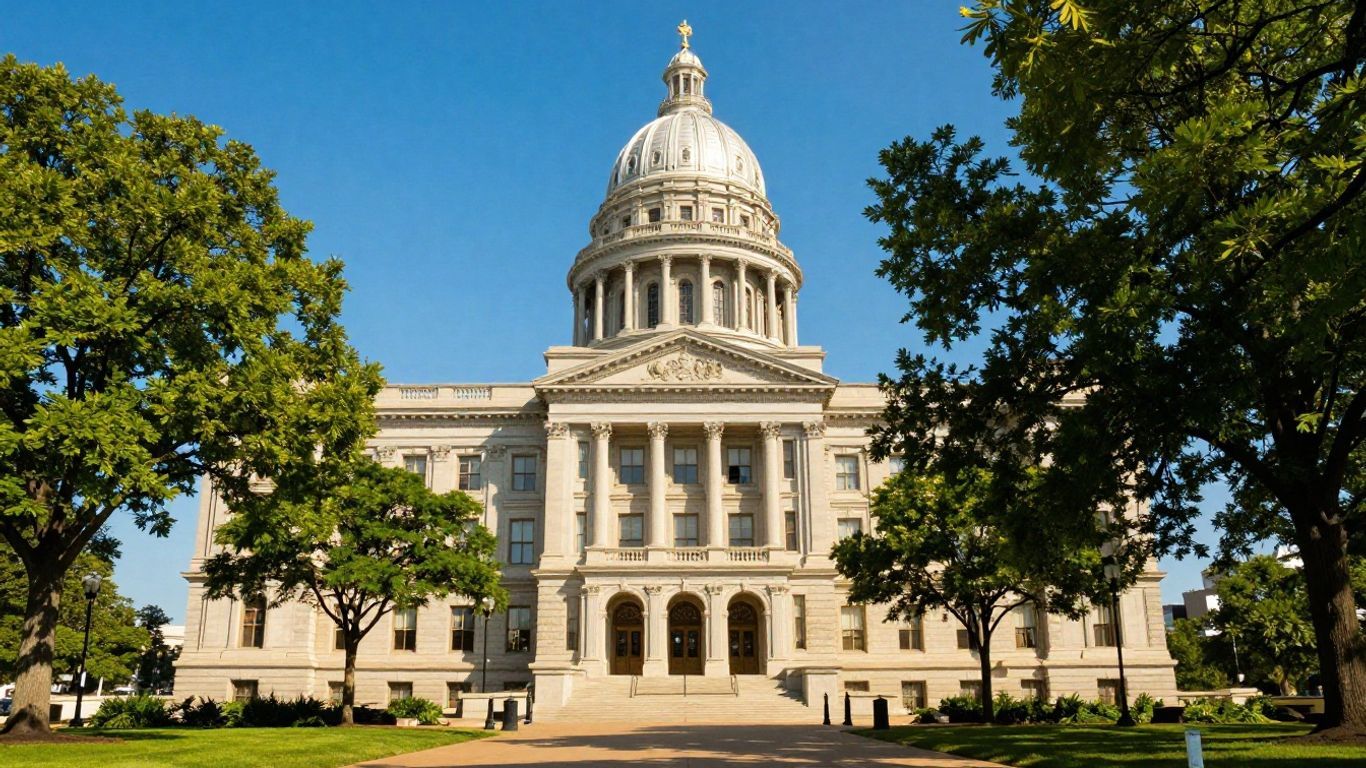
Minnesota's capital, St. Paul, possesses a history that gracefully extends back to the mid-19th century. It officially assumed the role of capital for the Minnesota Territory in 1849, subsequently becoming the state capital when Minnesota was admitted into the Union in 1858. This distinguished city is strategically positioned on the mighty Mississippi River, a waterway that has consistently served as a vital artery for both trade and travel.
St. Paul is famously known as one of the "Twin Cities," alongside its larger, more populous neighbor, Minneapolis. While these are indeed distinct urban centers, they frequently collaborate on regional initiatives and share many essential resources. It's quite interesting to consider that St. Paul actually predates Minneapolis, with its origins rooted in a bustling trading post and a crucial docking point for steamboats.
For a brief overview, here are a few key facts about St. Paul:
- Area: The city encompasses approximately 52.8 square miles (137 square kilometers).
- Population: According to recent estimates, the city proper boasts a population exceeding 311,000 residents, while the broader metropolitan area is home to several million inhabitants.
- Founding: The area that would ultimately become St. Paul was initially settled by pioneering fur traders and missionaries long before its formal designation as a capital.
The Mississippi River played an undeniably pivotal role in St. Paul's nascent development. It served as a critical nexus for transportation, facilitating the movement of goods and people both upstream and downstream. This strategic advantage naturally transformed it into a thriving hub for commerce and burgeoning settlement.
St. Paul is also celebrated for its distinct seasonal variations, featuring characteristically cold, snowy winters and invitingly warm, humid summers. The city boasts a rich and dynamic cultural scene, offering a plethora of museums, theaters, and parks. Moreover, it stands as a significant center for both government and business across the region.
24. Mississippi - Jackson
Jackson, Mississippi, has commendably served as the state capital since 1821. Strategically located in the very heart of the state, it naturally functions as an exceptionally convenient hub for all state-related affairs. The city proudly bears the name of Andrew Jackson, a celebrated hero of the War of 1812 and later the seventh U.S. President.
Jackson is a city undeniably steeped in rich history, having played significant roles in both the American Civil War and the transformative Civil Rights Movement. It truly is a compelling destination where one can encounter numerous historical markers and museums that vividly narrate the intricate story of Mississippi.
For a brief overview, here's a quick look at some essential facts about Jackson:
- Established: 1821
- Named After: Andrew Jackson
- Location: Central Mississippi
The journey to Jackson assuming its role as the capital wasn't a straightforward trajectory. Initially, the capital was situated in Natchez, a historic port town gracefully nestled on the Mississippi River. However, a dedicated commission was subsequently formed with the explicit purpose of identifying a more central location, a search that ultimately led to the selection of the site destined to become Jackson.
Over the decades, Jackson has steadily evolved into a significant cultural and economic epicenter for Mississippi. It's widely recognized for its quintessential Southern charm and its invaluable contributions to the realms of music and the arts.
25. Missouri - Jefferson City and more
Missouri, a state richly endowed with a compelling history, officially became an integral part of the United States in 1821. Its capital city, Jefferson City, was formally established in 1826, positioning it as one of the earlier state capitals across the Midwest. Prior to Jefferson City's designation, both St. Louis and St. Charles functioned as temporary capitals throughout the territorial period.
Indeed, Jefferson City's ultimate selection as the permanent capital represented a highly strategic decision, driven by the objective of securing a truly central location within the state. The city itself is gracefully situated on the Missouri River—a waterway that has, throughout history, been an indispensable transportation artery.
For a brief overview, here's a quick look at some pivotal facts about Jefferson City:
- Founded: 1826
- Riverfront Location: Distinctively situated on the scenic bluffs of the Missouri River.
- Statehood: Missouri achieved statehood in 1821.
The intricate history of Missouri's capital profoundly mirrors the state's own dynamic development, tracing its evolution from its nascent territorial days to its firm establishment as a significant state during America's westward expansion. The deliberate choice of Jefferson City aimed to forge a stable and enduring center for comprehensive government and administration.
While Jefferson City holds the undisputed title of official capital, it's certainly worth noting that other prominent cities, such as St. Louis, exerted considerable influence and played significant roles in the region's early history, serving as capitals for various territories well before Missouri's statehood. This broader historical context undoubtedly enriches our understanding of Missouri's remarkable journey.
Wrapping Up Your U.S. States and Capitals Knowledge
So, there you have it—a comprehensive overview of all 50 states and their respective capitals, presented in a clear and accessible format. Whether you're diligently studying for an examination, meticulously planning an upcoming journey, or simply harboring a natural curiosity about the diverse nation we inhabit, keeping this readily available list proves exceptionally beneficial. It's quite common for these specific details to slip our minds occasionally, but possessing this knowledge undoubtedly contributes to forming a much clearer and more nuanced understanding of the United States. Keep this valuable resource close at hand, and you'll undoubtedly become a geography whiz in no time. Happy learning!
Frequently Asked Questions
What exactly constitutes a state capital?
A state capital is fundamentally the primary city where the governmental operations of that particular state are situated. One might think of it as the 'headquarters' for the state's leadership, where crucial decisions and policies are formulated.
What is the significance of knowing state capitals?
Acquiring knowledge of state capitals genuinely enhances your comprehension of the United States—its intricate geography, and its governmental structure. It serves as a foundational element in understanding your nation, akin to knowing the names of your acquaintances.
Do any U.S. states have multiple capitals?
No, unequivocally, each of the 50 U.S. states possesses only one officially designated capital city. While it's true that various governmental buildings might be geographically dispersed, there is invariably one principal city recognized as the definitive capital.
What effective strategies can I employ to memorize all the states and their capitals?
You might consider several proven methods: crafting flashcards, engaging with interactive online games, or even devising memorable songs or narratives to assist recall. Furthermore, categorizing them into smaller, manageable groups can significantly streamline the memorization process.
Is the capital city invariably the largest city within a state?
Not invariably, no! Quite often, the capital city may be a smaller municipality, whereas another city within the same state could be substantially larger and more widely recognized. For instance, while Springfield holds the capital designation for Illinois, Chicago stands as its largest city by a considerable margin.
On what basis were capital cities historically selected?
Historically, capital cities were frequently chosen for a multitude of diverse reasons. Some were selected due to their central geographical placement within the state, others emerged as vital trade centers, or their designation was a direct outcome of political considerations prevalent during the state's formation.


