
resources-malaysia
Exploring the Diverse Malaysia Languages: A Comprehensive Guide
Industry Expert & Contributor
20 Oct 2025

When it comes to languages, Malaysia is a fascinating tapestry. It isn't a country where just one language dominates; instead, it's a vibrant mix of voices. You have the main languages that form the backbone of national communication, but then there are all the regional dialects and the ancestral tongues of indigenous groups. It’s quite remarkable how it all blends together. If you've ever been curious about what people are actually speaking on the streets of Kuala Lumpur or in a coastal village in Sabah, you've come to the right place. We’re about to explore the primary languages and then delve into some of the lesser-known ones that make Malaysia so linguistically rich.
Key Takeaways
- As the national language, Malay is used across the board in government and daily interactions, serving as a powerful unifying element for the nation's diverse population.
- Beyond Malay, Mandarin Chinese and Tamil are cornerstone languages spoken by large communities, beautifully reflecting Malaysia's multicultural fabric.
- English plays an indispensable role as a global bridge, widely used in business, higher education, and as a common second language throughout the country.
- Malaysia is home to a delightful array of regional Malay dialects and various Chinese and Indian dialects, each adding its own unique flavour to everyday conversations.
- The country proudly preserves numerous indigenous languages—especially in East Malaysia—that represent a deep and ancient cultural heritage vital to the nation's identity.
The Top Four Major Malaysia Languages
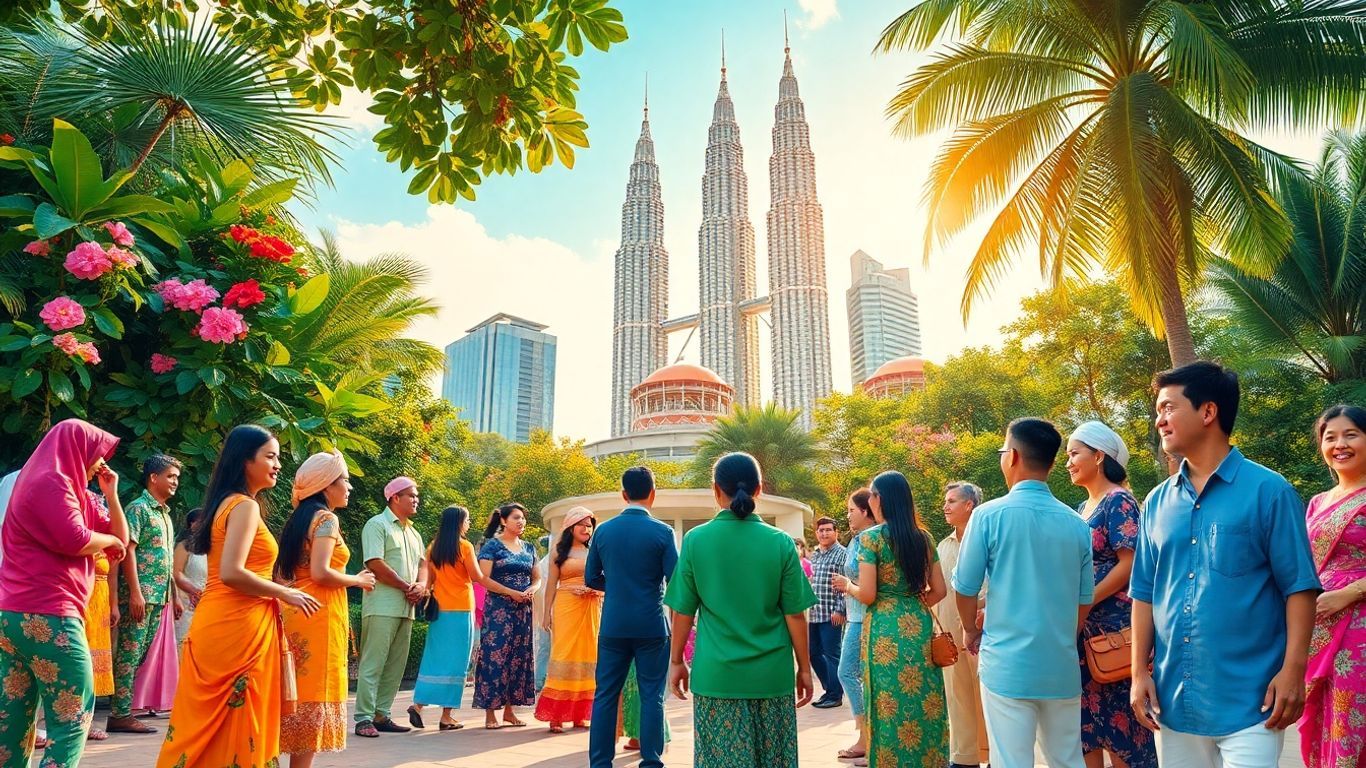
Step into Malaysia, and you're immediately greeted by a symphony of languages. It’s not just one or two tongues you'll overhear; it's a bustling chorus of sounds. But if we're to pinpoint the main players—the ones you'll encounter most frequently and that form the foundation of communication—four truly stand out. These languages are more than just tools for conversation; they are living windows into the diverse cultures and histories that make Malaysia the unique nation it is.
Malay: The National Language
At the heart of Malaysian identity is its official language, Malay, or *Bahasa Melayu*. You'll hear it everywhere—from government offices and television news to schoolyards and local markets. It’s the language that serves as a common thread, connecting people from all walks of life. Learning even a few phrases in Malay can open doors to understanding local customs and traditions in a much deeper way. It's more than just a set of words; it’s a symbol of national unity.
Mandarin Chinese: A Significant Dialect
Given Malaysia's substantial Chinese population, Mandarin holds a place of great importance. While a variety of Chinese dialects are spoken, Mandarin often serves as the lingua franca for broader communication within Chinese communities and in vernacular schools. You’ll find it widely spoken in urban centres, playing a significant role in both business and cultural life—a language that carries a rich heritage connecting many Malaysians to their ancestral roots.
Tamil: Connecting With Indian Heritage
Tamil is another cornerstone of Malaysia's linguistic landscape, spoken by a large portion of the Indian Malaysian community. It is a language with an ancient history, and its strong presence here is a testament to enduring cultural ties. You'll hear Tamil spoken in homes, temples, and at community gatherings. For many, it's a vital link to their heritage, traditions, and religious practices, and it's fascinating to see how it has maintained its strength alongside the other languages of the nation.
English: Malaysia's Global Connector
English holds a special and practical place in Malaysia. Thanks to the nation's history, it is widely used as a second language, particularly in the spheres of business, higher education, and international relations. While it may not be the mother tongue for most, it functions as crucial common ground for different ethnic groups to communicate, especially when engaging with the wider world. It's the language that helps Malaysia connect globally and stay in step with international progress.
The linguistic landscape of Malaysia is a vibrant mosaic, where major languages like Malay, Mandarin, Tamil, and English not only coexist but also influence one another, reflecting the country's diverse population and rich history. Each language serves as more than just a means of communication—it is a proud carrier of cultural identity and heritage.
Exploring Regional Malay Dialects And Varieties
Venture beyond the standard *Bahasa Melayu* you might find in textbooks or hear in official broadcasts, and you'll discover a rich tapestry of regional Malay dialects. These variations are far more than just slight differences in pronunciation; they often feature distinct vocabulary and unique grammatical structures that reflect the local history and culture of each state. Understanding these nuances offers a much deeper appreciation of the Malay language and its speakers.
Understanding Standard Malay Versus Colloquial Speech
Standard Malay, officially known as *Bahasa Baku*, is the formal version taught in schools and used by the government and media. It's crafted to be a unifying language for the entire nation. In everyday life, however, people naturally slip into colloquial speech, often called *Bahasa Pasar*. This is where the true regional flavour shines through. It's more relaxed, often faster, and peppered with local slang and expressions that might be completely foreign to someone from another part of the country.
The contrast between formal and informal Malay can be quite remarkable. While you might learn 'Saya mahu makan' (I want to eat) in a language class, you're far more likely to hear a local say 'Nak makan doh' or something similar in a casual setting, depending on where you are.
Distinctive Features Of Kelantanese Malay
Spoken in the northeastern state of Kelantan, the Kelantanese dialect is one of the most recognisable and distinct. It's known for its unique rhythm and pronunciation, which can often be a real challenge for speakers of Standard Malay to grasp. For instance, the pronoun for 'I' or 'me' often shifts from 'saya' to 'kawe', and 'you' might become 'hang'. The pace of speech can also be quite brisk, adding another layer of complexity for the uninitiated.
Here’s a small glimpse into some of these differences:
| Standard Malay | Kelantanese Malay | English Meaning |
|---|---|---|
| Saya | Kawe | I / Me |
| Awak / Kamu | Hang | You |
| Hendak / Mahu | Nak | Want |
| Sangat | Molek / Sangat | Very |
East Malaysian Malay Influences
Over in East Malaysia, particularly in Sabah and Sarawak, the Malay spoken also carries its own distinct flair, often shaped by the numerous indigenous languages of these states. Sabah Malay, for example, might weave in words from Kadazan-Dusun or Bajau, creating a unique linguistic blend. Similarly, Sarawak Malay has its own local vocabulary and intonation patterns. These East Malaysian varieties are a fantastic showcase of how Malay has adapted and integrated with the local linguistic landscape, creating a fascinating regional diversity within the broader language family.
Delving Into Chinese Dialects Spoken In Malaysia
While Mandarin is the standardised language taught in many Chinese schools and used in official settings across Malaysia, the true linguistic tapestry is woven with a vibrant array of Chinese dialects. These dialects are more than mere variations; they are living connections to the ancestral homelands of the Chinese communities who settled here generations ago.
Cantonese In Urban Centers
Walk through the bustling streets of Kuala Lumpur or Petaling Jaya, and you'll be immersed in the sounds of Cantonese. It's not just a language for casual conversation; you'll hear it prominently in local Chinese media, from TV dramas to radio programmes. It's estimated that around 30% of Malaysian Chinese speak Cantonese, making it a dominant voice in these urban hubs.
Hokkien's Presence In Northern Regions
Head up north, particularly to states like Penang and Kedah, and you'll find that Hokkien reigns supreme. It is, in fact, the most widely spoken Chinese dialect in Malaysia overall, with about 40% of the Chinese Malaysian population using it in their daily lives. If you're exploring the food paradise of Penang, you'll definitely hear Hokkien all around you.
Teochew And Hakka Variations
Teochew has a strong foothold in Johor, with towns like Muar and Batu Pahat being notable centres for the dialect, spoken by roughly 15% of Malaysian Chinese. Then there’s Hakka, which you'll encounter more frequently in Sabah and parts of Perak, used by about 10% of the Chinese population. Each of these dialects, while distinct, contributes to the rich and complex mosaic of Chinese languages in Malaysia.
The differences between these dialects are not just minor quirks in pronunciation. They can involve entirely different tones, unique vocabulary, and even subtle grammatical variations, making each one a distinct linguistic experience.
Here's a quick look at the approximate distribution:
| Dialect | Primary Regions | Approximate Percentage |
|---|---|---|
| Hokkien | Penang, Kedah, Perak | 40% |
| Cantonese | Kuala Lumpur, Selangor | 30% |
| Teochew | Johor | 15% |
| Hakka | Sabah, Perak | 10% |
Discovering Indian Language Varieties
When we talk about Indian languages in Malaysia, Tamil naturally comes to the forefront. It's spoken by a large segment of the Indian Malaysian population and is deeply woven into daily life, education, and religious observance. Over generations, Malaysian Tamil has developed its own unique character, absorbing words and phrases from Malay and English, which makes it distinct from the Tamil spoken in India. It's quite fascinating how languages evolve and adapt when they travel across oceans.
But the story doesn't end with Tamil! You'll also hear other Indian languages spoken here. While Tamil is the most prevalent, there's a notable presence of languages like Telugu and Malayalam, primarily spoken by communities whose families trace their origins to other parts of South India. These languages may be used by smaller groups, but they contribute beautifully to the rich linguistic diversity of Malaysia. You might hear them in certain neighbourhoods or even catch them on the Indian media channels that many Malaysians enjoy.
Then there's Punjabi, mainly spoken by the Sikh community. They have proudly maintained their language and culture, and you'll find Punjabi speakers concentrated in areas like Selangor and Kuala Lumpur. And although Hindi isn't a first language for most Indian Malaysians, many understand it quite well—thanks in large part to the immense popularity of Bollywood films and music. It's amazing how pop culture can keep languages alive and widely understood across different communities.
Here's a quick summary of the main Indian languages you might encounter:
- Tamil: The most widely spoken, used in everyday life, schools, and cultural events.
- Telugu & Malayalam: Spoken by smaller communities, often with roots in the states of Andhra Pradesh, Telangana, and Kerala in India.
- Punjabi: The language of the vibrant Sikh community.
- Hindi: Widely understood due to cultural influences, though less commonly spoken as a primary language.
It's also very common to hear a fluid mix of languages in conversation. Many Indian Malaysians effortlessly switch between Tamil, Malay, and English. This blending, sometimes humorously called 'Tanglish' (Tamil + English), demonstrates just how adaptable language can be in a multicultural environment like Malaysia. You can find out more about Malaysian Tamil and its unique place in the country.
The linguistic landscape for Indian languages in Malaysia is a powerful story of migration, adaptation, and cultural preservation. While Tamil holds a central position, the presence of other languages and the natural blending with local tongues highlight the dynamic nature of language in a diverse society.
Indigenous Languages Of Malaysia: A Rich Heritage
Beyond the major languages that most people associate with Malaysia, there lies an entirely different world of tongues spoken by the land's original inhabitants. These indigenous languages are a fundamental part of Malaysia's story, especially in Sabah and Sarawak on the island of Borneo, as well as among the Orang Asli communities of Peninsular Malaysia. These languages are a direct, living link to an ancient past and the diverse cultures that have shaped the nation.
Peninsular Malaysia's Orang Asli Tongues
The Orang Asli, the indigenous peoples of Peninsular Malaysia, speak a wide variety of languages, many of which belong to the Austroasiatic and Austronesian language families. Some of these are spoken by relatively small communities and face the challenge of preservation.
- Temuan: Spoken by one of the larger Orang Asli groups, this language is heard in states like Selangor and Pahang.
- Semai: This language is primarily spoken in the central parts of the peninsula, such as in Perak.
- Jahai: A rarer language spoken by traditionally nomadic groups near the Thai border.
- Mah Meri: Known for their intricate mask-making traditions, this community speaks a language found mainly in coastal Selangor.
Many of these languages are not widely spoken outside their immediate communities. Fortunately, efforts are being made to document and preserve them before they fade away.
Major Languages Of East Malaysia
Sabah and Sarawak are true linguistic treasure troves, home to a vast number of indigenous groups, each with its own language. These languages mostly belong to the broader Austronesian language family.
- Iban: The most widely spoken indigenous language in Sarawak, it is the language of many longhouse communities.
- Kadazan-Dusun: A major language group in Sabah, representing a significant portion of the state's indigenous population.
- Melanau: Spoken by communities living along the coast of Sarawak.
- Murut: Found in the interior regions of Sabah.
- Bidayuh: Predominantly spoken in the southwestern parts of Sarawak.
Unique Indigenous Groups And Their Languages
It's not just about the numbers; it's about the unique cultural heritage intrinsically tied to each language. For instance, the Rungus people in northern Sabah possess their own distinct language and traditions. Many of these languages are vessels for rich oral histories, passed down through captivating stories, songs, and chants. While Malay often serves as a common language, these indigenous tongues remain vital for cultural identity and daily life within their respective communities.
Linguistic Crossovers And Borrowed Words
Malaysia's linguistic scene is a vibrant tapestry woven with threads from countless cultures and historical interactions. It's not just about the main languages existing side-by-side; it's about how they've mingled, borrowed, and evolved together over centuries. This constant exchange has created a unique linguistic flavour that you simply won't find anywhere else.
Influences From Sanskrit And Arabic
Long before modern influences arrived, ancient languages like Sanskrit and Arabic left an indelible mark on the region. You can see this clearly in many everyday Malay words. Think about terms related to royalty, religion, or abstract ideas—many have roots in these classical tongues. For example, the word 'bahasa' itself, meaning language, comes from Sanskrit. Similarly, Arabic has contributed a wealth of words related to Islamic concepts and general vocabulary, reflecting the deep-rooted presence of Islam in Malaysia.
Here’s a small peek at some common words:
| Original Language | Malay Word | Meaning |
|---|---|---|
| Sanskrit | Raja | King |
| Sanskrit | Singa | Lion |
| Arabic | Dunia | World |
| Arabic | Ikhlas | Sincere |
The Impact Of English Loanwords
As a global connector and a legacy of the colonial era, English has also profoundly influenced Malaysian languages, especially Malay and the various Chinese dialects. You'll hear English words sprinkled into conversations all the time, often adapted with a local accent and grammatical twist. Words for technology, modern concepts, and even everyday items are frequently borrowed from English. It’s a natural process of how languages adapt to new ideas and keep pace with a changing world. You can find many examples of this in the day-to-day interactions of local Malaysian communities.
Interplay Between Malay, Chinese, And Tamil
What's truly fascinating is witnessing how the major languages borrow from one another in real-time. It’s perfectly normal to hear Chinese speakers use Malay words in a casual chat, or for Tamil speakers to incorporate Malay or English terms. This isn't random; it reflects how closely these communities live and interact. For instance, a Hokkien speaker might use the Malay word for a specific local dish, or a Tamil speaker might use an English term for a modern gadget. This linguistic blending is a hallmark of Malaysia's multicultural identity, making conversations dynamic and rich with diverse influences.
Experiencing Code-Switching In Malaysia
One of the most striking linguistic features you'll notice in Malaysia is how people effortlessly weave different languages together within a single conversation. This isn't just a haphazard mix-up; it's a dynamic and sophisticated practice known as code-switching, and it's a fundamental part of daily communication here.
The Phenomenon Of Multilingualism
Malaysia is a true melting pot of cultures, and this is mirrored perfectly in its languages. With Malay as the national language, English widely used for business and education, and large communities speaking various Chinese dialects and Tamil, most Malaysians grow up naturally multilingual. This isn't just about knowing a few phrases; it's about the ability to fluidly shift between languages depending on the context—who you're talking to, the topic of discussion, or even the social setting. It's a skill honed from childhood, a living testament to the country's diverse heritage.
Everyday Examples Of Language Mixing
You'll hear code-switching everywhere you go. Picture ordering food at a local *kopitiam*: the uncle might greet you with "Selamat pagi!" (Good morning in Malay), ask "Want mee goreng or nasi lemak?" (using English for the menu items), and then turn to chat with another customer in a mix of Hokkien and Malay. Or consider a group of friends making plans: one might say, "So, *kita* (we) going to the *kedai kopi* (coffee shop) later?" then add, "I heard that new movie is *hen hao* (very good in Mandarin)."
Here are a few common scenarios:
- Family Gatherings: Siblings might chat among themselves in English but switch to their mother tongue when speaking with parents or grandparents.
- Workplace Interactions: Colleagues often use English for formal meetings but sprinkle in Malay or Chinese phrases to build camaraderie during a coffee break.
- Shopping: A shopkeeper might start a conversation in Malay, then switch to English if they notice the customer is more comfortable with it, or even use a few words of another dialect to create a friendly connection.
Learning Through Local Interactions
Observing and even participating in code-switching is one of the most authentic ways to grasp the living languages of Malaysia. It reveals that languages aren't rigid systems but are constantly adapting and interacting. Don't be surprised if you find yourself picking up this habit—it’s a sign that you're truly immersing yourself in the Malaysian way of communication.
The constant interplay of languages isn't merely a linguistic curiosity; it's a social lubricant, a way for Malaysians to connect across different backgrounds and express their multifaceted identities. It’s a beautiful, practical demonstration of unity in diversity.
Wrapping Up Our Language Journey
So, we've taken quite a deep dive into the many ways people communicate across Malaysia. It's clear that the linguistic landscape is far more than just Malay, English, Mandarin, and Tamil, although these are undoubtedly the heavyweights. The country is also home to countless other dialects and indigenous languages that add incredible texture and depth to its cultural identity. It’s truly amazing how everyone manages to connect, creatively mixing and matching words and phrases in their daily lives. This vibrant exchange really showcases the rich history and cultural fusion packed into this nation. For anyone with an interest in languages, Malaysia is a endlessly fascinating place to explore. There’s always a new expression to hear and a new story to learn, offering one of the best ways to get to know its people.
Frequently Asked Questions
What are the main languages spoken in Malaysia?
Oh, Malaysia is a true melting pot of languages! The four major players you'll hear everywhere are Malay (the national language), Mandarin Chinese, Tamil, and English. But that's just the beginning! The country is also home to a huge variety of regional dialects and indigenous languages, which makes Malaysia linguistically fascinating.
Why is Malay the national language?
Malay, or *Bahasa Melayu*, holds the status of the national language primarily because it is the mother tongue of the Malay community, the largest ethnic group in the country. It serves as a unifying language for all Malaysians, used in government, public schools, and as a common bridge for communication between people of different backgrounds.
Are there different kinds of Malay spoken?
Yes, absolutely! Just like English has different accents and dialects around the world, Malay has many regional variations. The Malay spoken in Kelantan, for example, sounds quite different from the version you'd hear in Johor or Kuala Lumpur. These dialects have their own unique vocabulary and intonation, but most Malaysians can generally understand each other.
What are 'code-switching' and why do Malaysians do it?
Code-switching is the amazing habit of mixing two or more languages in a single conversation—sometimes even in the same sentence! Malaysians do this so naturally because most people grow up being multilingual. It's a very efficient and expressive way to communicate, allowing them to connect with others and show different sides of their identity in a diverse society.
Are there languages spoken by native groups in Malaysia?
For sure! Malaysia has a rich heritage of indigenous languages spoken by the Orang Asli in Peninsular Malaysia and the numerous ethnic groups in East Malaysia (Sabah and Sarawak), like the Iban and Kadazan-Dusun peoples. These languages are a vital part of Malaysia's cultural history and represent a deep ancestral connection to the land.
How do different languages influence each other in Malaysia?
Because people from so many different backgrounds live and work together, their languages have naturally mixed over time. You'll find Malay words that were borrowed from Sanskrit, Arabic, and English. In daily conversation, it's also common to hear Chinese and Indian Malaysians using Malay words or phrases. This constant borrowing creates a uniquely Malaysian linguistic blend that you won't find anywhere else!


