


resources-malaysia
Exploring the Diverse Religion of Malaysia: A Comprehensive Overview
Industry Expert & Contributor
24 Oct 2025

When it comes to faith, Malaysia is a truly fascinating place. It's not just one dominant belief; it's a rich melting pot of religions and spiritual practices that have woven themselves together over centuries. Of course, you have Islam as the nation's official religion, but alongside it are thriving communities of Christians, Hindus, Buddhists, and many others. This incredible blend makes Malaysia an interesting case study in how different faiths can coexist. It’s a story that has been shaped by ancient trade, colonial history, and the diverse peoples who have long called this land home.
Key Takeaways
- While Islam is the nation's official religion, Malaysia's constitution protects the right for other faiths to be practised in peace and harmony.
- Malaysia operates under a unique dual legal system, where both civil law and Sharia law are applied, affecting different communities and aspects of life.
- The country's religious diversity today is a direct result of historical influences, including ancient trade routes and colonial-era migration.
- In Malaysia, ethnicity and religious affiliation are often closely linked, contributing to the nation's wonderfully varied spiritual landscape.
- Though religious harmony is a national goal, there are ongoing conversations and debates surrounding religious legislation and the potential for discrimination.
Understanding Malaysia's Religious Tapestry
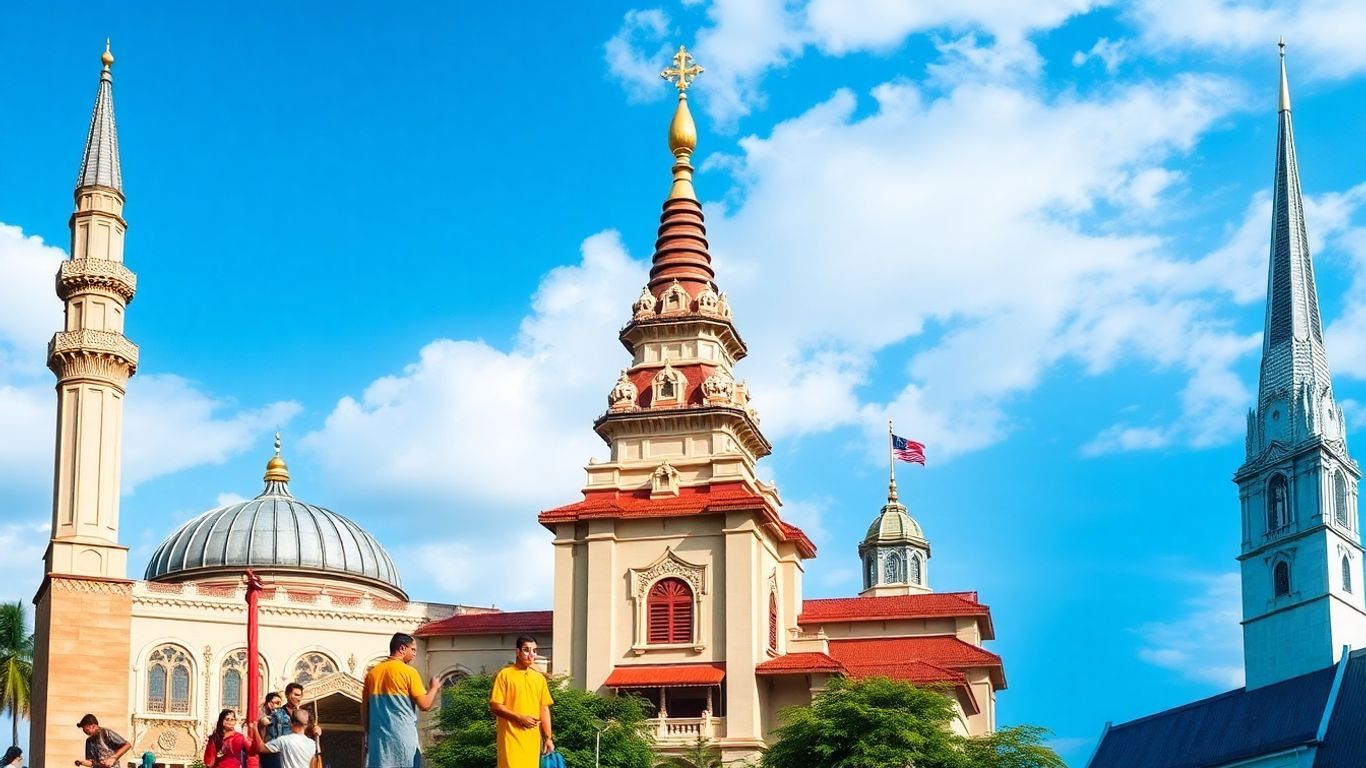
Malaysia presents a remarkable spiritual landscape where various faiths coexist, creating a truly unique cultural mosaic. It's not a country dominated by a single religion; instead, you'll discover a dynamic mix that beautifully reflects its complex history and its multicultural population.
Islam: The Federation's Official Religion
Islam holds a central position in Malaysia, as it's enshrined as the official religion of the Federation. This means it's deeply woven into the very fabric of the nation's identity and governance. While the constitution guarantees that other religions can be practised peacefully, the prominence of Islam is undeniable. For ethnic Malays, being Muslim is a defining characteristic—a point explicitly stated in the constitution itself. This deep connection between Malay identity and the Islamic faith shapes many facets of law and daily life across the country.
Christianity and Hinduism: Significant Minority Faiths
Looking beyond Islam, you'll find that Christianity and Hinduism are two of the most significant minority religions in the country. Vibrant Christian communities are found all over Malaysia, with churches of various denominations serving their congregations. In the same vein, Hinduism is practised by a large portion of the population, especially among Malaysians of Indian descent. Their colourful temples are not just places of worship but also important cultural and spiritual hubs. These faiths, along with Buddhism, add incredible depth to Malaysia's religious diversity.
Other Spiritual Beliefs in Malaysia
But the spiritual picture doesn't end there. Malaysia is also home to a wide array of other beliefs and practices. Buddhism is widely followed, with countless beautiful temples and shrines dotting the landscape. You'll also encounter smaller but dedicated communities practising Sikhism, Taoism, and Confucianism, as well as various indigenous animistic beliefs. It's this rich blend of faiths—from the officially recognised to the more niche traditions—that truly defines Malaysia's spiritual character.
The side-by-side existence of these diverse faiths is a hallmark of Malaysian society, though navigating the intricate relationship between religion and state affairs can sometimes be a complex affair.
The Constitutional Framework of Religion in Malaysia
Malaysia's approach to religion within its legal and governmental structures is quite unique and, frankly, has a fair bit of nuance. It isn't a simple black-and-white situation. The constitution itself charts a course that acknowledges Islam's special status while also making room for other faiths to be practised freely.
Secular State or Religious Federation?
So, where does Malaysia stand on this? It's a question with a layered answer. While the country is often described in secular terms, Article 3 of the constitution clearly states that "Islam is the religion of the Federation; but other religions may be practiced in peace and harmony." This establishes Islam's federal status without banning other religions. Complicating things further is Article 160, which constitutionally defines a "Malay" as someone who is Muslim. This link between ethnicity and religion profoundly shapes how identity is viewed nationwide. It's a delicate balancing act, and at times, it can feel like the scales lean more towards one side.
Dual Legal Systems: Civil and Sharia Law
Malaysia operates with two legal systems that run in parallel: the civil law system and the Sharia (or Syariah) law system. Each state has the authority to formulate its own Sharia laws, which can result in some variations from one state to another. For Muslims, Sharia law governs a host of personal matters and can also apply to certain criminal offences. For example, some states have passed laws that penalise specific actions for Muslims, with punishments ranging from fines to imprisonment. This dual system means that, depending on your religion and the issue at hand, you could be subject to completely different legal frameworks—a system designed to respect religious practices but one that can also lead to complexities where civil and Sharia laws overlap.
Governmental Regulation of Islamic Doctrine
The government takes an active role in overseeing the practice of Islam, particularly the Sunni sect, which is the dominant branch in the country. Both federal and state governments have the power to regulate Islamic doctrine. This means that while other Islamic sects do exist, they may not always receive official recognition or support, and in some instances, their activities might even be restricted. This focus on doctrinal regulation is part of a broader effort to maintain a sense of unity and standardisation within the Muslim community, though it does occasionally raise questions about religious freedom for minority Islamic groups.
Historical Influences on Malaysian Religious Diversity
Malaysia's rich religious landscape is something that was built over centuries; it certainly didn't just happen overnight. It’s a story shaped by the constant movement of people, bustling trade, and the ebb and flow of different cultures. You could almost think of it as a grand potluck, where every group brought their own unique dish, and over time, the flavours all mingled to create something distinctly Malaysian.
Early Trade Routes and Religious Introduction
Long before the great empires rose, the lands we now know as Malaysia were already lively hubs for international traders. These weren't just merchants moving goods—they were also carriers of new ideas and beliefs. Sailors and traders from India, China, and the Middle East made their stops here, sharing their faiths just as they shared their spices and silks. This early contact laid the foundational stones, introducing spiritual concepts that would later take root and flourish.
The Arrival of Islam and the Malacca Sultanate
The arrival of Islam was the real game-changer. It began to trickle in through merchants, but it truly established itself and blossomed with the rise of the powerful Malacca Sultanate around the 15th century. Malacca transformed into a major Islamic centre, and its influence radiated throughout the region. This period was incredibly important, as it cemented Islam as a dominant faith, shaping much of the cultural and political identity that would follow for generations.
Colonial Rule and Migratory Shifts
Next came the colonial era, with the British being the primary power. This chapter brought another wave of transformation, not just politically but also demographically. The British administration actively encouraged migration from China and India to supply labour for the booming tin mines and rubber plantations. This huge influx of people brought their own religions with them—Buddhism, Hinduism, Christianity, and a variety of folk beliefs—adding even more layers to the land's already diverse spiritual tapestry. This period of migration significantly reshaped the ethnic and religious makeup of the peninsula, shifting it from a predominantly Malay society to the pluralistic one we see today.
It's truly fascinating to see how all these historical threads are woven together. You have:
- Early Traders: Bringing in a variety of beliefs from India and China.
- Malacca Sultanate: Firmly establishing Islam's presence in the region.
- Colonial Era: Welcoming large populations from India and China, who brought their own distinct faiths.
This historical layering is precisely why Malaysia today is such a rich and complex mix of traditions and practices. It wasn't one single event, but a gradual, organic process of interaction and settlement that unfolded over many, many years.
Religious Practices Among Ethnic Communities
In Malaysia, religious diversity is deeply connected to its ethnic tapestry. While Islam holds the title of the official religion, different communities embrace their faiths in ways that beautifully reflect their unique heritage and traditions. It's quite common to see distinct neighbourhoods where certain ethnic groups are more concentrated, each with its own cherished places of worship and vibrant cultural practices.
Malay Adherence to Islam
For ethnic Malays, Islam isn't just a religion; it's a fundamental part of their identity, a link that's even defined in the constitution. This means that being Malay is intrinsically tied to being a Muslim. The vast majority of Malays are adherents of Sunni Islam, and their religious observances are seamlessly integrated into their daily lives, from communal prayers at the local mosque to the nationwide celebration of Islamic holidays. The government also has a hand in regulating Islamic doctrine for Muslims, with a primary focus on promoting Sunni Islam.
Hinduism Among Indian Malaysians
The Indian Malaysian community, who are largely of Tamil ancestry, predominantly practice Hinduism. Their arrival in Malaysia, initially as labourers, has left an indelible mark on the nation's culture—especially its incredible food scene. Hinduism is celebrated through dazzling festivals like Thaipusam and Deepavali, as well as daily rituals at ornate temples. While Hinduism is the majority faith, you'll also find Christians and Muslims within the Indian Malaysian community.
Buddhism and Indigenous Religions
Buddhism holds a significant place in Malaysia, particularly among the Chinese Malaysian population. You'll find Buddhist temples and serene shrines are common sights across the country, each reflecting a rich spiritual heritage. Beyond these major religions, the indigenous communities, collectively known as the Orang Asli, have their own traditional beliefs, often rooted in animism and a deep spiritual connection to nature. Over time, however, some Orang Asli have adopted Islam or Christianity. These indigenous groups, the earliest settlers of the Malay Peninsula, each possess unique languages and cultural practices. Their traditional ways are a vital—and ancient—part of Malaysia's spiritual mosaic, even as some communities adapt to larger, more widespread religions.
The interplay between ethnicity and religion in Malaysia is certainly complex. While the constitution ensures freedom of religion, the official status of Islam and its constitutional link to Malay identity creates a unique social dynamic. This often means that religious practices are not just personal choices but are also deeply entwined with cultural and ethnic belonging, influencing everything from social structures to community life.
Coexistence and Challenges in Religious Harmony
Visual Harmony of Places of Worship
As you wander through Malaysian cities, it's quite common to see a mosque, a church, and a temple all standing near each other, sometimes even on the same street. It's a pretty powerful sight, actually. This visual mix is a daily reminder of how different faiths share the same space and how people from various beliefs live as neighbours, side-by-side.
Concerns Over Religious Legislation
While things often look peaceful on the surface, there are definitely some complex issues beneath. The government has a role in how Islam is practised, primarily endorsing the Sunni school of thought. This can create challenges for other Islamic groups. Furthermore, certain laws, like the Sharia Criminal Code in states such as Kelantan, have sparked national conversations. These laws can impose serious penalties for actions like converting out of Islam or not adhering to specific religious rules. Advocacy groups like Sisters in Islam have voiced concerns about these issues, highlighting how they can impact individuals, especially those in minority groups.
The constitution declares Islam as the religion of the Federation while allowing other religions to be practiced peacefully. However, the line between religious freedom and government regulation can sometimes become blurred, prompting important debates about how these laws affect daily life and individual rights.
Navigating Religious Identity and Discrimination
Being openly non-religious in Malaysia isn't always straightforward. While most people identify with a faith, openly declaring oneself an atheist is not very common, partly due to fears of social stigma or potential discrimination. This can make it difficult for some to express their true beliefs. The way politics and ethnicity are often intertwined also adds another layer of complexity. At times, political strategies focus on appealing to specific ethnic demographics, which can inadvertently create divisions instead of fostering unity. This ethnic-based focus can spill over into everyday interactions, sometimes making it harder for people from different backgrounds to connect, even in shared spaces like universities or housing areas.
The interplay between religious laws, ethnic politics, and individual identity creates a complex social fabric that Malaysians are constantly working to understand and improve.
Exploring the Spiritual Mosaic of Malaysia
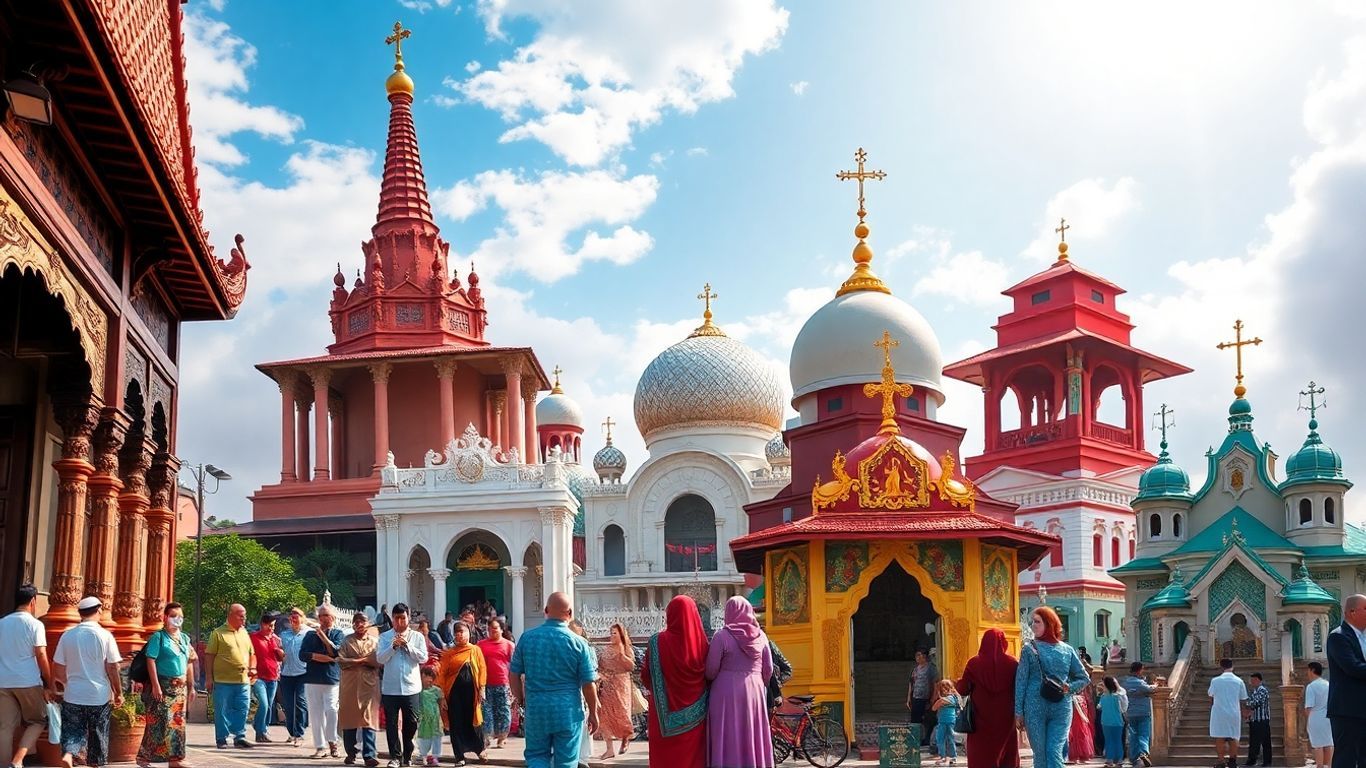
The Presence of Buddhist Temples and Shrines
Buddhism is a prominent faith in Malaysia, especially among the Chinese and Thai communities. You'll discover absolutely stunning Buddhist temples and peaceful shrines dotted across the country, often featuring intricate architecture and vibrant, colourful decorations. These sites are more than just places for religious observance; they also serve as cultural hubs and are popular destinations for tourists. Just think of the magnificent Kek Lok Si Temple in Penang—a sprawling complex of pagodas and statues—or the Dhammikarama Burmese Temple, famous for its grand reclining Buddha. These sacred sites offer a wonderful glimpse into the devotion and artistic heritage of Malaysian Buddhists.
Christian Churches Across the Nation
Christianity, though a minority faith, has a rich and lengthy history in Malaysia, first introduced by European colonial powers and later spread by missionaries. Today, a variety of denominations, including Catholic, Protestant, and Orthodox churches, serve congregations all over the nation. You’ll spot churches in the heart of bustling cities as well as in more remote parts of the country, reflecting the diverse ethnic and historical backgrounds of Malaysian Christians. Many of these churches are deeply involved in community outreach and social services, playing a vital role in the lives of their members.
Sikhism and Other Faiths in Malaysia
Beyond the more widespread religions, Malaysia's spiritual landscape is enriched by other faiths as well. Sikhism, for instance, has a notable presence, with Gurdwaras (Sikh places of worship) found in several cities, primarily serving the Punjabi community. You'll also come across smaller communities practising faiths like Hinduism, Taoism, and Confucianism, alongside traditional indigenous beliefs. While they may not be as visible as the larger religious groups, these faiths are integral to the rich tapestry of Malaysian spirituality. The coexistence of these diverse beliefs is truly a defining characteristic of Malaysia's social fabric.
Malaysia's constitution recognises Islam as the official religion but also guarantees the right for other faiths to be practised in peace. This delicate balance fosters a vibrant religious scene, though navigating the legal and social dynamics of religious freedom can sometimes present complexities for minority communities.
Wrapping It Up
So, when you look at the big picture, Malaysia is truly a nation where different beliefs and traditions have found a way to live together. Seeing mosques, churches, and temples all over the country is a testament to this unique blend. It’s clear that while the country has made great strides in fostering unity since its independence, some challenges remain. The way religion and politics intertwine, and even how the education system is structured, can sometimes highlight differences rather than similarities. But honestly, from everything I've seen and learned, there's a genuine and deep-seated desire for harmony among everyday Malaysians. It’s a journey, to be sure—and one that requires everyone's participation—but it feels like Malaysia is steadily moving forward on its own unique path. It’s a country with so much to offer, and its spiritual tapestry is undoubtedly a huge part of what makes it so special.
Frequently Asked Questions
What are the main religions practiced in Malaysia?
Malaysia is a wonderfully multicultural country with a mix of beliefs. Islam is the official religion and is practiced by the majority of the Malay population. However, you'll find large communities of people who follow Buddhism, Christianity, and Hinduism. On top of that, there are also smaller groups who practice Sikhism, Taoism, and other spiritual traditions. It's a real melting pot!
Is Malaysia a secular country?
That's a very interesting question, and the answer isn't a simple yes or no. While Malaysia was founded with secular principles, the constitution officially states that Islam is the religion of the Federation. But—and this is a big but—it also guarantees that other religions can be practiced in peace and harmony. So, it's best described as a country with Islam in a special constitutional position, while protecting other faiths.
How do different religions get along in Malaysia?
For the most part, people of different faiths in Malaysia coexist peacefully. It's not uncommon to see mosques, churches, and temples located very close to one another in cities, which is a great symbol of this harmony. While there are sometimes public discussions and debates about religious laws and social issues, day-to-day life is generally harmonious.
What is the role of Sharia law in Malaysia?
Malaysia has two parallel legal systems: civil law and Sharia law. Sharia law applies specifically to Muslims and typically covers personal and family matters, like marriage and inheritance, as well as certain religious observances. Each state in Malaysia has the authority to create its own Sharia laws, which means the rules can differ slightly from one part of the country to another.
How did Malaysia become so religiously diverse?
Malaysia's religious diversity is a direct result of its long and colourful history. Early on, ancient trade routes brought faiths like Buddhism and Hinduism to its shores. Later, Arab traders introduced Islam, which became a major influence. Then, during the British colonial era, many workers from India and China migrated to Malaysia, bringing their own religions and rich cultural traditions with them.
Can people practice religions other than Islam freely in Malaysia?
Yes, the constitution guarantees that non-Islamic religions can be practiced in peace and harmony. While the government does regulate Islamic doctrine, people of other faiths are generally free to follow their own beliefs, build their own places of worship like churches and temples, and celebrate their own religious festivals.


