
citiesabc, first_page
Fei-Fei Li's World Labs Raises $1 Billion: How Spatial Intelligence Is Reshaping the Future of Cities, Creativity and the 3D World
20 Feb 2026

The race to teach machines how to truly understand the world around us just took a monumental leap forward. On February 19, 2026, World Labs, the AI start-up founded by legendary computer scientist Fei-Fei Li , announced it has secured $1 billion in new funding to advance its mission in spatial intelligence. For cities, builders, designers, and technologists, this is a watershed moment.
From 2D Pixels to Full 3D Worlds
Most of today's AI lives in flatland, processing text, images, and language on a two-dimensional plane. World Labs was born with a different ambition: to give AI the ability to perceive, generate, reason, and interact within three-dimensional space, much like humans do when they navigate, build, and create in the physical world.
The company describes its technology as "large world models" (LWMs), a spatial equivalent of the large language models (LLMs) that power today's generative AI chatbots but designed for 3D environments rather than text. World Labs' vision is to lift AI from the flat screen into the full depth and richness of the real and virtual world.
In November 2025, World Labs launched Marble, its first commercial product, an AI model that generates interactive 3D virtual worlds from image or text prompts. It was a signal of intent: this company is not just doing research. It is building products.
The $1 Billion Round: Who's Backing It
The funding round attracted some of the most influential names in global technology and investment, including Nvidia, AMD, Autodesk, Fidelity Management and Research Company, Emerson Collective, and Sea. The breadth of investors tells a story in itself , from chip giants to design software powerhouses to global financial institutions, the coalition backing World Labs reflects the cross-industry potential of spatial AI.
Particularly noteworthy is Autodesk's $200 million contribution, the single largest commitment in the round. Alongside the investment, Autodesk has also taken on an advisory role. The partnership is a natural fit: Autodesk's tools are used daily by architects, engineers, urban planners, and product designers worldwide, professionals who think spatially for a living. Bringing spatial AI into their workflows could redefine how cities are designed and built.
As Li herself put it:
"Autodesk has long helped people think spatially and solve real-world problems and, together, we share a clear purpose, building physical AI that augments human creativity and puts more powerful tools in the hands of designers, builders and creators."
World Labs did not disclose its post-funding valuation, though reports from January 2026 had placed it at around $5 billion.
Fei-Fei Li: The Architect of Modern AI Vision
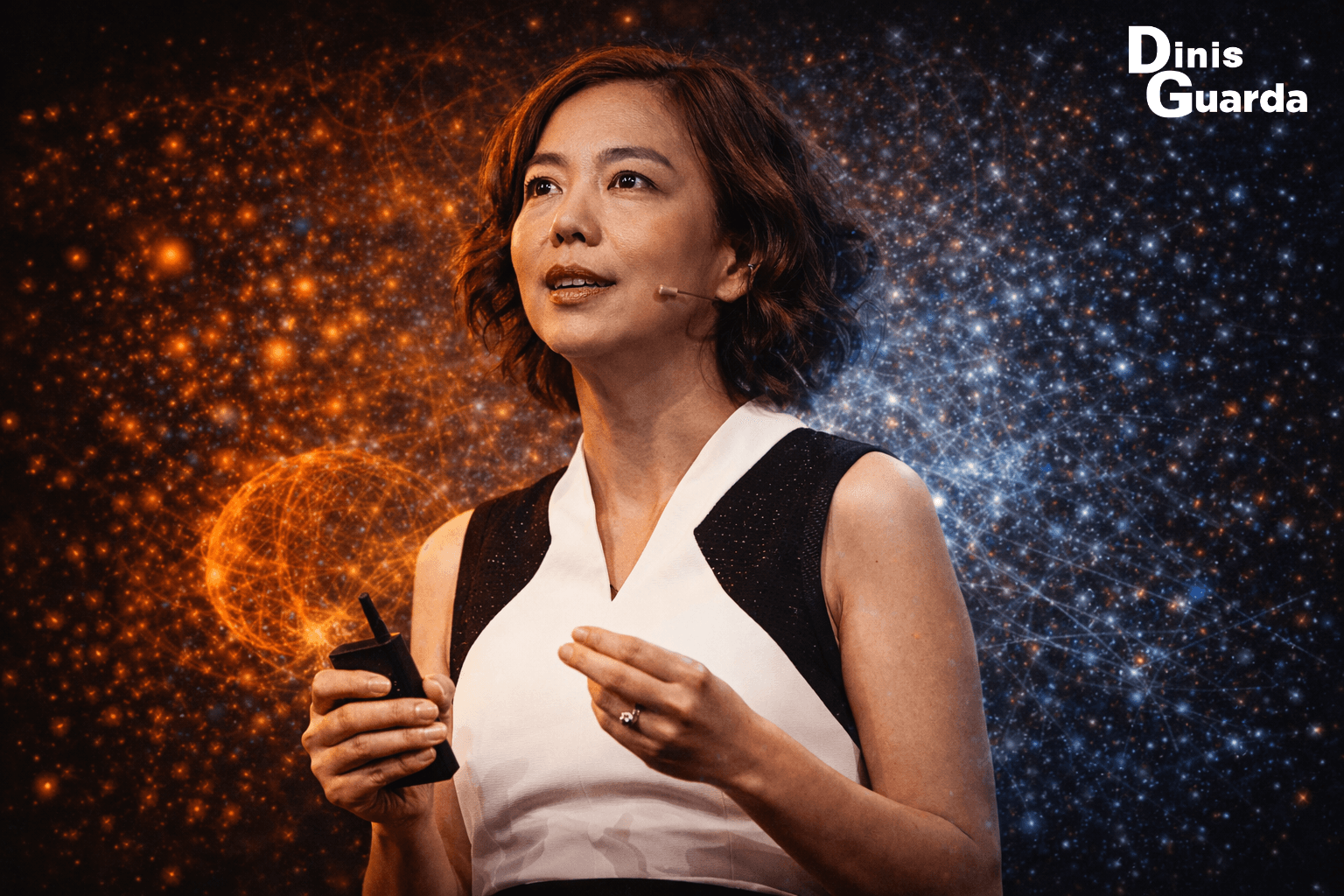
To understand why this funding matters, you need to understand who Fei-Fei Li is and what she has already built.
Known widely as the "godmother of AI", Li is the force behind ImageNet , the massive visual dataset that ignited the deep learning revolution and fundamentally changed how machines see. Her work did not just advance a technology; it launched an era.
Today, Li serves as a professor in Stanford University's computer science department, co-director of the Stanford Human-Centered AI Institute, and a scientific partner at Radical Ventures. She previously served as chief scientist at Google Cloud. When she speaks about where AI is going, the world listens.
World Labs came out of stealth in 2024, raising a $230 million initial round backed by Andreessen Horowitz and Nvidia's venture arm, which valued the company at roughly $1 billion at the time. Less than two years later, that valuation has reportedly quintupled.
Why Spatial Intelligence Is the Next AI Frontier
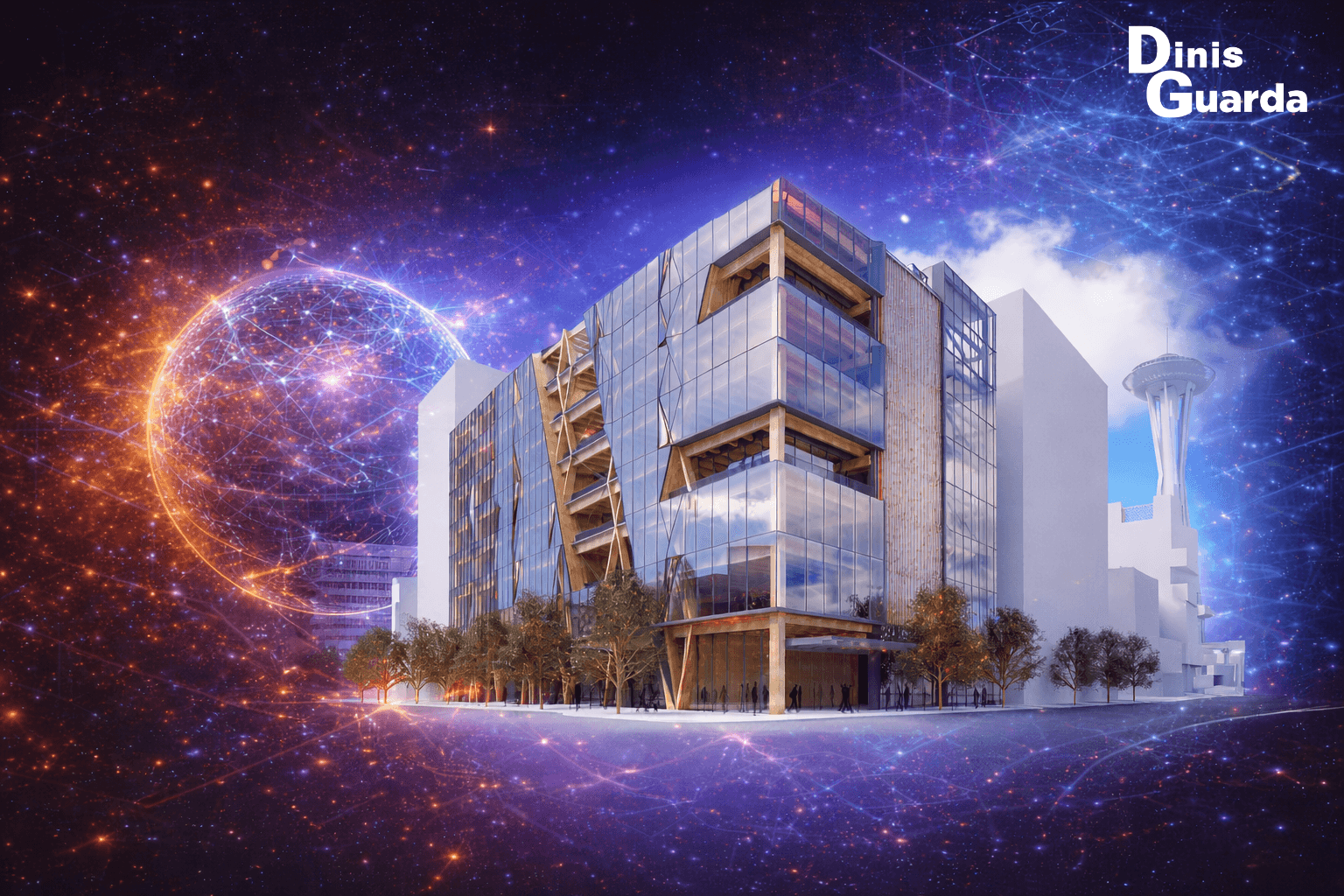
We live in a 3D world. We build cities in 3D. We design buildings, infrastructure, and physical products in 3D. Yet the dominant AI systems of our time , the large language models and image generators , operate primarily in two dimensions. Spatial intelligence is the missing layer.
Li has been clear about why this matters at a civilisational scale.
"I believe spatial intelligence is as critical [as] , and complementary to , language intelligence," she told Bloomberg in late 2025.
For cities and urban systems, the implications are significant. Spatial AI could transform how we plan and simulate urban environments, how architects visualise and iterate on designs, how robotics systems navigate complex physical spaces, and how scientific discovery unfolds in fields ranging from materials science to medicine.
World Labs has stated its intent to use the new capital to continue building AI models that will "revolutionise storytelling, creativity, robotics and scientific discovery."
What This Means for the Future of Cities and the Built World
Citiesabc has long tracked the convergence of AI, digital transformation, and the built environment. The World Labs raise is one of the clearest signals yet that physical AI, technology that understands and interacts with the 3D world, is moving from research labs into real products and real workflows.
For urban innovators and city builders, this is not an abstract development. Tools like Marble, which generate immersive 3D environments from simple prompts, represent an early glimpse of AI that could one day help planners simulate entire city districts, help designers prototype built environments in hours rather than months, or enable robotics systems to operate reliably in complex real-world urban spaces.
The bet that Nvidia, AMD, Autodesk, and Fidelity are making with this $1 billion is not just on World Labs , it is on the idea that the next great frontier of AI is spatial, and that whoever masters it will have a profound impact on how humanity builds, creates, and inhabits the world.


