
World Labs: What Fei-Fei Li's Spatial Intelligence Platforms Means for the Future of AI
20 Feb 2026

What Happened?
On February 19, 2026, World Labs , the AI start-up founded by renowned computer scientist Fei-Fei Li , announced it has raised $1 billion to push forward its vision of spatial intelligence. The round attracted high-profile backers including Nvidia, AMD, Autodesk, Fidelity Management and Research Company, Emerson Collective, and Sea.
The company did not disclose its post-funding valuation, though reports from January 2026 had estimated it could reach around $5 billion. Notably, Autodesk alone contributed $200 million to the round and has also taken on an advisory role in the start-up.
Who Is Fei-Fei Li?
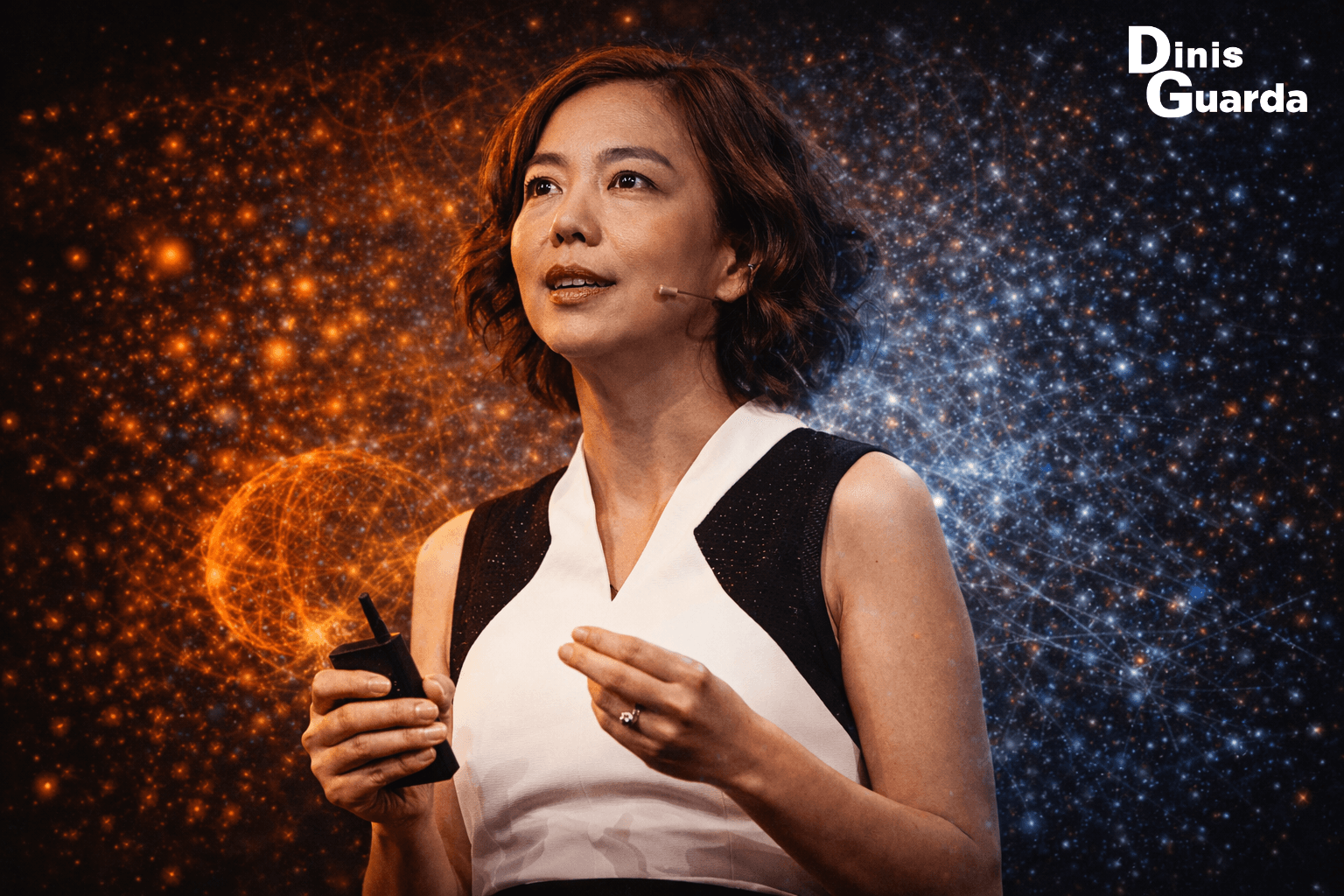
Fei-Fei Li is one of the most influential figures in artificial intelligence. Often called the "godmother of AI", she is best known for her groundbreaking work on ImageNet, the large-scale visual database that helped ignite the deep learning revolution.
Beyond her research, Li is a professor at Stanford University's computer science department, co-director of the Stanford Human-Centered AI Institute, and a former chief scientist at Google Cloud. She is also a scientific partner at Radical Ventures.
What Is World Labs Building?
World Labs describes itself as a "spatial intelligence company" building frontier models that can perceive, generate, reason, and interact with the 3D world. It calls its AI products "large world models" , a nod to the large language models (LLMs) that power tools like ChatGPT, but focused on three-dimensional spatial understanding rather than text.
The company came out of stealth in 2024, raising a $230 million initial round that included Andreessen Horowitz and Nvidia's venture arm, valuing it at roughly $1 billion at the time.
In November 2025, World Labs launched its first commercial product: Marble, a tool that generates interactive 3D virtual worlds from image or text prompts.
Why Does Spatial Intelligence Matter?
Li has been vocal about why spatial intelligence deserves to stand alongside language intelligence as a core pillar of AI.
"I believe spatial intelligence is as critical [as] – and complementary to – language intelligence," she told Bloomberg in late 2025, also calling AI a "civilisational technology."
Most AI breakthroughs of the past decade have been rooted in processing language and 2D images. Spatial intelligence takes this further, teaching AI to understand and interact with the three-dimensional world, which is how humans and robots actually navigate reality.
What Will the $1 Billion Be Used For?
According to World Labs, the fresh capital will go toward building AI models to "revolutionise storytelling, creativity, robotics [and] scientific discovery". The partnership with Autodesk is particularly telling: Autodesk's tools are used by architects, engineers, and designers worldwide, and the collaboration signals clear ambitions to bring spatial AI into professional creative and industrial workflows.
As Li put it:
"Autodesk has long helped people think spatially and solve real-world problems and, together, we share a clear purpose – building physical AI that augments human creativity."
The Bigger Picture
The World Labs raise is a signal that the AI investment wave is moving beyond pure language models. With robotics, autonomous systems, and immersive computing all demanding richer 3D world understanding, spatial intelligence may be the next major frontier and Fei-Fei Li is positioning World Labs squarely at its center.
For creators, designers, builders, and researchers, this is a space worth watching closely.


