
resources
How Londoners Are Shaping the Smart City of Tomorrow
Industry Expert & Contributor
18 Jul 2025

London is a huge city, and it’s always changing. Right now, there’s a lot of talk about making it a “smart city.” This means using new tech and data to make things work better for everyone. It’s not just one big plan, though. Lots of different groups and people are involved, all trying out new ideas. This article looks at how Londoners are helping to build the smart city of tomorrow, piece by piece.
Key Takeaways
- London’s smart city efforts involve many different organizations and local boroughs, making it a complex picture.
- Using data, like through the London Datastore, helps city planners understand things better and make smarter choices.
- New tech like 5G, more electric cars, and smart devices are changing how London works, even if you don’t always see it.
- Organizations like DG Cities and the Greater London Authority are big players in testing and putting new smart city ideas into action.
- Getting Londoners involved and encouraging new ideas are important for the smart city to really work and improve daily life.
Understanding London’s Smart City Landscape
London’s journey to becoming a smart city is, well, a bit complicated. It’s not like one single entity is calling all the shots. Instead, you’ve got a bunch of different groups involved, all with their own ideas and priorities. It’s less of a coordinated symphony and more of a… jam session. But hey, that’s London for you, right?
Diverse Organizational Involvement
So, who’s actually involved? Pretty much everyone, it seems. You’ve got tech companies, startups, universities, and various government agencies all trying to get in on the action. The sheer number of players makes it tough to get a clear picture of what’s going on. It’s like trying to follow a football game when you don’t know the teams or the rules. Each organization brings its own expertise and agenda, which can lead to both innovation and, let’s be honest, a bit of confusion.
The Role of Boroughs in Smart Initiatives
Here’s where it gets even more interesting. London isn’t just one big city; it’s made up of 32 boroughs, plus the City of London itself. And each of these boroughs has a say in what happens within its borders. Some boroughs are super keen on smart city stuff, while others are a bit more hesitant. This means you can have wildly different approaches to things like smart transportation or data collection depending on where you are in the city. It’s a bit like having 33 mini-cities all trying to do their own thing.
Scaling Good Practices Across London
With so many different groups and boroughs involved, how do you make sure that good ideas actually spread across the city? That’s the million-dollar question. It’s no use if one borough comes up with a brilliant solution to a problem if nobody else knows about it or can use it. There needs to be a way to share knowledge and best practices so that everyone can benefit. Easier said than done, of course. But if London can figure out how to do this, it could really become a leader in the smart city world.
One of the biggest challenges is breaking down the silos between different organizations and departments. It’s about getting everyone to work together and share information, rather than operating in their own little bubbles. This requires a shift in mindset and a willingness to collaborate, which isn’t always easy.
Here are some key areas where scaling good practices is essential:
- Data sharing and interoperability
- Cybersecurity standards
- Citizen engagement strategies
Leveraging Data for Urban Intelligence
London’s journey to becoming a smart city relies heavily on how it gathers, analyzes, and uses data. It’s not just about collecting information; it’s about turning that information into actionable insights that improve the lives of Londoners. The city is working to break down data silos and make information more accessible, leading to better decision-making and more effective services.
The London Datastore Initiative
The London Datastore Initiative is a cornerstone of the city’s open data efforts. It’s a free, publicly accessible platform containing a vast array of data sets related to London. Think of it as a digital library filled with information about everything from traffic patterns to air quality to demographic trends. The goal is to empower citizens, businesses, and researchers to use this data to develop innovative solutions to urban challenges.
- The Datastore promotes transparency and accountability by making government data readily available.
- It encourages collaboration and innovation by providing a common platform for data sharing.
- It supports evidence-based decision-making by providing access to reliable and up-to-date information.
Combining Data for Deeper Insights
Providing open data is just the first step. The real power comes from combining different data sets to uncover hidden patterns and relationships. For example, by combining transportation data with air quality data, the city can identify areas with high pollution levels and develop targeted interventions to reduce emissions. This holistic approach allows for a more granular understanding of how the city works.
By integrating data from various departments, the Greater London Authority can gain a more complete picture of the city’s operations and challenges. This integration is key to developing effective and efficient solutions.
Data for London Platform Development
To further enhance data accessibility and usability, London is actively developing the Data for London platform. This platform aims to provide a more user-friendly interface for accessing and analyzing data, as well as tools for data visualization and collaboration. The platform is designed to be accessible to both technical experts and non-technical users, making it easier for everyone to participate in the smart city movement. The platform will help with smart transportation and other key areas.
Here’s a glimpse of what the Data for London platform offers:
- Interactive dashboards for visualizing key city metrics
- APIs for developers to build applications using London’s data
- Collaboration tools for sharing insights and best practices
- Training resources to help users get the most out of the platform
Technological Advancements Driving Change
London’s journey to becoming a smart city is fueled by several key technological advancements. These technologies are not just abstract concepts; they’re actively being implemented and tested across the city, changing how Londoners live, work, and interact with their environment.
The Proliferation of 5G Networks
5G is more than just faster internet; it’s a foundational technology for many smart city applications. The increased bandwidth and low latency of 5G enable real-time data transfer, which is crucial for things like autonomous vehicles, smart traffic management, and remote monitoring. London is actively expanding its 5G infrastructure, with various providers rolling out networks across different boroughs. This expansion is expected to unlock new possibilities for innovation and improve the efficiency of existing services.
Increased Adoption of Electric Vehicles
Electric vehicles (EVs) are becoming increasingly common on London’s roads, driven by a combination of government incentives, growing environmental awareness, and advancements in battery technology. The city is also investing heavily in EV charging infrastructure to support this transition. This includes installing charging points in residential areas, workplaces, and public spaces. The shift to EVs is not only reducing air pollution but also creating opportunities for smart charging solutions that can balance the load on the electricity grid.
Here’s a quick look at the growth of EV adoption:
- Increased availability of charging stations
- Government incentives and subsidies
- Growing awareness of environmental issues
Internet of Things and Smart Objects
The Internet of Things (IoT) is connecting everyday objects to the internet, creating a vast network of sensors and devices that can collect and share data. In London, IoT technology is being used in a variety of applications, from monitoring air quality to managing waste collection. Smart streetlights, for example, can adjust their brightness based on real-time conditions, saving energy and improving safety. The London Datastore Initiative is a great example of how data collected from IoT devices can be used to improve city services.
The proliferation of sensing technology and ubiquitous infrastructures is key. The more granular and rich the data collected, the more useful it becomes for the city. This data-driven approach allows for more informed decision-making and more efficient resource allocation.
Key Players in London’s Smart City Ecosystem
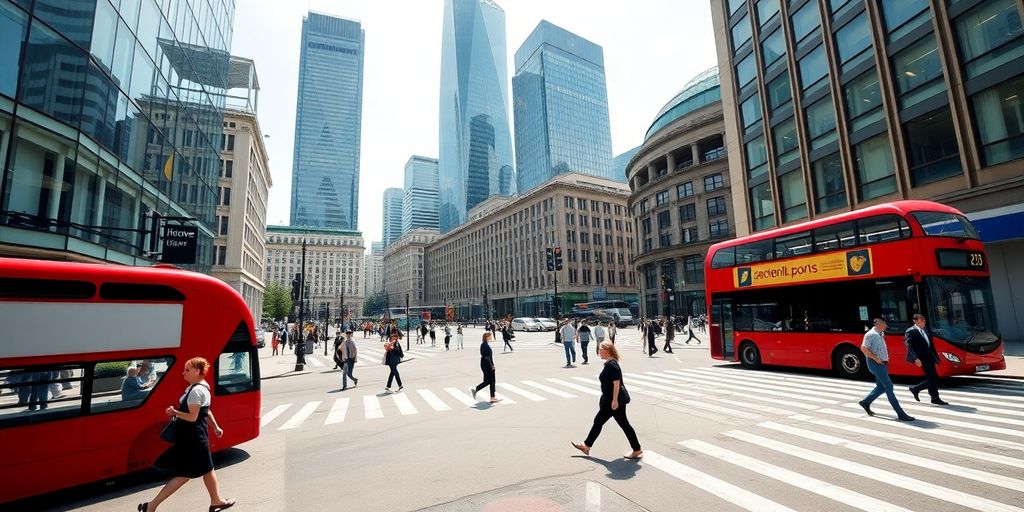
It’s not just technology that makes a city smart; it’s also the organizations and people driving the change. London’s smart city initiatives involve a diverse range of players, each contributing unique skills and perspectives. Let’s take a look at some of the key players shaping London’s smart city future.
DG Cities as a Technology Testbed
DG Cities, based in Greenwich, plays a vital role as a technology testbed. They provide a space for companies to experiment with new smart city solutions in a real-world environment. Think of it as a sandbox where innovative ideas can be tried out and refined before being rolled out across the city. They work with startups, established businesses, and local authorities to explore the potential of new technologies and address urban challenges. This approach allows for a more agile and responsive approach to smart city development.
Greater London Authority’s Connectivity Focus
The Greater London Authority (GLA) is a central force in London’s smart city journey. The Connected London Team at the GLA is focused on improving the city’s digital infrastructure, particularly full-fiber broadband. They understand that reliable connectivity is the backbone of any smart city, enabling everything from smart transportation to remote healthcare. The GLA is also working on the Data for London platform, which aims to improve data sharing and collaboration across the city. Their work is essential for creating a connected and data-driven urban environment.
Hammersmith & Fulham’s Innovation Districts
Hammersmith & Fulham is actively cultivating innovation through its innovation districts. The White City Innovation District, anchored by Imperial College, is a hub for technology companies and research institutions. The borough is actively seeking international smart city firms to test and scale their technologies within its boundaries. This creates a dynamic ecosystem where businesses can collaborate, innovate, and contribute to the development of smart city solutions. The Earls Court Development Company is also developing a new community and business campus on a 40-acre site, which will include new homes, offices, laboratory space, and creative studios. This project is expected to create over 12,000 new jobs and further strengthen Hammersmith & Fulham’s position as a center for innovation.
London’s smart city development isn’t a top-down initiative. It’s a collaborative effort involving various organizations, each with its own focus and expertise. This decentralized approach allows for greater flexibility and innovation, but it also requires effective coordination and communication to ensure that all efforts are aligned and contribute to a shared vision.
Fostering Innovation and Collaboration
London’s smart city ambitions aren’t just about new gadgets; they’re built on people and organizations working together. From small startups with big ideas to entire boroughs sharing what they’ve learned, this spirit of cooperation is what drives meaningful change across the urban landscape.
Innovation Hubs and Startups
London has a whole ecosystem designed to help new tech businesses get off the ground. It’s more than just providing money. Special hubs and organizations connect innovators with the tools and people they need. For instance, dedicated areas like the one in Queen Elizabeth Olympic Park act as a catalyst, bringing together businesses, academics, and government to find solutions for city life. These places offer access to workspaces, expert advice, and a network of fellow entrepreneurs. This support structure is a big reason why London continues to be a global innovation hub.
| Support Type | Description |
|---|---|
| Physical Space | Co-working suites and real-world testbeds |
| Business Advice | Sessions on intellectual property and risk |
| Networking Events | Industry meetups and access to expert panels |
Citizen Engagement in Smart City Development
Getting everyday Londoners involved is a huge part of the strategy. The city has learned that the best ideas for improving a neighborhood often come from the people who live and work there. Instead of just planning things from the top down, there’s a growing movement toward community-led projects.
By giving residents a direct way to propose and fund local improvements, the city helps make sure that new projects meet genuine community needs. This approach builds trust and helps people feel more connected to the changes happening around them.
There are several ways the public can participate:
- Crowdfunding platforms that allow anyone to pitch an idea for a local project and gather support.
- Hackathons and app-building challenges that invite creative solutions to specific urban problems.
- Local workshops and public events designed to gather feedback on new initiatives.
Cross-City Collaboration and Clusters
London is a massive and diverse city, so a solution that works in one borough might not be right for another. This is why collaboration between different areas is so important. Groups of boroughs, such as the South London Partnership, often team up to tackle shared issues. They might run pilot programs across their boundaries to test new technologies for things like reducing fly-tipping or monitoring air quality. By sharing the results and costs of these experiments, boroughs can learn from each other and adopt successful ideas much more quickly. This teamwork prevents each local authority from having to solve the same problems all on its own, creating a ripple effect of progress across the capital.
The Future of Urban Functionality

Sensing the Urban Realm for Efficiency
Imagine a London where every street corner, every building, and every public space is equipped with sensors, constantly gathering data. It sounds like science fiction, but it’s quickly becoming reality. These sensors will monitor everything from traffic flow and air quality to waste levels and energy consumption. This data will then be used to optimize city services, reduce waste, and improve the overall quality of life for Londoners.
- Real-time traffic management to reduce congestion.
- Smart waste collection to minimize overflowing bins.
- Optimized energy usage in buildings to lower carbon emissions.
By understanding how the city functions in real-time, authorities can make informed decisions to improve efficiency and sustainability. This proactive approach will lead to a more responsive and adaptable urban environment.
Autonomous Vehicles and AI Trials
Autonomous vehicles (AVs) are no longer a distant dream; they’re actively being tested in London. These trials are crucial for understanding how AVs can integrate into the existing transportation network and improve mobility for everyone. AI plays a vital role, not just in driving the vehicles, but also in managing traffic flow and optimizing routes. The Greater London Authority’s connectivity focus is key to making this happen.
- Testing different types of AVs in various environments.
- Developing AI algorithms for safe and efficient navigation.
- Addressing ethical and safety concerns related to AV deployment.
Enhanced Digital Skills for Londoners
The smart city of tomorrow won’t just be about technology; it will also be about people. To fully benefit from these advancements, Londoners will need to develop enhanced digital skills. This includes basic computer literacy, data analysis skills, and the ability to use smart city applications. Investing in digital skills training will ensure that everyone can participate in and contribute to the smart city. Here’s a breakdown of the skills needed:
| Skill Category | Description |
|---|---|
| Basic Computer Skills | Using computers, internet, and common software applications. |
| Data Literacy | Understanding and interpreting data to make informed decisions. |
| Smart City App Usage | Navigating and utilizing various smart city applications and platforms. |
| Cybersecurity Awareness | Protecting personal data and devices from online threats. |
Addressing Challenges and Opportunities
Dismantling Organizational Silos
One of the biggest hurdles in London’s smart city journey is breaking down the walls between different departments and organizations. It’s like everyone’s working on their own puzzle piece, but nobody’s looking at the whole picture. To truly make progress, we need better communication and collaboration. Think about it: transport, energy, waste management – they’re all connected. When these systems talk to each other, we can find smarter, more efficient solutions.
Public Perception and Acceptance of New Technologies
New tech can be scary, right? People worry about privacy, security, and whether these changes will actually make their lives better. It’s not enough to just roll out fancy gadgets; we need to explain why they matter and how they’ll benefit Londoners. Transparency is key. If people understand the purpose and safeguards behind things like smart lampposts or data collection, they’re more likely to embrace them.
- Address privacy concerns head-on.
- Clearly communicate the benefits to residents.
- Involve the public in the decision-making process.
Ensuring Sustainable Urban Development
Smart city initiatives shouldn’t just be about tech; they need to be about creating a greener, more sustainable London. That means thinking about the environmental impact of everything we do, from energy consumption to waste disposal. We need to make sure that these advancements contribute to a healthier planet for future generations. For example, the city of Manchester notes that “digital exclusion is closely linked with social exclusion and has a real impact for our residents”.
Sustainable urban development is not merely an option but a necessity for London’s future. It requires a holistic approach that integrates technological advancements with environmental responsibility and social equity.
Here’s a quick look at some key areas:
| Area | Focus |
|---|---|
| Energy | Renewable sources, smart grids |
| Transportation | Electric vehicles, public transit |
| Waste | Reduction, recycling, circular economy |
Conclusion: London’s Smart Future
So, what does all this mean for London? It’s clear that the city is changing, even if you can’t always see it. A lot of the smart city stuff happens behind the scenes, making things work better. We’re talking about things like managing traffic more smoothly and making sure services run well. Londoners are a big part of this, whether it’s through using new tech or just adapting to changes. The city is becoming more connected, with things like 5G networks popping up and more electric vehicles on the roads. It’s a journey, and while there might be some bumps along the way, the goal is to make London a more efficient and livable place for everyone. It’s pretty interesting to see how it all comes together.
Frequently Asked Questions
Why is it tricky to understand London’s smart city plans?
London’s smart city efforts are a bit complex because many different groups are involved. It’s like London isn’t just one city, but 33! Each of the 32 boroughs and the City of London have their own ideas and progress with smart city projects. It’s all about making sure these different efforts help Londoners, spread good ideas, and make smart choices for the future.
What is DG Cities and what do they do?
DG Cities, located in Greenwich, is a special place where new technologies are tested out. They act like a real-world lab to see how these smart ideas work before they are used more widely.
How is the Greater London Authority involved in making London smarter?
The Greater London Authority (GLA) has a team called Connected London that works on improving London’s internet and phone connections, like making sure everyone has fast fiber optic internet. They are also building a new ‘Data for London’ platform to link up information from all over the city better.
What opportunities are there in Hammersmith & Fulham for smart city companies?
The Hammersmith & Fulham area is inviting smart city companies from other countries to test and grow their technology there. This includes the growing White City Innovation District, which is connected to Imperial College, a top university. They are also working with a company to build a huge new area with homes, offices, labs, and shops, creating lots of jobs.
What is the basic idea behind a ‘smart city’?
The smart city idea is all about using sensors to collect information from the city and then using that information to make the city work better and be more eco-friendly. This can involve anything from using cell phone data to new technologies.
Will London look very different with these smart city changes?
Yes, there’s a good chance that in the next ten years, you’ll see more 5G internet everywhere, and more electric cars on the roads. City councils will also try to use more data to make things better, so you might see more smart devices and sensors around the city. Plus, there will be more chances for people to learn digital skills.


